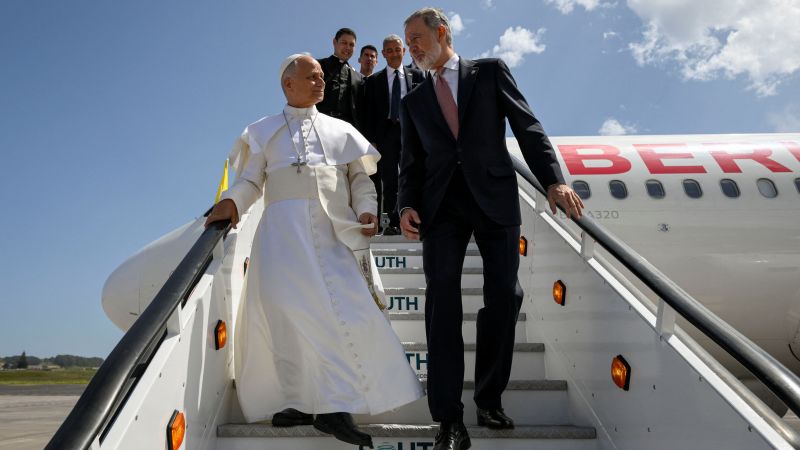
Pope Leo’s Plane Was Grounded. Then the King of Spain Stepped In to Help
Sandego.net – During Pope Leo XIV’s return journey from Tenerife to Rome on an Iberia Airways flight, an unexpected technical issue forced the aircraft to remain on the ground. The captain informed passengers of the delay, prompting the pontiff and a portion of his entourage to exit the plane. As one of the 80 journalists accompanying the pope on his June 6–12 visit to Spain, I witnessed the sudden halt of the flight, which had been part of a routine itinerary. The papal delegation typically travels in the front section of the plane, while journalists occupy the rear, a setup that often allows for informal interactions during the return leg. However, this time, the plane’s inability to take off turned the event into a moment of disruption.
A Unique Papal Travel Experience
The papal flight’s special arrangements are well-known, with the pope and his senior aides usually aboard a dedicated aircraft, while host countries provide planes for the return trip. This tradition, however, was interrupted on this particular day. Despite the chaos, the situation was resolved when the King of Spain offered his private jet to transport the pontiff. The decision came after the Vatican confirmed that the grounded Iberia Airways plane could not be repaired in time. As the pope boarded the royal aircraft, the journalists were left to wait for a subsequent flight, marking a memorable yet unplanned chapter of the trip.
For the papal delegation, the journey back to Rome was accompanied by a unique set of circumstances. While the journalists paid for economy class seats, they were granted business class fares as part of their coverage. This arrangement, though standard, added an extra layer of privilege to their experience. The special menus, adorned with the pope’s coat of arms, and the headrests featuring the same emblem, became small but significant details of the trip, reflecting the ceremonial nature of papal travel.
An Historic Visit to Spain
The visit, however, was more than just a logistical exercise. As the first American pope and a fluent Spanish speaker, Leo XIV’s presence in Spain was a landmark moment. His address to the country’s parliament drew a seven-minute standing ovation, a rare and powerful gesture in a nation known for its political divisions. The pope’s ability to connect with diverse audiences, from large crowds to individual survivors of abuse, underscored the multifaceted nature of his mission.
The large crowds at his events, including over 1.2 million for a Mass and procession in Madrid, were a surprise to many. On the flight over, the pope acknowledged this to CNN, noting he had anticipated competition from Puerto Rican rapper Bad Bunny, who was holding a concert in Madrid on the night of his arrival. While speculation arose about a potential link between the two, the Vatican confirmed only that a brief, closed-door meeting occurred, though no photographs were released.
Among the most striking moments of the trip was the Mass celebrated at Barcelona’s Sagrada Familia basilica. One hundred years after the architect Antoni Gaudí’s passing, the pope honored the site, which stands as a testament to his visionary design. The event, which included a blessing of the tower—now the tallest church in the world—was accompanied by a dazzling light show, fireworks, and a drone display that projected Gaudí’s face onto the night sky. The combination of tradition and modern spectacle created a vivid tableau of the pope’s presence in the city.
Humanitarian Focus and Personal Moments
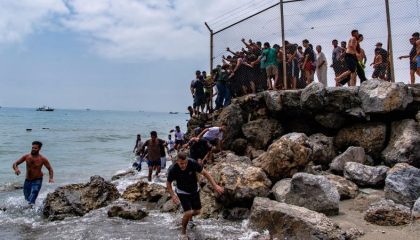
Beyond the grand events, the pope’s visit included heartfelt, low-key interactions. In Tenerife, he met with migrants at the Las Raices camp, where he spoke about their struggles to cross the Atlantic from West Africa. Addressing the crowd, he urged those responsible for trafficking to “stop” and “repent,” emphasizing that they would face “divine justice.” This moment, combined with his later visit to the Canary Islands—a major gateway for migrants into Europe—highlighted the central role of migration in his papacy.
He also met privately with abuse survivors, urging Spain’s bishops to listen to victims and make reparations. These encounters, often more intimate than public appearances, showcased the pope’s commitment to addressing social issues. Meanwhile, his relaxed demeanor during the trip stood in contrast to his usual formal approach. At one point, he even entered the cockpit of the Iberia Airways plane, chatting with the pilots and waving to the military escort. Such moments, rare for Leo XIV, revealed a more personal side of the pontiff.
His conversations with young people further illustrated this shift. Encouraging them to consider marriage and family, the pope shared anecdotes about his own youth, including playing soccer and American football. He also mentioned his ongoing fitness routine, highlighting the importance of physical health in his daily life. These casual exchanges, laced with humor and warmth, offered a glimpse into the pope’s personality and priorities.
A Chaotic Yet Memorable End
The grounded plane incident, while chaotic, became a symbol of the pope’s adaptability and the support he received from Spain’s royal family. As the journalists were left to navigate the delay, the sight of Pope Leo XIV stepping into the King’s private jet was a poignant moment of transition. The return journey, though disrupted, carried the same sense of purpose that had defined the entire visit. From the grandeur of Sagrada Familia to the quiet dignity of the Las Raices camp, the trip was a blend of spectacle and sincerity.
For many, the visit was a reminder of the pope’s ability to bridge cultural and political divides. His engagement with Spain’s diverse population, from the enthusiastic crowds to the somber faces of migrants, underscored the universality of his message. The logistical challenges, such as the plane delay, only added to the narrative of a papacy that is as much about human connection as it is about tradition. As the final leg of the journey unfolded, the pope’s presence in Spain left an indelible mark, blending historical significance with contemporary relevance.
“Stop” and “repent,” he added, “for you will face divine justice.”
The visit, though marked by unforeseen hiccups, proved to be a testament to the pope’s resilience and the collaborative spirit between the Vatican and Spain. From the grandeur of Masses to the humility of private meetings, each moment contributed to a broader vision of leadership and compassion. As the plane finally took off, the journey back to Rome carried the weight of a visit that was as much about inspiration as it was about action.