The Hidden Village Beneath the Bombs: Vịnh Mốc’s Subterranean Legacy
Sandego.net – On the outskirts of Vịnh Mốc, the air hums with the familiar sounds of street vendors and the occasional clatter of bamboo poles. Above ground, the village is a mosaic of everyday life—grilled rice and noodle dishes sizzle on open-air grills, while red plastic chairs line the sidewalks like sentinels. This scene, though unremarkable at first glance, masks a deeper story of survival. For decades, the village has stood as a testament to human resilience, its surface hiding the scars of a war that once reduced it to rubble. Sixty years ago, Vịnh Mốc was not just a quiet fishing community but a strategic target, bombed relentlessly by American forces who dropped over 9,000 tons of explosives in eight years. Today, the village’s subterranean network—its hidden heart—offers a glimpse into the ingenuity of those who endured the chaos.
A History of Resistance
Vịnh Mốc’s journey from a peaceful coastal settlement to a wartime refuge began with the Geneva Accords of 1954. These agreements, which ended the First Indochina War, split Vietnam into two zones: the communist North and the capitalist South. The Vietnamese Demilitarized Zone (DMZ), a narrow strip of land bordering the Bến Hải River, became a frontline. Vịnh Mốc, located just beyond this dividing line, was in a prime position. It served as a vital link for the North Vietnamese Army’s supply lines, making it a focal point for both sides in the escalating conflict. By 1965, the village was under constant aerial assault, with bombs pummeling its landscape and altering the lives of its residents forever.
Before the war, Vịnh Mốc thrived as part of Quảng Trị province’s rural charm. Its terrain was a patchwork of rice paddies, red basalt soil, and the golden sands of the South China Sea. Fishermen cast their nets along the coast, and the village’s rhythm was dictated by the tides. But the arrival of the Vietnam War disrupted this tranquility. American airpower, relentless and precise, turned the region into a battleground. Villagers, caught between the frontlines and the need for shelter, sought refuge in a way that would redefine their existence.
The Ingenious Underground System
As the conflict intensified, the people of Vịnh Mốc made a bold decision: to live beneath the earth. This choice was not arbitrary. “Digging underground was both a practical and strategic move,” explains Văn Ngọc Vũ, a tour guide and director of Annam Tour. “The bombardment was too frequent to stay above, and losing land was a risk we couldn’t afford.” The result was a sprawling underground complex, designed to sustain life in the face of destruction. It was a vision that had roots in earlier examples, like the Củ Chi tunnels near Ho Chi Minh City, but Vịnh Mốc took the concept further, creating a self-contained village that could support hundreds of families.
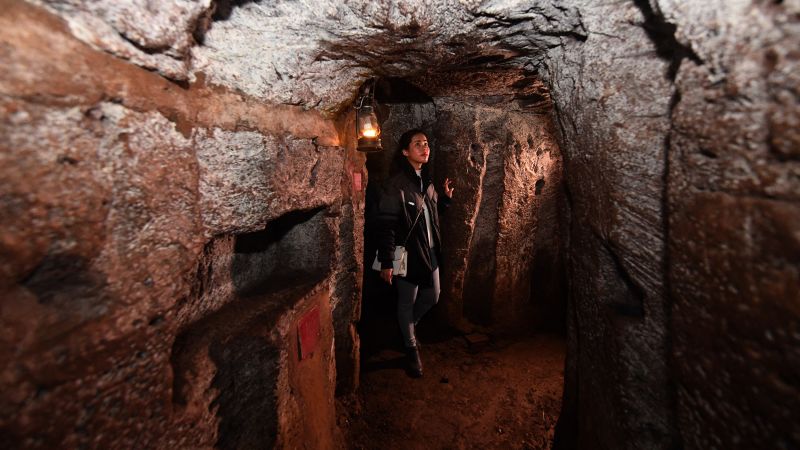
The project began in 1965 and spanned two years, a feat of engineering that defied the odds. According to Lê Xuân Vy, a border police commander, the construction was overseen with meticulous care. The tunnels, stretching over a mile in length, were carved into the earth with an eye for both functionality and survival. Their design incorporated zigzag paths to disperse blast waves, a clever adaptation to the straight-line trajectory of bombs. Arched ceilings and reinforced walls added structural strength, ensuring the complex could withstand shelling and aerial strikes. Each element of the system was intentional, a response to the violence that had already claimed so much of the village’s surface.
Life Beneath the Surface
Within this underground world, life was dictated by narrow corridors and low ceilings. The tunnels were divided into three levels, ranging from 50 feet to 75 feet below ground. While the upper levels remained open to the surface, the lower ones provided deeper protection. For six years, residents lived in this subterranean environment, adapting to its constraints. Niches in the tunnel walls became sleeping quarters for families, while communal rooms served as kitchens and gathering spaces. The air was thick with the scent of damp earth, but it was also a place of warmth and camaraderie.
One of the key innovations was the integration of cross-ventilation. Exits on opposite sides of the complex allowed fresh air to circulate, mitigating the stifling conditions. Wells were dug to ensure a steady water supply, and the village’s connection to the sea and farmland was maintained through thirteen strategically placed exits. “These tunnels weren’t just for hiding,” says Tran My Hoa, a guide from Connect Travel. “They were a lifeline, enabling supply missions and communication with the outside world.” The design also accounted for the village’s natural resources—its soil was hard enough to prevent collapse yet soft enough to excavate with simple tools.
For many, the transition from the sunlit, humid surface to the dim, damp tunnels was disorienting. “It’s like stepping into a different world,” notes Vũ. “The heat of the day was replaced by a cooler, stagnant air. The tunnels became a second home, a place of both danger and daily life.” Children played in niches carved into the walls, while elders cooked meals in communal kitchens. Even the village’s social structure adapted, with families forming close-knit units to ensure survival. The underground village was not just a shelter but a microcosm of resilience, where every corner was designed for endurance.
A Legacy Etched in Stone
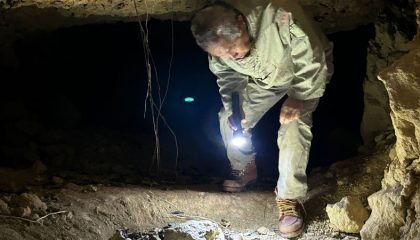
Today, Vịnh Mốc stands as a living museum, its tunnels offering visitors a tangible connection to the past. The experience is both awe-inspiring and unnerving. Walking through the narrow passages, one can almost hear the echoes of shrapnel and the whispers of those who once called this place home. The claustrophobic conditions, which persisted for over half a decade, are a stark reminder of the sacrifices made. “The tunnels were a refuge, but they also demanded constant vigilance,” adds Hoa. “Every step had to be taken carefully, every moment counted.”
Despite the challenges, the tunnels became a symbol of Vietnamese ingenuity. Unlike the Củ Chi complex, which featured interconnected