Spain Mourns After High-Speed Train Collision Kills 68
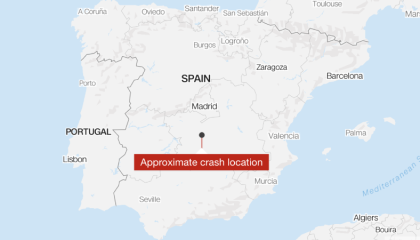
Sandego.net – Spain is facing renewed grief and scrutiny after a collision between two trains near Urda in Toledo province left at least 68 people dead and more than 100 injured on Wednesday. The crash occurred on the high-speed railway route linking Madrid and Seville, one of the country’s most important rail connections.
Authorities have said the disaster involved a failure in a computerized rail-management system as well as what appears to have been a serious human mistake. A southbound Renfe train struck an Iryo train that had stopped on the tracks during wider disruptions in the area.
“Today, Spain is in mourning. All of Spain is in mourning,” Prime Minister Pedro Sánchez said at the crash site, offering his “full solidarity” to the families of those affected.
Safety System Failure Preceded the Collision
Transportation Minister Óscar Puente said problems with the LZB train-management safety system affected a 63-kilometer, or 40-mile, section of railway. The malfunction triggered an automatic halt for rail traffic in the affected zone.
With the automated system unavailable, ADIF, the state-owned rail infrastructure manager, assumed manual control. Officials then authorized the Renfe high-speed train to continue south despite a red signal. Puente said the train was allowed to proceed without a speed limit because of an incorrect instruction issued by a rail controller.
Between 8:36 a.m. and 8:52 a.m. local time, the Renfe service traveled at roughly 124 miles per hour before hitting the stationary Iryo train. The circumstances surrounding the authorization are expected to be a central focus of the official inquiry.
“There was a red signal prohibiting movement, yet the train was authorized to proceed,” Puente said during a Wednesday press conference. “It is a decision made under inexplicable circumstances.”
The crash raises urgent questions about how manual operations are handled when digital safety systems fail. Rail networks rely on layered safeguards intended to prevent trains from entering occupied sections of track, particularly on high-speed corridors. Investigators will need to establish how the order was issued, what information was available to the controller, and whether all required safety procedures were followed.
Passengers Describe Chaos Inside the Carriages
Survivors described a violent and confusing impact that threw passengers from their seats and left people piled together inside damaged carriages. Several cars were especially badly affected, with trapped passengers and debris complicating the first moments of rescue efforts.
One survivor, who did not provide her name, said three cars had suffered catastrophic damage.
“One was on fire, in another there were people trapped and crying,” she said. “And then in the main one (impacted) – there were people buried under debris.”
Yoander, 25, said he had been asleep when the collision happened. He woke up as his body was thrown forward into the seats ahead of him, sustaining injuries to his face and leg.
“I was sleeping, and when I woke up I was already crashing into the seats in front of me,” he said. “I’m in pain, but there are people that need more help than I do.”
Patricia, who was traveling on the Renfe train, said her service had already been stopped for about 20 minutes. Passengers had been told that heavy traffic was affecting the line. She said the train departed and collided only a few minutes later.
“Some people were hurled into the air… it was awful,” Patricia said. “Some of the train structure got into our carriage, and our carriage wasn’t even the worst (affected).”
Victims, Passengers and Emergency Response
Of the people killed, 24 were traveling on the Renfe train from Madrid to Seville, while 44 were aboard the Iryo service operating on the same route. The latest figures from Castilla and La Mancha’s regional government listed 151 passengers on the Iryo train and 393 on the Renfe train.
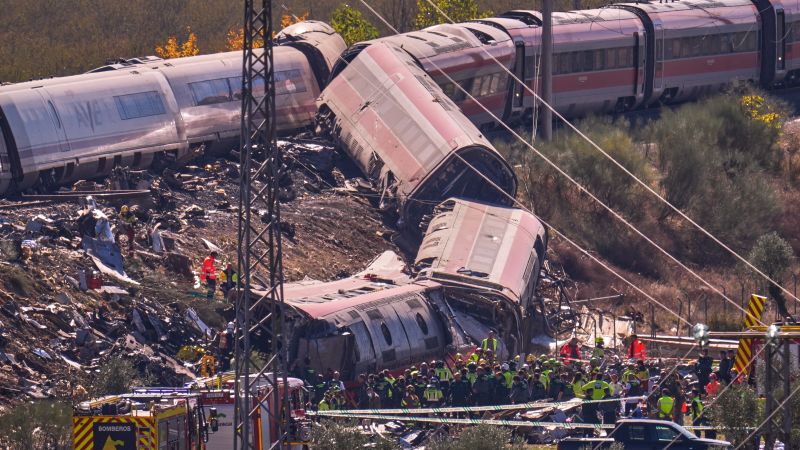
Emergency crews launched a major response shortly after the collision. Fire engines, ambulances and police vehicles converged on the site, while the Spanish civil guard erected multiple tents to support the rescue operation. At least three helicopters were deployed as authorities worked to transport and assist victims.
Rescuers have searched through wreckage in heavily damaged Iryo carriages, where the impact was particularly severe. Several cars from the Renfe high-speed train derailed and came to rest tilted on their sides. Passengers without serious injuries were moved away from the most dangerous areas as operations continued.
Third Deadly Rail Incident This Year
The Urda crash is Spain’s third fatal rail incident of the year. In January, more than 40 people died in a major crash in Córdoba province. A separate incident near Barcelona later killed a train driver.
The latest tragedy is likely to intensify public concern over rail safety and the resilience of systems used to manage high-speed traffic. Spain has an extensive rail network that connects major cities and supports large numbers of daily travelers, making the reliability of signaling, communications and emergency procedures essential.
Puente said a comprehensive investigation would examine the crash. Sánchez pledged that responsibility would be established if mistakes or negligence were found.
“If there has been negligence, it will come to light. And if there have been failures in the safety system, they will be addressed with the utmost firmness,” Sánchez said.
For families awaiting news, survivors recovering from injuries and communities along the Madrid-Seville corridor, the immediate priority remains the human cost of the collision. The investigation will determine how a system disruption and a decision to proceed combined into one of Spain’s deadliest rail disasters of the year.
Related Reading
Frequently Asked Questions
What is What caused the deadly train crash?
What caused the deadly train crash is the main topic of this guide. The article explains the context, practical details, and next steps readers should understand.
Why does What caused the deadly train crash matter?
What caused the deadly train crash matters because readers are looking for a useful answer, not just a short summary. Good content should match search intent and help them decide what to do next.