
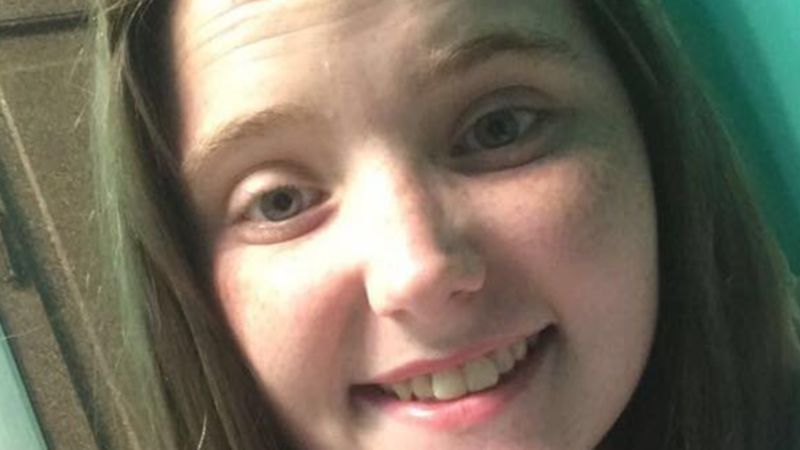
Thousands of Messages Take Center Stage in Matthew Farwell’s Federal Trial
Sandego.net – A lengthy digital record is at the heart of the federal case against Matthew Farwell, the former Massachusetts police officer accused of killing Sandra Birchmore and her unborn child in February 2021.
Investigators recovered roughly 40,000 text messages exchanged by Birchmore and Farwell over several years. In a Boston courtroom, prosecutors and defense attorneys are drawing opposing conclusions from those conversations as they seek to explain Birchmore’s death.
Birchmore, 23, was discovered dead in her Canton apartment on February 4, 2021. A duffel bag strap was looped around her neck and attached to a closet door handle. Her death was initially classified by local and state authorities as a suicide. Her relatives questioned that determination, and federal prosecutors later brought homicide charges against Farwell.
Farwell has entered a not-guilty plea. His trial, now in its third week at Boston’s John J. Moakley Courthouse, centers in part on the final communications between the two.
The final exchange
On the evening of February 1, 2021, a snowstorm was moving across eastern Massachusetts. Birchmore was about 10 weeks pregnant and had spent the day preparing for the possibility of becoming a mother. Her activity that day included buying a stroller, looking at nursery items and discussing newborn clothing with a friend.
At 9:07 p.m., Farwell asked whether he could briefly come to her apartment.
“Are you still up?”
“Okay to come by for a second?”
Birchmore replied without apparent hesitation.
“Yeah. You can come say hi. You okay?”
“Door’s open when you get here.”
Those were the last messages Birchmore sent. Surveillance video showed Farwell entering the apartment building seven minutes later. Prosecutors say he remained inside for roughly 30 minutes.
Two sharply different interpretations
The prosecution describes the messages as a record of grooming, manipulation and an inappropriate sexual relationship that began when Birchmore was 15 years old and Farwell was 27. Farwell was a married police officer at the time. Prosecutors contend he killed Birchmore to prevent her from revealing the alleged relationship and sexual abuse.
Farwell, now 40, is charged with killing a victim or witness to prevent the disclosure of alleged federal crimes. A separate count stems from Birchmore’s pregnancy and involves a federal statute protecting unborn children.
Defense lawyers present the messages differently. Their position is that Birchmore was emotionally unstable and died by suicide after Farwell ended their relationship. The competing interpretations place the jurors in the position of weighing not simply what was written, but the history, tone and circumstances surrounding thousands of private exchanges.
Birchmore frequently used her phone and regularly kept in touch with people through text messages. Her cousin, Angelique Pirozzi, previously described her as socially engaged and intensely committed to her relationships.
“She was outgoing and very passionate about her friendships,”
“She overshared — she texted people constantly.”
That tendency has left an unusually detailed account of a relationship that prosecutors say became increasingly strained. The digital evidence includes about 600 messages sent or received during Birchmore’s final hours.
How the messages are being presented
Before testimony and physical exhibits began, both sides made clear that text messages would be central to their cases. During opening statements, attorneys referred to the messages 33 times while outlining very different narratives for the jury.
The following week, two FBI agents read messages aloud in court. Testimony indicated that Birchmore initiated many of the conversations. It also showed that Farwell at times blocked her number on his phone.
Text evidence can be influential because it preserves words written close to the events at issue. But a message alone may not establish intent, emotion or the full nature of a relationship. Jurors must assess the language in the broader context of the pair’s history, the timing of the exchanges and the other evidence offered during the trial.
For prosecutors, the messages are intended to establish motive and illustrate a pattern leading to Birchmore’s death. That context is particularly important because the forensic evidence does not provide an uncomplicated account of what occurred inside her apartment on the night Farwell visited.
For the defense, the same material is intended to raise doubt about the government’s version of events and support its claim that Birchmore’s death was self-inflicted.
Pregnancy and a disputed paternity question
Tensions between Birchmore and Farwell intensified in December 2020 after she told him she was pregnant and identified him as the father. Prosecutors say Farwell believed he was the father in the weeks before her death. They also maintain that Birchmore had previously threatened to disclose their relationship if he did not impregnate her.
A DNA test performed after Birchmore’s death reached a different conclusion on paternity. It identified a U.S. Army recruiter, rather than Farwell, as the father of the pregnancy.
That finding does not end the questions before the jury. The issue for prosecutors is whether Farwell’s own understanding and fears at the time supplied a motive, while the defense is expected to challenge whether the government can prove its account beyond a reasonable doubt.
Farwell has been decertified as a police officer and is barred from law-enforcement employment in Massachusetts. The federal trial will determine whether the government can establish that Birchmore’s death was a killing rather than the suicide initially found by investigators.
More than five years after Birchmore died, the conversations preserved on her phone and laptop remain among the most personal pieces of evidence in the case. Their significance will depend on which interpretation jurors find most convincing: a record of coercion and concealment, or evidence of a relationship ending in tragedy.
Related Reading
Frequently Asked Questions
What is She exchanged 40 000 texts?
She exchanged 40 000 texts is the main topic of this guide. The article explains the context, practical details, and next steps readers should understand.
Why does She exchanged 40 000 texts matter?
She exchanged 40 000 texts matters because readers are looking for a useful answer, not just a short summary. Good content should match search intent and help them decide what to do next.