Trump Ties State Benefits to Republican Midterm Wins
Sandego.net – Trump has made transactional promises to voters in several competitive Senate states, arguing that Republican victories would bring federal aid, policy changes or investment. His campaign message presents political alignment with the president as a practical advantage for states seeking help from Washington.
The approach differs from a standard pledge to pursue an agenda after an election. Trump has described benefits as contingent on Republican wins, despite Republicans already controlling Congress while he serves as president. His comments have involved disaster relief, environmental compensation, fuel policy and manufacturing investment.
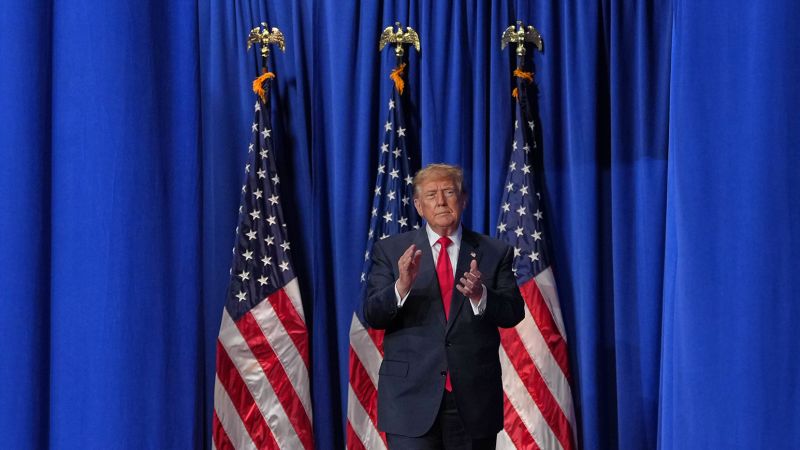
At last month’s Republican midterm convention, Trump launched his broader election effort by proposing that every adult in the United States receive $5,000 if Republicans retained their majority. Later appearances focused more directly on individual states with consequential Senate races.
North Carolina Disaster Relief
At a September 16 event in Gastonia, North Carolina, Trump discussed hurricane recovery while campaigning for Republican Senate candidate Michael Whatley. He suggested that Whatley’s defeat could affect the delivery of federal assistance.
“Now, if Michael loses, I’m not sending it. Okay?”
Trump later said he was joking. Still, the comment received attention because his administration has moved more quickly and more generously on disaster aid in Republican-led states. The administration also acknowledged in court that grant decisions had been made “based solely on the political identity of the grant recipient’s state.”
For storm-damaged communities, federal assistance can shape housing recovery, infrastructure repairs and the restoration of local services. That context gives added significance to campaign statements suggesting that relief could depend on election results.
Federal Leverage in Ohio and Kentucky
During an October 3 appearance in Vandalia, Ohio, Trump said the presidency provides substantial influence over states. He argued that Ohio’s Republican senators could use their relationship with him to bring money into the state, while saying he probably would not help Democratic gubernatorial candidate Amy Acton because he believed she disliked him.
“When you are president, you have a lot of power over states.”
Trump has made transactional promises in other campaign settings as well. At an October 17 rally in Highland Heights, Kentucky, he said that a Republican win would lead the Department of War to invest $100 million in revitalizing a major drug-manufacturing facility in Winchester. He said Democrats would be unable to deliver the project.
E15 Policy in Kansas and Iowa
Trump used similar conditional language at campaign appearances in Park City, Kansas, on October 19 and Sioux City, Iowa, on October 22. He said year-round availability of E15 fuel would become permanent if Republicans won.
E15 is gasoline containing up to 15% ethanol, making the issue especially important in farm states where ethanol policy can affect corn demand and fuel markets. In Kansas, Trump said keeping Republican Sen. Roger Marshall in office would secure the policy while suggesting Democratic candidate Adam Hamilton would not receive the same result.
“But if Adam Hamilton is in, I’m not doing it. That’s it. I’m only doing it for” Marshall.
Camp Lejeune Claims
At an October 20 event in Greenville, North Carolina, Trump addressed unresolved claims connected to water contamination at Camp Lejeune. He said that if Republicans retained the House and Senate, he would direct the Justice Department to settle legitimate outstanding claims as quickly as possible.
“So, if we don’t win, there’s no money. If we do win, you’re getting it.”
Trump has made transactional promises a central feature of his midterm messaging, portraying Republican victories as a route to specific federal decisions. The comments place electoral politics alongside issues that affect disaster recovery, compensation claims, energy markets and economic development.
Frequently Asked Questions
What are transactional promises in this campaign?
They are statements linking federal aid, investment or policy decisions to Republican election victories or support for candidates aligned with Trump.
Which states have been highlighted?
The campaign comments described here involved North Carolina, Ohio, Kentucky, Kansas and Iowa.
Why do these promises matter to voters?
The issues raised involve practical local concerns, including hurricane recovery, manufacturing jobs, ethanol fuel policy and compensation claims tied to Camp Lejeune.