New York Moves Toward Ending Central Park’s Horse-Drawn Carriage Era
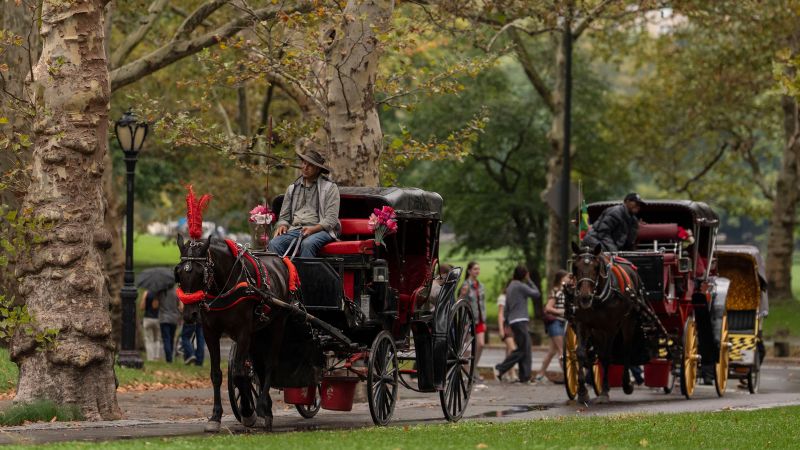
Sandego.net – A New York City tradition that has carried visitors around Central Park for more than a century and a half is approaching its final stretch. City lawmakers were expected to approve legislation Thursday that would prohibit horse-drawn carriage rides by June 2028, leaving drivers to confront an uncertain future and reopening a long-running dispute over the animals’ place in one of the city’s busiest public spaces.
The proposed ban follows the death of 18-year-old Indian tourist Romanch Mahajan, who died last spring after jumping from a runaway carriage during a ride. His death appeared to be the first fatal accident connected to a Central Park horse carriage since the service began.
For animal welfare advocates and members of Mahajan’s family, the measure represents a long-sought change. For the people who drive the carriages, however, it threatens to erase a specialized livelihood without a clear path forward.
Drivers Ask What Comes After the Ban
More than 150 carriage drivers remain in the industry, and many say their central concern is not simply the loss of a job but the fate of the horses and small businesses tied to it.
Alexus Lawson, a 28-year-old driver from Queens, grew up around horses and has also worked as a riding instructor. She worries about caring for 7-year-old Starlight and the other horses in her life if carriage work disappears.
“No one can come up with an appropriate answer because there is none.”
“Without a job, how can I take care of my horses?”
The bill directs Mayor Zohran Mamdani’s administration to prepare a transition plan by next April. That plan is intended to support displaced drivers through career counseling and referrals to available work in fields including transit, hospitality and taxis. The measure also permits the city to weigh compensation for workers affected by the shutdown.
A spokesperson for the mayor said City Hall is developing a more detailed workforce-transition proposal and has begun conversations about possible compensation. Mamdani has said the city has a civic duty not to abandon workers during the change.
Yet carriage drivers say the outline does not answer the immediate practical questions: how long new employment may take to secure, how much income could be lost during the transition, and whether alternative work can replace a business built around the carriages.
Christina Hansen, a longtime driver and spokesperson for the industry, said the proposal does not provide a sufficient route to continued employment or business stability.
“It does nothing for alternate employment, for the continuation of our businesses.”
“Who’s going to pay my rent while I’m looking for a job?”
An Industry Already Shaken by Change
Medet Fidan, 56, said the prospect of losing carriage work feels especially difficult after his previous career was disrupted by ride-hailing services. A former taxi driver, Fidan moved from behind the wheel to handling reins after app-based transportation altered the taxi business.
“I think the city is leaving us a big mess.”
“We’re going to lose our businesses, we’re going to lose our jobs, we’re going to lose our livelihoods.”
The union representing carriage drivers has promised to challenge the legislation in court as soon as it becomes law. Its expected legal action could extend the debate even as the city begins planning for a 2028 end date.
Council Speaker Julie Menin has said she will continue to participate in the transition process. Her office argues that setting a deadline compels City Hall to address the prolonged uncertainty surrounding drivers who would be displaced.
“These workers deserve to be protected,” Menin said Thursday.
At the same time, Menin said horse carriages no longer fit within a park shared by walkers, cyclists, people walking dogs and large numbers of tourists. The issue has long placed the city’s attachment to a recognizable attraction against concerns about safety, animal treatment and the realities of a crowded urban park.
A Renewed Push After a Family’s Loss
Mahajan’s relatives have urged the city to end the rides, describing their grief and their belief that the attraction had seemed safe. At a Thursday rally, his uncle Gaurav Mahajan joined lawmakers and animal welfare advocates in support of the proposal.
“The hour of justice has finally arrived.”
“We’re turning our shattering loss into an unbreakable shield of kindness for the city. For months, our family hasn’t been allowed to just grieve.”
“We’ve had to fight. We’ve had to channel our devastating sorrow into a war for change.”
Drivers have voiced sympathy for Mahajan’s family while maintaining that an entire industry should not be dismantled because of one accident. That disagreement lies at the heart of the dispute: whether the tragedy demonstrated a risk inherent in the activity or an exceptional event that should not determine the future of every carriage operator.
Past Efforts Failed to End the Rides
New York has considered eliminating horse-drawn carriages before. Two earlier mayors supported ending the industry but were unable to make it happen.
Bill de Blasio entered office after campaigning to halt carriage rides on his first day as mayor. His effort eventually lost momentum amid opposition from unions and a high-profile media campaign that included actor Liam Neeson. Eric Adams later raised the possibility of a ban near the end of his own administration, but that proposal did not advance.
President Donald Trump also criticized the planned ban. Trump Tower stands close to Central Park, and he described the rides as part of the city’s character.
“It was a Great Tradition. Another piece of History that’s gone. It will be missed!”
With the expected Council vote, the policy debate is now shifting from whether the city should end carriage rides to how it will manage the consequences. By June 2028, one of Central Park’s most familiar scenes may disappear. Before then, the city faces pressure to provide drivers with meaningful options, address questions around compensation and ensure that the people whose work depends on the industry are not left without support.
Related Reading
Frequently Asked Questions
What is Facing a ban on horse drawn?
Facing a ban on horse drawn is the main topic of this guide. The article explains the context, practical details, and next steps readers should understand.
Why does Facing a ban on horse drawn matter?
Facing a ban on horse drawn matters because readers are looking for a useful answer, not just a short summary. Good content should match search intent and help them decide what to do next.