A lifelong sleep disorder finally had a name
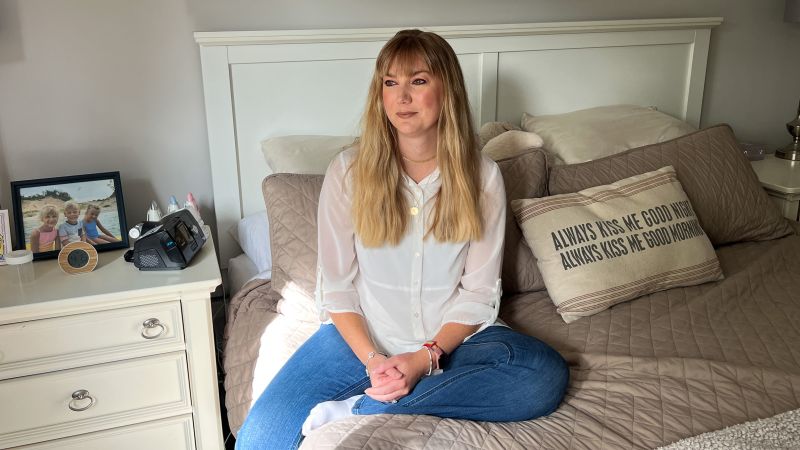
Sandego.net – For much of her life, Amy Clifton struggled with exhaustion so severe that it shaped her childhood, relationships and sense of self. She also experienced frightening nighttime visions, sudden weakness triggered by emotion and an inability to stay awake during the day. It took almost 30 years for those symptoms to be recognized as type 1 narcolepsy.
Amy, now a mother of three with a supportive husband, had reached a point of profound despair before receiving effective care. At times, she believed the people closest to her might be better off without her.
“My kids would cry and say, ‘Mommy, are you ever going to have enough energy to play with us again?’”
She said the question deepened her feelings of hopelessness. The fatigue was not ordinary tiredness, yet for years it was misunderstood by people around her and by medical professionals.
Early symptoms were repeatedly dismissed
Amy’s sleep difficulties began when she was 4 years old. Insomnia, nightmares and crushing daytime sleepiness followed her into school. In elementary classrooms, adults labeled her lazy rather than considering that a medical condition could be behind her struggle to remain awake.
As a teenager, sleep deprivation contributed to irritability and mood changes. Those symptoms were attributed to hormones, and her pediatrician prescribed birth control. The terrifying experiences she had while falling asleep or waking up were treated as childhood sleep terrors instead of clues to a neurological sleep disorder.
She recalled hearing voices near her bedroom window and seeing strange lights, shadows and figures in her room. The episodes felt real until they passed, leaving her frightened and questioning her own sanity.
“I was terrified, and when I would finally realize they weren’t real, I was like, ‘Am I going insane? Why am I seeing these things that aren’t here?’”
Those experiences are now understood as hypnagogic hallucinations, which can occur as a person transitions between wakefulness and sleep. In type 1 narcolepsy, the brain lacks enough orexin, a chemical involved in maintaining stable sleep and wake states. That instability can leave someone feeling partly asleep and partly awake.
Weakness caused by emotion was another overlooked sign
Amy also had cataplexy, a defining feature of type 1 narcolepsy. Strong feelings, including laughter or surprise, could abruptly weaken her muscles. She has partial cataplexy, meaning the effect involves certain muscles rather than causing complete immobility.
“My grip would fail suddenly, and I would drop things,” Amy said. “My body froze when I heard a loud noise, and when I laughed, my head would nod and my knees would buckle.”
She learned to grab onto something when an episode began so she would not fall. Despite the combination of overwhelming sleepiness, hallucinations and emotion-related weakness, no doctor connected the symptoms for years.
The impact extended well beyond fatigue. Narcolepsy can interfere with work, driving, parenting and other daily responsibilities. For Amy, the lack of an explanation made the condition still more isolating.
A misdiagnosis added to the burden
At 29, Amy was hospitalized after suicidal thoughts became severe. Specialists interpreted her hallucinations and sleepiness as bipolar 2 disorder. Medication intended for that diagnosis did not relieve her suffering and instead left her feeling detached and heavily sedated.
“The medications they gave me for bipolar made me feel like a zombie,” Amy said.
She feared she was becoming less present as a mother and wife. Her husband, Peter Clifton, watched her lose hope and encouraged her to continue seeking help.
“She lost the will to experience life,” Peter said. “I had to remind her, ‘Remember to keep fighting, remember to keep going.’”
Marriage brought the symptoms into clearer view
Amy and Peter met at a Christian liberal arts college in Michigan. She was a freshman, while he was a junior. He knew she took frequent naps and sometimes had nightmares, but the seriousness of her symptoms became far more apparent after they married.
On the first night of their honeymoon in the US Virgin Islands, Amy woke in terror and punched Peter in the face. Peter remembered smiling at her as she drifted off before she suddenly sat up and struck him. Amy believed she saw an intruder standing in the corner of the room. She tried to call out but could not move, another experience associated with narcolepsy-related sleep paralysis.
“When I was able to move and saw Peter leaning over me, I was so freaked out that I punched him in the nose,” Amy said. “I felt horrible about it!”
For years, the story became a humorous memory shared at social gatherings, although neither of them knew why the vision had occurred. They now recognize it as part of Amy’s recurring hypnagogic hallucinations.
Peter said the episodes occur on most nights. Earlier in their marriage, he would search their home after Amy became frightened, his own adrenaline rising as he checked each room. With a better understanding of what was happening, their response has changed. They can turn on a light, recognize that no threat is present and return to sleep more calmly.
“I’m not ‘SEAL Team Six’ going through the house clearing every room anymore,” Peter said.
Why recognition matters
Amy’s experience shows how symptoms that appear separate can conceal a single underlying condition. Daytime sleepiness may be mistaken for a lack of motivation. Hallucinations may be viewed solely through a mental-health lens. Muscle weakness may be treated as an unrelated problem. Taken together, however, those signs can point toward type 1 narcolepsy.
Her long path to a diagnosis also underscores the consequences of delayed recognition. A disorder that affects sleep can reach into emotional health, family life, safety and a person’s ability to participate fully in the world. For Amy, finally identifying the cause of her symptoms offered a framework for treatment and a way to understand experiences that had frightened her since childhood.
Related Reading
Frequently Asked Questions
What is For decades no one could explain?
For decades no one could explain is the main topic of this guide. The article explains the context, practical details, and next steps readers should understand.
Why does For decades no one could explain matter?
For decades no one could explain matters because readers are looking for a useful answer, not just a short summary. Good content should match search intent and help them decide what to do next.