Paris Fashion Week Builds Momentum With Big Ideas and Bigger Spectacle
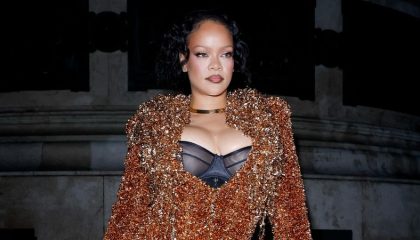
Sandego.net – Paris Fashion Week has moved into high gear, bringing together experimental newcomers, global luxury houses and the familiar frenzy that surrounds the season’s most watched runway events. Rihanna has been in the city, crowds have gathered outside venues to cheer for celebrity arrivals, and the calendar still holds days of presentations across the French capital.
The opening stretch offered a contrast between emerging voices and established fashion institutions. Monday put attention on newer designers, including the creative pair behind Matières Fécales, Swedish talent Ellen Hodakova Larsson and LVMH Prize recipient Julie Kegels. By Tuesday, Dior and Saint Laurent had raised the scale with major productions and polished collections, while Maison Margiela delivered another characteristically unruly statement.
Maison Margiela Pushes Against Conventional Beauty
Maison Margiela, the cult label closely associated with the split-toe tabi shoe, staged its latest show in an environment of fading flowers. The decaying floral backdrop gave the room a faintly off-kilter atmosphere, fitting the approach of designer Glenn Martens.
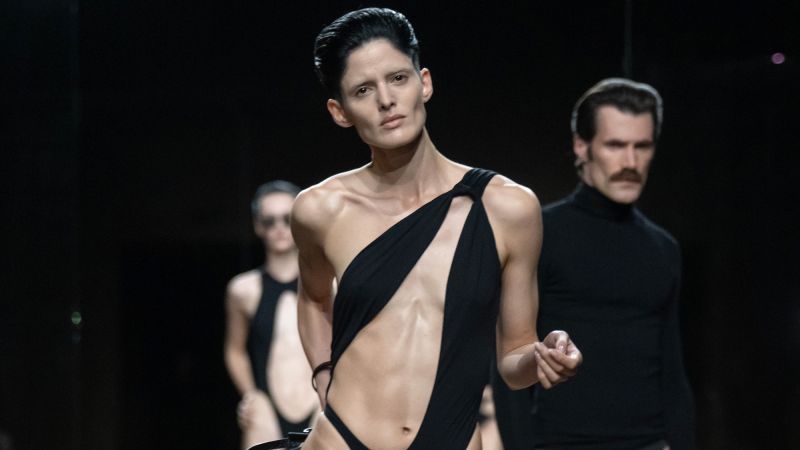
Martens continued to challenge familiar ideas of what attractive clothing should look like. Models appeared in knee-high boots without toes, sharply built blazers, and shirts cut so the torso was left dramatically exposed. Floral motifs created additional visual tension by colliding with the scenery behind the runway.
The effect was not simply decorative. Margiela’s presentation treated clothes as a means of unsettling expectation: tailoring could be elegant but distorted, and flowers could read as both romantic and slightly eerie. It was one of the week’s clearest examples of fashion using discomfort as an expressive tool.
Rick Owens Turns the Palais de Tokyo Into Another World
Rick Owens once again used the sloping route that begins above the Palais de Tokyo and extends over its fountain. The location gives every procession a cinematic quality, with models seeming to descend from a distant spacecraft rather than walk a conventional catwalk.
That sense of otherworldliness became even stronger on Thursday. Owens sent out prismatic tentacle-like dresses, made by threading tulle detailing through elastic cords. As the models moved, the cords bounced and shifted, allowing the garments to animate themselves in motion.
The show demonstrated how a runway setting can become part of a collection’s meaning. Owens’ clothes were not isolated objects: their unusual silhouettes, movement and monumental surroundings worked together to produce a vision that felt part fashion, part performance and part science-fiction scene.
Issey Miyake Finds Drama in Air and Movement
At Issey Miyake, lead womenswear designer Satoshi Kondo considered a different question: can clothing do more than outline the person wearing it? Since taking on the role in 2019, Kondo has explored form and material with an emphasis on movement, and Friday’s presentation placed air itself at the center of the idea.
The show opened with a five-minute interpretive dance created by choreographer Tess Voelker. She and her collaborators manipulated a huge piece of pink fabric that expanded into a mushroom-cloud-like form when it filled with air, then folded and deflated as the dancers controlled it.
That theatrical beginning led into three final looks that translated the concept into wearable pieces. Two nearly weightless jackets and a skirt, all constructed from nylon yarn, featured drawstring hems designed to catch the wind. The designs suggested that a breeze on a daily journey could become an active element of an outfit rather than something to resist.
Balenciaga’s New Direction Takes Shape
Pierpaolo Piccioli’s latest Balenciaga collection included acid-bright City Bags, enlarged cummerbunds, capes and inflated flowers shaped into neck braces. More than a year into his tenure at the house, the Italian designer’s direction remains visibly distinct from the sharper, frequently satirical approach associated with Demna’s period at the brand.
One seemingly simple look captured that shift. A boxy rose-colored shirt, close in tone to the vivid pink long connected with Piccioli’s work at Valentino, initially resembled an ordinary office button-down. It had turned-up cuffs and a chest pocket. When the model turned, however, a hood built into the shirt became visible.
The shirt-and-hood combination had appeared in the previous era of Balenciaga, though in far darker colors. Here, the familiar hybrid was reframed through a brighter, more romantic palette, showing how a single garment type can carry very different moods under a new creative vision.
Chloé Revisits the Archive Through Chemena Kamali’s Lens
Chemena Kamali drew directly on her growing fascination with Chloé’s history for the house’s newest collection. After three years with the brand and extensive time spent studying its archive, certain pieces have remained particularly important to her.
Among them was the 1972 “Noel” suit, originally created by Karl Lagerfeld. Kamali reinterpreted its tailoring on Thursday, layering it over decorative lingerie harnesses. The pairing brought together a precise archival reference and a deliberately more intimate, frilled styling language.
The collection’s most immediately appealing proposition came from 1950s rain macs. Kamali transformed that reference into transparent vinyl outerwear in pink and smoky gray, with rolling Inverness capes worn over trench coats and highly embellished dresses. Scarlet and classic yellow rain slickers supplied a more practical-looking counterpoint, each matched with an oversized sou’wester hat.
Even so, the footwear remained firmly in fashion territory: models wore slingback pumps instead of rain boots. The contrast underscored Chloé’s approach to utility this season, where weather-ready clothing was treated less as protective equipment than as a glamorous layer with its own sense of drama.
A Jazz-Club Setting at the Louvre
Daniel Roseberry transformed a basement space at the Louvre into the setting of an affluent jazz club. Black velvet curtains, cream-and-black carpeting, chandeliers and bistro tables illuminated by lamps created an intimate evening atmosphere for guests.
The room provided a natural backdrop for clothes intended for a memorable night out. Across Paris, the week has repeatedly shown how setting, silhouette and storytelling are being used together. Whether designers are working with air, archive pieces, distorted tailoring or theatrical environments, the strongest presentations are asking viewers to see clothing as more than a finished product.
With more shows still ahead, Paris Fashion Week remains a place where competing ideas about beauty, wearability and spectacle can meet on the same schedule. The early highlights have made one thing clear: this season’s most compelling collections are not content merely to dress the body. They are trying to reshape the space around it.
Related Reading
Frequently Asked Questions
What is Here s what s happening at Paris?
Here s what s happening at Paris is the main topic of this guide. The article explains the context, practical details, and next steps readers should understand.
Why does Here s what s happening at Paris matter?
Here s what s happening at Paris matters because readers are looking for a useful answer, not just a short summary. Good content should match search intent and help them decide what to do next.