
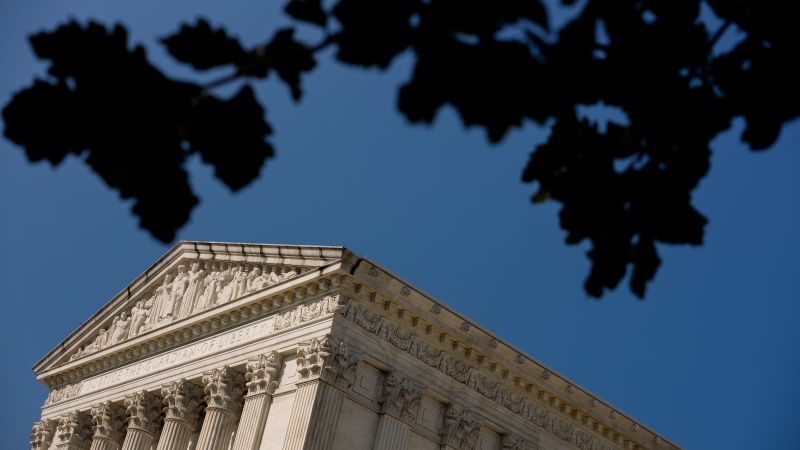
Supreme Court Takes Up Challenge to Trump’s No-Bond Detention Policy
Sandego.net – The Supreme Court will examine whether the Trump administration may require detention without bond hearings for people who entered the United States illegally, placing a major immigration enforcement dispute on the court’s docket as its new term approaches.
The justices agreed Thursday to hear an appeal involving an Immigration and Customs Enforcement policy that has become one of the administration’s most forceful immigration measures. The case will test the administration’s reading of a federal immigration statute enacted during the 1990s and could shape how long many migrants can be held while their cases move through the immigration system.
President Donald Trump returned to office in 2025 and adopted an interpretation that departed from decades of prior practice. That change also differed from the approach used during Trump’s first administration. Under the newer position, people found to be in the country illegally can be placed in mandatory detention without receiving a hearing to seek release on bond.
A central immigration case for the new term
The court’s decision to accept the dispute ensures that immigration will be a prominent issue when the term begins next week. The justices are already considering a separate election-related appeal involving state efforts to address noncitizen voting. Together, the cases place politically consequential questions about immigration and citizenship at the forefront of the court’s work.
At issue is not simply whether immigration authorities can detain people during removal proceedings. Federal law has long included detention provisions, and immigration enforcement officials have broad responsibilities involving people accused of violating immigration rules. The sharper legal question is whether the statute requires detention without an opportunity for an individual hearing on release, even in circumstances where bond hearings had commonly been available in the past.
A bond hearing generally gives a detained person a chance to ask an immigration judge to consider release while the underlying case continues. Such decisions may involve questions including whether the person is likely to appear for future proceedings and whether release would create public-safety concerns. The administration’s policy at the center of the Supreme Court case would prevent those hearings for the group covered by its interpretation of the law.
Detention population rose sharply after the policy shift
The practical impact of the administration’s approach has been reflected in the number of migrants held by immigration authorities. At the end of the Biden administration, the detention population stood at just under 38,000 people. By this past summer, the number had climbed above 65,000.
That increase illustrates why the case has significant consequences beyond a technical disagreement over statutory language. Detention affects migrants as they prepare immigration claims and wait for hearings, while also increasing the pressure on the government’s detention system. A ruling affirming the administration’s position could reinforce its ability to continue using mandatory custody without bond hearings for affected migrants. A ruling against the policy could require a different process and restore access to individual bond determinations for at least some people currently subject to detention.
The Supreme Court has not yet decided the merits of the dispute. Its agreement to review the appeal means the justices will receive legal arguments from the parties and consider how the immigration law should be read. The eventual opinion will determine whether the administration’s interpretation can stand.
Why the wording of the law matters
Immigration cases before the Supreme Court frequently turn on the exact language Congress used and the limits of executive authority in applying that language. In this case, the administration maintains that the 1990s law authorizes mandatory detention for people who entered illegally. Those challenging the policy argue that the government’s interpretation goes too far and improperly eliminates bond-hearing protections that had been part of established practice.
The dispute therefore concerns both the scope of federal power and the procedural protections available to people in immigration custody. The court’s analysis may address whether the government can apply mandatory detention based on its current reading of the statute, whether timing or other circumstances affect that authority, and how courts should treat an executive branch interpretation that marks a substantial break from prior administrations.
For people facing immigration proceedings, the distinction is consequential. Cases can take time to resolve, and detention without a bond hearing can mean remaining in custody throughout a significant portion of that process. For immigration officials, the outcome will clarify whether the mandatory-detention policy may remain a central enforcement tool.
What happens next
The case arrives as the administration continues to make immigration enforcement a defining policy priority. The court’s upcoming review will provide a direct examination of one of the most controversial elements of that agenda: the use of detention without an individualized opportunity to request release on bond.
No final timetable for a decision was announced with Thursday’s order granting review. The justices will consider the case during the term that opens next week, and their eventual ruling could have broad effects on detention practices nationwide.
Until then, the administration’s policy remains a focal point in the continuing legal and political debate over immigration enforcement. The Supreme Court’s decision will determine whether the federal government may continue treating the affected group of migrants as subject to mandatory custody without bond hearings under the administration’s interpretation of the law.
Related Reading
Frequently Asked Questions
What is Supreme Court to decide if Trump?
Supreme Court to decide if Trump is the main topic of this guide. The article explains the context, practical details, and next steps readers should understand.
Why does Supreme Court to decide if Trump matter?
Supreme Court to decide if Trump matters because readers are looking for a useful answer, not just a short summary. Good content should match search intent and help them decide what to do next.