A Billion-Dollar Bet on Storytelling: The Lucas Museum Finally Opens Its Doors
Sandego.net – Walk through the sculpted gardens of the newly opened Lucas Museum of Narrative Art in South Los Angeles, and you will find a nineteenth-century plaster cast of Antonin Mercié’s David-and-Goliath composition standing shoulder-to-shoulder with a bronze rendering of Princess Leia choking Jabba the Hutt with a chain. Nearby, Rosie the Riveter turns her face away from both. The juxtaposition is jarring, deliberate, and — according to the institution’s founders — precisely the point.
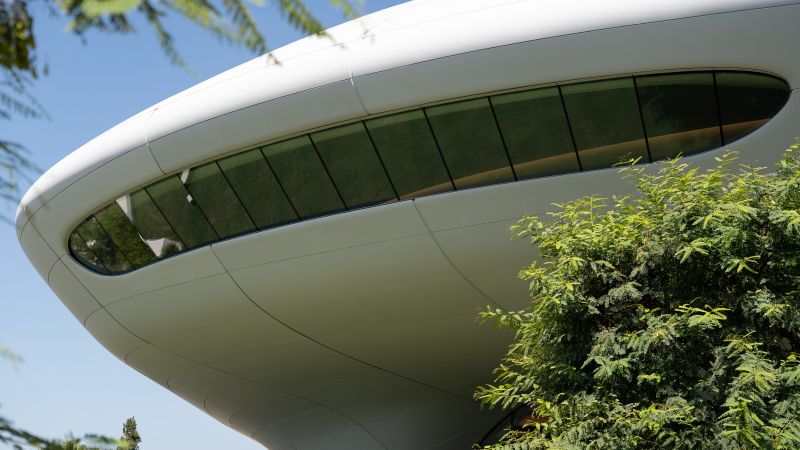
On September 22, filmmaker George Lucas and his wife, business executive Mellody Hobson, will formally welcome the public into what has become one of the most expensive privately funded cultural projects in American history. The museum, perched above Exposition Park in a sinuous white structure designed by MAD Architects and Stantec, represents the culmination of more than sixteen years of planning, two abandoned city sites, and roughly one billion dollars of Lucas’s personal fortune.
Two Cities Rejected, One Billion Spent
The road to Exposition Park was anything but straight. Lucas originally envisioned the project in San Francisco, then pivoted to Chicago before both locations fell through. Each relocation consumed years of permitting, political negotiation, and capital. The final Los Angeles buildout, completed at a cost Lucas estimates at approximately $1 billion, dwarfs even the recently inaugurated Obama Presidential Center, which came in at $850 million.
At a private press preview held on Wednesday, Lucas acknowledged the toll of the endeavor.
“This has been a long haul,” he told reporters. “Part of the problem is I’m a contrarian. I don’t like to do things that people think can be done.”
“This one almost broke my will,” he continued, “but the great people that we’ve assembled to do this has been a big advantage. We still had to deal with bureaucracies and people who have contrary thinking, but we managed to make our way through all that.”
What Fills Thirty Galleries
Inside the 300,000-square-foot complex, visitors encounter more than 1,300 objects distributed across thirty galleries. The holdings draw heavily from Lucas’s private collection, assembled over five decades and spanning fine art, theatrical costumes, film props, and cultural memorabilia. Yet the franchise that made his name occupies a surprisingly modest share of the floor plan: Star Wars material accounts for roughly seven percent of the total display.
The remaining ninety-three percent is where the museum’s thesis lives. Works by Frida Kahlo and Norman Rockwell hang beside photographs by Gordon Parks. Original comic-book pages by Frank Miller share wall space with Impressionist canvases and high-resolution reproductions of Michelangelo’s Sistine Chapel ceiling. Two screening theaters will cycle early silent films, Lucas’s own student-era shorts, productions by Man Ray, and episodes of the anime series Cowboy Bebop.
The curatorial logic, Hobson explained, is that no single tradition holds a monopoly on storytelling’s power.
“Narrative art is important because it depicts the myths that anchor us, the stories that we believe in,” she said during her opening remarks. “They may not necessarily be true, but they unite us as families, as communities, as countries, as nations.”
A Temple to the People’s Art
Lucas has described his namesake institution as “a temple to the peoples’ art,” a phrase that signals his intent to elevate illustrators, animators, comic-book creators, and other practitioners traditionally sidelined by the Western art canon. The approach echoes a broader reassessment underway at major institutions: New York’s Museum of Modern Art and London’s Tate Britain have both rehung permanent collections in recent years, pairing overlooked or marginalized voices with household names to interrogate who gets to define cultural gravitas.
The Lucas Museum pushes further, arguing that an artwork’s significance is shaped not merely by its physical placement but by the conversations it enters. A Banksy mural gains new resonance when hung beside a Renaissance altarpiece; a Star Wars concept sketch acquires historical weight when framed within a five-thousand-year survey of visual narrative.
Clouds, Not Spaceships
The building itself invites comparison to a hovering spacecraft, its undulating white envelope floating above the park’s tree line. MAD founder and project architect Ma Yansong, however, insists the formal language derives from meteorology rather than science fiction.
“The building is actually less about shape, and more about the experience inside the space,” Yansong explained at the press preview. “I wanted to make the central plaza very spiritual, everyone (who) goes there can imagine something very different.”
That ambition permeates the interior. Futuristic tube-like elevators whisk visitors between floors. A late addition to the program — a top-floor exhibition of original Banksy murals, some of which staff had not yet seen before the preview — underscores the institution’s restless, ever-expanding appetite.
The Downstairs Question
Ground-level visitors encounter the “History of Narrative Art” exhibit, a chronological sweep that reads less like a traditional art survey and more like a natural-history walkthrough, as though non-human observers were being introduced, specimen by specimen, to the full range of human creative output displayed behind glass portals. The scale of the undertaking — organizing, interpreting, and contextualizing every storytelling tradition from cave painting to digital animation under one roof — is, by any measure, unprecedented.
For Los Angeles, the museum arrives at a moment when the city is actively courting global cultural tourism and competing with established arts capitals for institutional prestige. Whether the Lucas Museum’s radical eclecticism will attract the broad, curious audiences its founders envision, or whether it will be dismissed as a billionaire’s eccentric hobby, remains to be seen. What is certain is that no other institution in the world has attempted to place a comic-book panel, a silent-film reel, and a Renaissance fresco in the same sentence — and then ask the visitor to take all three seriously.
Related Reading
Frequently Asked Questions
What is Three cities 16 years and 1 billion?
Three cities 16 years and 1 billion is the main topic of this guide. The article explains the context, practical details, and next steps readers should understand.
Why does Three cities 16 years and 1 billion matter?
Three cities 16 years and 1 billion matters because readers are looking for a useful answer, not just a short summary. Good content should match search intent and help them decide what to do next.