DOJ Subpoenas Hit Nevada Voter Data Before Midterms
Sandego.net – The Justice Department has issued subpoenas directed at Nevada’s election office, pulling voter-level records straight from the state’s secretary of state. Seven separate subpoenas, routed through the FBI over roughly three months, request information from the office that administers ballots, registrations, and candidate filings across the Silver State. The move marks the latest escalation in a sustained federal effort to insert itself into the day-to-day operations of state-run elections — functions that, under the traditional constitutional division of labor, have long rested with governors, secretaries of state, and county clerks.
Nevada Secretary of State Francisco Aguilar, a Democrat, confirmed the subpoenas on Friday. His office stated it had received “seven voter-related DOJ subpoenas from the FBI over the last three months.” Neither the precise scope of the data sought — individual voter records, registration timestamps, or ballot-transport logs — nor the underlying investigative theory was disclosed. Both the Department of Justice and Aguilar’s office were reached for comment but had not supplied additional detail as of publication.
Aguilar Casts the Subpoenas as Pre-Election Pressure
Far from treating the requests as routine discovery, Aguilar framed them as part of a broader pattern of federal overreach designed to destabilize state election offices before voters head to the polls this fall. In a written statement he described the administration’s posture as intimidation wrapped in investigative language.
“The federal administration is inundating election offices with investigations and questions ahead of the election, and making sweeping claims of election fraud to the public before any investigation is done,” Aguilar said. “We will continue standing up for Nevada voters and remain focused on running a safe, secure and transparent election this fall.”
His remarks land against a backdrop in which the administration has repeatedly asserted, without producing documentary proof, that widespread voter fraud is occurring in multiple states. Nevada, with its large population of mail-ballot voters and its history of high turnout in presidential cycles, has become a particular focus of those assertions.
A Wider Pattern of Federal Intrusion Into State Election Functions
The Nevada subpoenas do not exist in isolation. Earlier this year, federal agents searched the elections office in Fulton County, Georgia — the same office at the center of Trump’s long-running, unsubstantiated claim that the 2020 presidential contest was stolen. That search drew immediate criticism from state officials and civil-liberties groups, who noted that no prior indictment or court order had been made public before agents entered the building.
This week, the Department of Homeland Security announced an accelerated investigation into alleged voter fraud across nine states, with Nevada among them. DHS has separately pressured state governments to hand over their voter rolls for federal audit and has threatened to withhold grant funding from any state that declines to adopt a sweeping package of election reforms the department has outlined. The combination of audit demands, funding leverage, and active investigations gives the federal government an unusually broad toolkit for shaping how states administer their own elections.
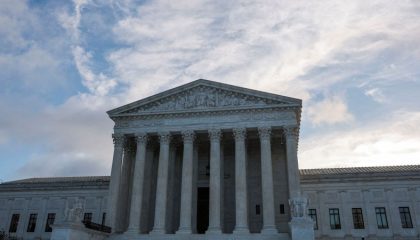
On Thursday, the administration took the matter to the Supreme Court, asking the justices to grant the United States Postal Service sweeping authority to withhold delivery of mail ballots. The petition sets up a constitutional showdown less than two months before the midterm elections, raising questions about whether a federal agency can effectively delay or suppress ballots in individual jurisdictions.
The Noncitizen Audit: Numbers That Do Not Add Up
One of the administration’s most cited justifications for its election interventions is a DHS audit of public voter rolls that, earlier this summer, identified more than 250,000 registered noncitizens across four states. Nevada’s share of that figure was reported at approximately 16,000 names.
Yet internal records reviewed by journalists reveal a far narrower picture. Behind closed doors, DHS acknowledged to Nevada’s top election officials that it had “confirmed” only 185 of those names as actual noncitizens on the rolls. An additional 6,200 were tagged as “higher confidence matches,” a category that still required further vetting before any action could be taken. The gap between the headline number and the verified count has fueled skepticism about whether the audit’s methodology supports the sweeping interventions now underway.
Frequently Asked Questions
What exactly did the Justice Department subpoena from Nevada? Seven voter-related subpoenas were served on Nevada’s secretary of state over approximately three months. The precise categories of data requested — whether individual voter records, registration timestamps, or ballot-transport logs — have not been publicly disclosed.
Who confirmed the subpoenas, and when? Nevada Secretary of State Francisco Aguilar confirmed receipt on Friday, stating his office had received the seven subpoenas from the FBI over the prior three months.
Is this connected to other federal election actions? Yes. Earlier this year federal agents searched the Fulton County, Georgia elections office. This week DHS announced an accelerated voter-fraud investigation spanning nine states, and the administration petitioned the Supreme Court for authority to withhold mail-ballot delivery via USPS.
What did the DHS noncitizen audit actually confirm for Nevada? Although the audit’s headline figure placed roughly 16,000 Nevada names on its list, internal records show DHS confirmed only 185 as verified noncitizens, with an additional 6,200 flagged as “higher confidence matches” still requiring vetting.