
Kalshi Issues Its First-Ever Lifetime Ban as Prediction Markets Face Insider-Trading Backlash
Sandego.net – The prediction-market industry crossed a threshold it had not previously reached when Kalshi announced on Monday that it would permanently bar former Representative George Santos from trading on its platform. The sanction marks the first lifetime ban in the company’s history and lands amid a wave of scrutiny over how candidates and political operatives exploit their informational advantages in markets that now process billions of dollars in weekly volume.
The Santos ban is not the only action Kalshi took that day. The company also suspended North Carolina congressional candidate Laurie Buckhout for three years after she admitted wagering on the outcome of her own campaign. Together, the two cases represent the most visible examples yet of what critics call political insider trading — the practice of placing bets on markets where the trader possesses non-public knowledge or can shape the very event being wagered upon.
The Santos Ban and Its Backdrop
Santos’s lifetime ban traces to insider bets he placed earlier this year regarding his potential appearance at the State of the Union address. The timing and specificity of those wagers drew the attention of both Kalshi’s internal compliance team and federal regulators.
The former congressman’s path to this moment has been turbulent. He was expelled from the House in 2023 amid a separate fraud investigation, subsequently served time in federal prison, and was released early last year following a commutation granted by President Donald Trump. His re-entry into public life has been marked by continued legal and reputational battles.
The Commodity Futures Trading Commission, which oversees prediction markets at the federal level, announced a settlement with Santos in July. That resolution imposed a $17,500 fine and closed the agency’s probe into his trading conduct.
Santos reacted to the lifetime ban with characteristic bluntness on social media.
“Hey @Kalshi thanks for the lifetime ban from your gambling platform. Let’s see how much longer you guys are around for,” Santos posted on X on Monday.
His comment pointedly invoked the unresolved regulatory question over whether platforms like Kalshi should be treated as state-regulated gambling operations or as federally supervised financial markets. That jurisdictional fight remains active and could reshape the entire industry’s compliance architecture.
Buckhout’s Self-Bet and a Competitive District
Laurie Buckhout, a retired Army colonel running for North Carolina’s 1st Congressional District, told reporters she had placed a wager on her own campaign’s outcome. She characterized the decision as a “dumb mistake” and said she moved to correct the situation as soon as she learned a rule had been violated.
“I bet on myself. Literally,” Buckhout said. “It was a dumb mistake, and as soon as I learned there was an issue, I worked to make it right. Safe to say my career as a Kalshi trader was short-lived.”
Kalshi’s legal filing noted that Buckhout traded less than $1,000, cooperated fully with the company’s internal investigation, and would receive a three-year suspension rather than a permanent ban. Bobby DeNault, the platform’s head of enforcement, confirmed that all parties involved except Santos had cooperated with compliance inquiries and would face temporary bans.
“All but one individual (George Santos) cooperated with our Compliance Department inquiries and will be banned temporarily,” DeNault said.
The Buckhout case is the first publicly known instance of a sitting congressional nominee caught betting on her own race. The stakes are amplified by the district’s profile: North Carolina’s 1st covers a largely rural stretch of eastern North Carolina and has been held by Democratic Representative Don Davis since 2023. Republican state legislators redrew the district’s boundaries last year as part of a nationwide push for GOP-favorable redistricting ahead of the midterms. The Cook Political Report now classifies the seat as “Lean Republican,” making it one of the party’s strongest opportunities to flip a House seat.
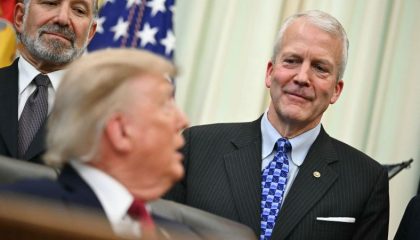
Buckhout has drawn significant party support. President Trump has endorsed her, and she was among the earliest candidates selected for the National Republican Congressional Committee’s “MAGA Majority” program, which spotlights recruits targeted at Democratic-held districts. She previously ran against Davis in 2024 and lost by fewer than two percentage points before the district was redrawn. Last year she held a brief position at the Department of Defense before launching her current campaign.
Political Fallout and Broader Implications
Democratic operatives moved quickly to weaponize the disclosure. Representative Don Davis, Buckhout’s opponent, called her conduct “a disqualifying breach of public trust” and accused her of treating the campaign as “an opportunity to cash in.” Madison Andrus, spokeswoman for the Democratic Congressional Campaign Committee, went further in a written statement.
“There is no chance she can be trusted as an ethical representative for North Carolina families,” Andrus said.
The two cases arrive at a moment when prediction platforms such as Kalshi and Polymarket have surged in popularity, letting users wager on elections, sports, entertainment, and geopolitical events. Weekly trading volumes now reach into the billions of dollars. Earlier this year, Kalshi suspended three lesser-known political candidates from both parties for comparable conduct, signaling that the company intends to enforce its rules across the political spectrum.
Industry leaders and federal regulators have publicly pledged to tighten oversight of insider trading and market manipulation on these platforms. Yet the Buckhout and Santos episodes underscore how quickly the practice can spread once candidates and staffers treat prediction markets as extensions of their own campaigns. For voters watching the midterms, the question is no longer whether political actors will trade on these markets, but whether the platforms and regulators can detect and punish violations before they distort the very elections they are meant to reflect.
Related Reading
Frequently Asked Questions
What is George Santos becomes first person to get?
George Santos becomes first person to get is the main topic of this guide. The article explains the context, practical details, and next steps readers should understand.
Why does George Santos becomes first person to get matter?
George Santos becomes first person to get matters because readers are looking for a useful answer, not just a short summary. Good content should match search intent and help them decide what to do next.