Supreme Court Sidesteps Ballroom Legality Question, Lets Trump Push Forward on White House Expansion
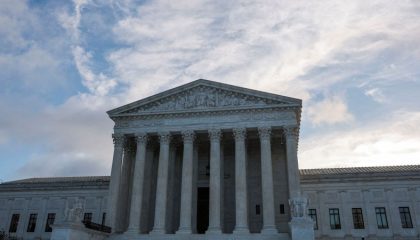
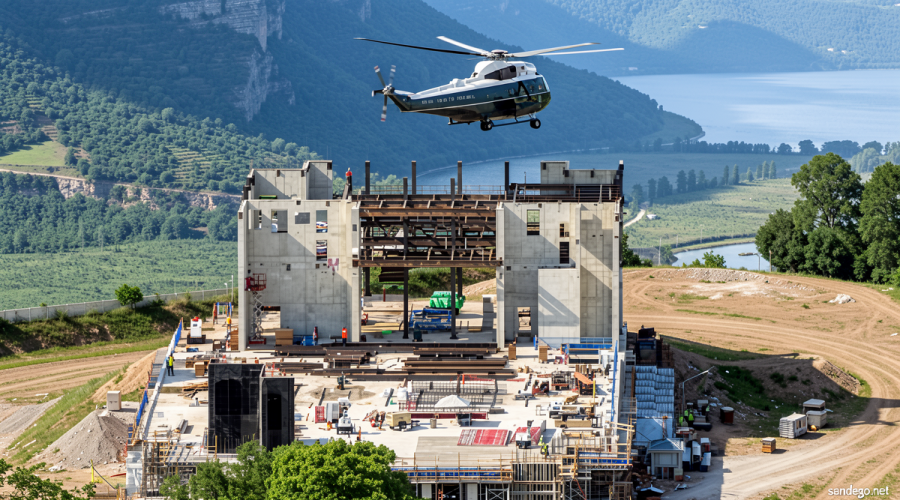
Sandego.net – President Donald Trump received a decisive green light on Monday to press ahead with construction of a nearly 90,000-square-foot ballroom attached to the White House, after the Supreme Court dismissed a preservation group’s attempt to freeze the project indefinitely. The 5-4 ruling, however, stopped short of answering the central question that has consumed Washington’s legal world for months: whether the administration actually has the legal authority to tear down the East Wing and erect a gilded ceremonial complex on the site without congressional authorization.
Instead, the conservative majority resolved the case on procedural grounds. In an unsigned, eight-page opinion, the justices concluded that the National Trust for Historic Preservation likely lacks Article III standing to bring the challenge at all. By narrowing the dispute to a question of who may sue, the court effectively handed Trump the time and momentum needed to complete most of the structure while parallel litigation grinds through lower federal courts.
The Standing Ruling and What It Means
The preservation group had anchored its standing claim to the experience of one of its members, Alison Hoagland, an architectural historian who argued that her appreciation of the White House as a historic structure is being concretely harmed by the demolition and reconstruction. The majority was unmoved. The opinion stated that the court has “repeatedly held that mere offense, disagreement, or distaste does not qualify as a concrete and particularized injury” sufficient to open the courthouse doors.
“Today, we do not pass upon the legality of the government’s East Wing project. We conclude only that, based on the submissions before us, the government is likely to prevail in showing that the Trust lacks Article III standing to challenge the project.”
That language — deliberately hedged with “likely” and “based on the submissions before us” — signals that the justices left the door ajar for future litigation. The lower courts, including the D.C. Circuit, remain free to revisit both the standing question and the underlying merits.
Roberts’ Dissent: A History Lesson in Disagreement
Chief Justice John Roberts, writing for himself and the court’s three liberal justices, produced a dissent that read less like a legal brief and more like a lecture on American civic memory. Roberts called the construction “likely unlawful” and warned that the majority’s narrow reading of the plaintiff’s injury allowed what he saw as an executive overreach into congressional prerogatives to proceed unchecked.
“The White House is not just any building. In failing to appreciate as much, the court misconceives the plaintiff’s injury, allowing the executive’s likely infringement of the legislature’s power of the purse and authority to regulate federal property in the District of Columbia to continue.”
Roberts invoked Winston Churchill’s famous observation that people “shape our buildings, and afterwards our buildings shape us,” arguing that the maxim was “all the more reason to ensure that those responsible follow the rules in deciding what to tear down and and what to build up at the People’s House.” The dissent framed the ballroom not as a private preference of a sitting president but as a transformation of a national symbol whose stewardship belongs to Congress, not to the occupant of the Oval Office.
The Emergency Docket and Trump’s Shadow-Court Strategy
The ballroom decision is the latest in a string of favorable rulings Trump has collected on what critics call the “shadow docket” — the emergency, expedited track through which the president can seek same-day or next-day Supreme Court review of lower-court orders. During his first term, Trump appointed three justices, creating the conservative supermajority that now routinely grants certiorari on these fast-track petitions.
Those emergency wins have, in aggregate, allowed the administration to reshape federal agencies, upend immigration enforcement frameworks, and advance other initiatives that district and circuit courts had temporarily blocked. The ballroom case fits that pattern: a lower court had issued a stay, and the president escalated to the full court within days.
A Broader Campaign of Architectural Imposition
The ballroom is not an isolated project. Trump has inserted himself personally into a series of construction and renovation efforts around Washington, including a triumphal arch, alterations to the Lincoln Memorial reflecting pool, and a planned overhaul of the Kennedy Center. Each has drawn its own legal challenge. Critics maintain that the White House is not the personal property of whoever occupies it, and that dismantling the East Wing to make way for a gilded ceremonial space required congressional approval that was never sought.
The D.C. Circuit, sitting en banc in a 2-1 split, had ruled against the administration earlier this month on the merits of that argument.
“Whether or not a massive ballroom should be constructed is for Congress to decide and is not a matter for Executive self-help.”
That circuit opinion now sits in tension with the Supreme Court’s procedural dismissal. The justices did not overrule the D.C. Circuit’s merits reasoning; they simply declined to reach it because, in their view, the plaintiff before them could not show a cognizable injury. Future plaintiffs with different factual postures may yet force the court to confront the constitutional question directly.
Trump’s Reaction and the Road Ahead
The president took to social media Monday evening to celebrate the ruling, describing himself as “pleased” and declaring the legal matter fully settled.
“I am pleased to report that the United States Supreme Court has just ruled in favor of the Ballroom/Military Complex being built without any further contingency, doubt, or threat.”
He labeled the preservation group’s lawsuit “baseless” and pledged that the finished structure would be “one of the Greatest ever constructed in Washington, D.C.” Trump has long described the ballroom as the cornerstone of his presidential legacy, arguing that its state-of-the-art defensive features make it a national-security necessity rather than a vanity project.
With the Supreme Court’s procedural barrier removed, construction crews are expected to accelerate work through the fall and winter. The lower-court litigation, meanwhile, will continue in parallel — a reminder that the justices’ Monday opinion resolved who may sue, not whether the project itself can lawfully stand.
Related Reading
Frequently Asked Questions
What is Supreme Court allows Trump to continue?
Supreme Court allows Trump to continue is the main topic of this guide. The article explains the context, practical details, and next steps readers should understand.
Why does Supreme Court allows Trump to continue matter?
Supreme Court allows Trump to continue matters because readers are looking for a useful answer, not just a short summary. Good content should match search intent and help them decide what to do next.