
The White House Ballroom Ruling Marks Another Chapter in Trump’s Supreme Court Emergency Campaign
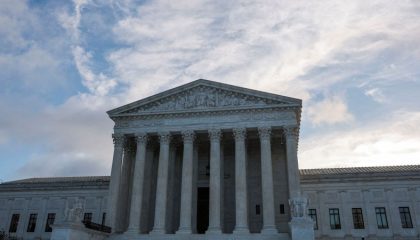
Sandego.net – A 5-4 Supreme Court majority on Monday gave President Donald Trump the green light to press ahead with construction of a sprawling new ballroom at the White House, dismissing a challenge brought by the National Trust for Historic Preservation. The unsigned, eight-page order concluded that the preservation group likely lacked standing to contest the project. It was the latest in a string of favorable rulings the administration has collected from the court’s emergency docket since Trump reclaimed the presidency in January 2025.
The decision, handed down over the objections of the court’s three liberal justices, underscores how quickly the president has been able to reshape federal policy through short-fuse judicial interventions rather than waiting for the slow, deliberative process of the regular merits calendar.
What the Emergency Docket Actually Is
The Supreme Court operates two parallel tracks for reviewing lower-court rulings. The familiar merits docket involves full briefing, oral argument, and opinions that can take well over a year to produce. The emergency docket — a term critics have dubbed the “shadow docket” — works on a compressed timeline. Cases arrive as urgent questions about what should happen to a policy while lower courts still weigh the underlying legal issues. Briefing is minimal, oral argument is typically absent, and the court frequently issues brief orders without explaining its reasoning or even disclosing the full vote count.
Because these rulings are not final merits decisions, they carry a provisional character. Yet their practical effect can be immediate and sweeping: a single unsigned order can keep a construction project moving, preserve an executive action, or freeze a regulation while the full legal battle plays out in lower courts.
A Win Rate That Outpaces the Previous Administration
During his second term, Trump’s Department of Justice has filed an unprecedented volume of emergency appeals with the now 6-3 conservative court. The administration has prevailed in more than 70 percent of those cases, a figure that dwarfs the roughly half-win rate achieved by President Joe Biden during his tenure. The gap reflects both the ideological alignment between the current executive branch and the majority of justices and the sheer volume of filings the Trump team has generated.
In his first year back in office, the president launched what amounted to a sustained barrage of emergency petitions. The tempo slowed noticeably through 2026, though several high-stakes appeals still landed during the summer months. Some of those emergency rulings were later reinforced when the justices addressed the same questions on the regular merits docket; others were effectively overturned when the full court took a different view after extended briefing.
Key Victories Across Policy Domains
The ballroom ruling is the most visible of several recent wins. Earlier in the past year, the court permitted the administration to move forward with a plan assigning the United States Postal Service a supervisory role over mail-in ballots — a structural change that would alter how states administer one of the primary channels for voting by mail. In another matter, the justices allowed a ban on transgender service members in the armed forces to proceed, again over the dissent of the liberal bloc.
Collectively, these orders have enabled the president to wrest operational control from independent agencies, cancel funding streams that Congress had approved, and advance elements of a sweeping immigration enforcement agenda without waiting for legislative action or full appellate review.
The Rare Setbacks
Trump’s emergency record is not spotless, though losses remain uncommon. Perhaps the most consequential defeat came in December, when the court turned down the president’s request to deploy the National Guard into Chicago to provide a protective perimeter around Immigration and Customs Enforcement agents. The ruling signaled that even a 6-3 conservative bench will draw lines around executive military authority in domestic settings.
More recently, the justices rejected the administration’s attempt to remove a senior official at the Library of Congress, a move that would have extended presidential removal power into an institution long understood to enjoy a degree of institutional independence.
Why the Pattern Matters
The cumulative effect of dozens of emergency orders is to compress the timeline between executive action and judicial blessing. Policies that might have faced months of litigation — and potential injunctions — in a more evenly balanced court instead receive near-immediate validation from a majority aligned with the administration’s priorities. For agencies, contractors, and affected individuals, the practical consequence is that the status quo the president seeks becomes the status quo the courts protect, at least temporarily, while the full merits question remains unresolved.
Whether this pattern represents a durable feature of the current court’s operation or a temporary surge tied to one administration’s aggressive filing strategy remains an open question. What is clear is that the emergency docket has become, in practice, one of the most consequential levers of presidential power in the modern era — and that the current occupant of the White House has pulled it with a frequency and success rate unmatched in recent memory.
Related Reading
Frequently Asked Questions
What is Trump keeps stacking up emergency wins?
Trump keeps stacking up emergency wins is the main topic of this guide. The article explains the context, practical details, and next steps readers should understand.
Why does Trump keeps stacking up emergency wins matter?
Trump keeps stacking up emergency wins matters because readers are looking for a useful answer, not just a short summary. Good content should match search intent and help them decide what to do next.