Glacier Ice Releases a Hiker’s Gear After Six Decades of Frozen Silence
Sandego.net – A backpack buried beneath the ice of Austria’s Sulztalferner glacier for more than sixty years has finally surfaced, returning to the hands of its original owner — an 86-year-old climber who was forced to leave it behind in a crevasse during a near-fatal accident in the summer of 1963. The reunion, completed through the man’s son due to his declining health, marks one of the most extraordinary recoveries of personal property tied to alpine mountaineering history.
The Discovery at Nearly 3,000 Meters
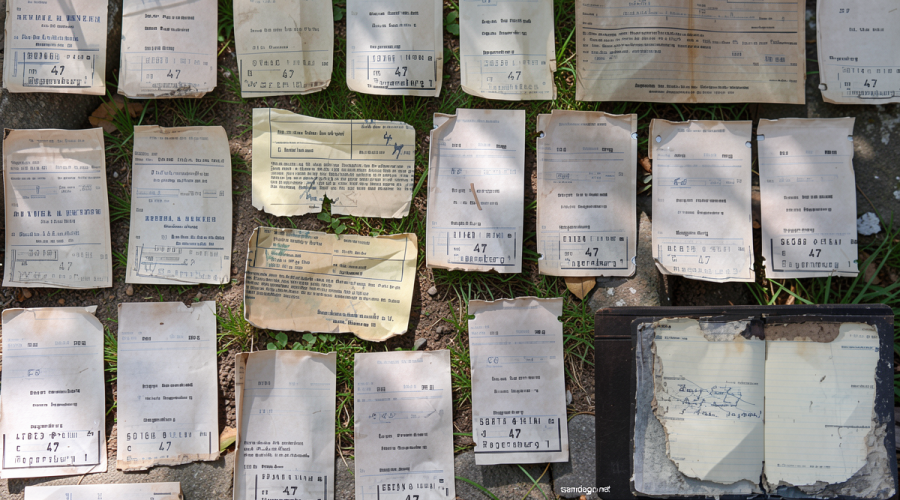
Last month, a hiker traversing the western Tyrolean glacier at an elevation approaching 3,000 meters (roughly 9,800 feet) spotted a rucksack protruding from the thinning ice. Austrian police were notified and dispatched investigators to examine the find. What they uncovered inside the pack was a remarkably preserved assortment of vintage climbing and personal items: an ice axe, a camera, a whistle, and a weathered document folder containing papers bearing the owner’s name.
Those documents proved decisive. Officers cross-referenced the name against records of past mountaineering incidents on the glacier and traced the story back to August 1963, when a group of roped-together climbers had been crossing the Sulztalferner. One member of the party fell into a crevasse. His companions hauled him back to solid ice, but in the desperate effort to lighten his load during the rescue, he shed his backpack. The pack sank into the crevasse and vanished into the accumulating snow and ice that would seal it away for generations.
A Return Delayed by Time and Ill Health
By the time the items were identified and the owner located, sixty-three years had elapsed since the accident. The man, whose name has not been made public, was no longer in a condition to travel to the glacier or collect the gear himself. Tirol police arranged for the recovered equipment to be delivered through his son, who accepted the items on his father’s behalf.
The son expressed his gratitude at the backpack’s return, according to a statement from Tirol police.
The episode underscores how alpine glaciers function, in effect, as time capsules. Items dropped or lost in crevasses during the mid-twentieth century — when recreational mountaineering was expanding rapidly across the European Alps — can remain sealed in firn and ice for decades, only to re-emerge as warming temperatures accelerate surface melt.
Glaciers as Archives: A Pattern With Precedent
This is far from the first instance in which retreating ice has yielded objects, or even human remains, frozen for millennia. The most famous example remains Ötzi the Iceman, whose mummified body was found by hikers in the Italian Alps in 1991. Radiocarbon dating placed his death approximately 5,300 years ago, making him one of the oldest naturally preserved human remains ever discovered. His clothing, tools, and even traces of food in his digestive tract offered an unprecedented window into Copper Age alpine life.
More recently, shrinking glaciers across the Alps, the Himalayas, and the Arctic have exposed everything from World War II-era aircraft to centuries-old wooden stakes and textile fragments. Each recovery is simultaneously a human-interest story and a data point in the broader narrative of cryospheric change.
The Widening Context of Alpine Ice Loss
The Sulztalferner’s role in this story is not incidental. Alpine glaciers across the European mountain ranges have been losing mass at accelerating rates since the early twentieth century, with the pace quickening markedly after 1980. A study published last year projected that, if current trajectories of greenhouse-gas emissions continue, the annual number of glaciers disappearing entirely will peak at roughly 4,000 per year by mid-century. That figure encompasses glaciers worldwide, not only those in the Alps, but the regional implications for Tyrolean ice fields are direct: thinner ice means fewer crevasses to swallow gear, fewer stable routes for climbers, and a shrinking window in which such frozen archives remain intact.
For the 86-year-old man whose ice axe and camera have now come home, the return carries a quiet poignancy. The glacier that once swallowed his equipment in a moment of terror in 1963 has, through the slow chemistry of warming, given it back. What was lost to a crevasse in a single afternoon of August has been reclaimed after more than six decades of silence beneath the ice.
Related Reading
Frequently Asked Questions
What is Man 86 reunited with backpack 60 years?
Man 86 reunited with backpack 60 years is the main topic of this guide. The article explains the context, practical details, and next steps readers should understand.
Why does Man 86 reunited with backpack 60 years matter?
Man 86 reunited with backpack 60 years matters because readers are looking for a useful answer, not just a short summary. Good content should match search intent and help them decide what to do next.