2 Air Traffic Controllers Left Tower Before LaGuardia Jet Crash
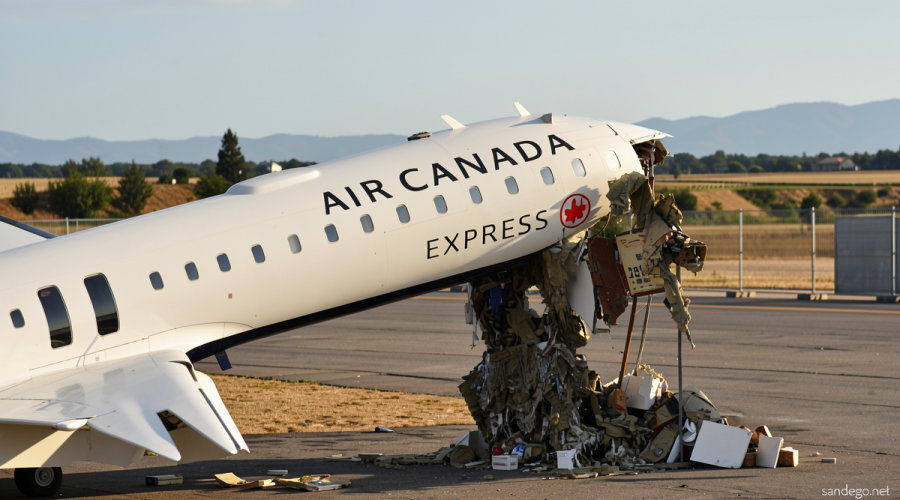
Sandego.net – 2 air traffic controllers left their posts in the LaGuardia control tower before an Air Canada Express jetliner collided with a fire truck on the runway, according to sources tied to the investigation. The March 22 accident killed both pilots and injured dozens of the 76 people aboard. FAA officials are now weighing formal discipline against the two employees, who remain on leave while the matter is reviewed internally.
The sources described the absence as extending well beyond a brief lapse of a few minutes. During the critical window in which the aircraft touched down and the truck crossed the taxiway, the tower was reportedly short-staffed. The FAA has not publicly confirmed the precise duration or circumstances of the departure.
What Happened on the Runway
Air Canada Express Flight 8646, operating a roughly one-hour Montreal-to-LaGuardia sector, had just landed when it struck an airport fire truck that was crossing the taxiway en route to a separate incident on the airfield. Both pilots were killed. Of the 72 passengers and four crew members aboard, dozens sustained injuries.
LaGuardia’s compact footprint, bordered by water and dense residential neighborhoods, leaves controllers with minimal sequencing flexibility. A gap in tower staffing during active runway operations at such a constrained facility carries outsized risk, a factor investigators are expected to weigh in their final report.
Agency and Union Responses
The FAA issued a brief public statement reaffirming its accountability stance:
“The FAA is committed to holding employees accountable, and we will not compromise the safety or efficiency of the National Airspace System.”
The agency did not specify the form of discipline under consideration. The National Air Traffic Controllers Association, which represents controllers nationwide, declined to confirm that proceedings are underway. In a written statement the union said it is “actively discussing these allegations with FAA leadership” and called those discussions “the appropriate forum for addressing the matter.”
Both NATCA and the FAA are designated parties in the National Transportation Safety Board’s probe. Under standard NTSB practice, parties refrain from public commentary until the board publishes its final report, which will include a probable-cause finding. That report is not expected for approximately another six months.
Transportation Secretary’s Framing
U.S. Transportation Secretary Sean Duffy characterized the departure as workplace misconduct rather than a simple scheduling error:
“We will not tolerate fraud, and we are taking appropriate action to hold folks accountable and prevent unlawful practices from disrupting the traveling public. But when a small percentage of individuals take advantage of the American taxpayer, unfairly add additional work to their fellow controllers, and impact the airspace – we have no choice but to act.”
The language of “fraud” and “unlawful practices” signals that the Department of Transportation views the incident through a lens of intentional wrongdoing that shifted workload onto colleagues and degraded the safety margin of the airspace system.
Broader Staffing Context
The U.S. air-traffic-control workforce has long operated under periodic staffing pressures, with congressional debates over hiring freezes, retirement incentives, and the pace at which new controllers can be trained and certified. A finding that controllers vacated their posts during active operations at a high-density airport would intensify scrutiny of those long-standing resource questions.
Frequently Asked Questions
Were the two controllers fired? As of the latest available reporting, both remain on leave while the FAA reviews the matter. No final disciplinary decision has been announced.
When will the NTSB final report be available? The board has indicated the report, which will include a probable-cause determination, is approximately six months away from publication.
How many people were aboard the aircraft? Flight 8646 carried 72 passengers and four crew members. Both pilots were killed; dozens of occupants were injured.
Was the fire truck responding to an emergency? Sources indicate the truck was crossing the taxiway en route to respond to a separate incident elsewhere on the airfield at the time of the collision.