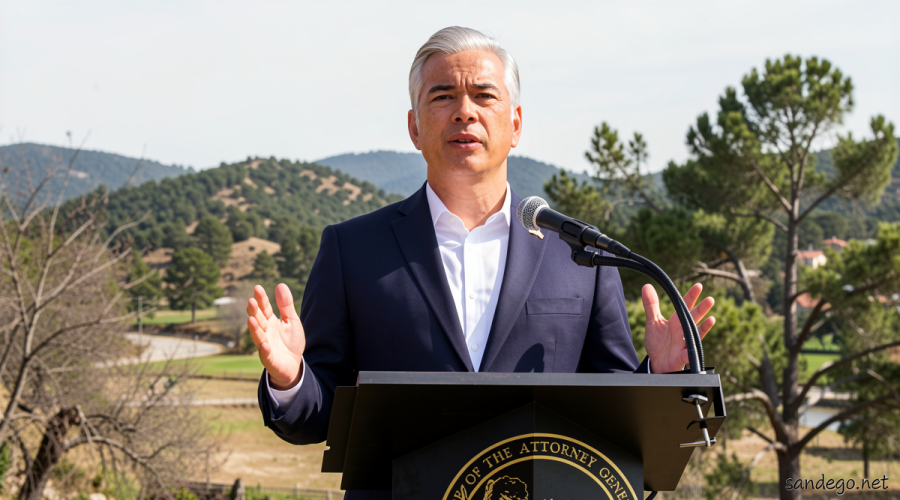
California AG Calls Off Paramount Talks
Sandego.net – The standoff between Hollywood’s largest studio and a coalition of state regulators escalated sharply when California AG calls off Paramount settlement negotiations scheduled for Monday. Attorney General Rob Bonta’s office announced late Sunday that the session — intended to be the first substantive dialogue on unwinding the lawsuit freezing an $110 billion media merger — would not proceed. The cancellation followed what Bonta described as a breach of confidentiality and a misrepresentation of prior discussions.
“Paramount did not maintain the confidentiality of that meeting. Not only did Paramount leak the alleged substance of settlement discussions, but they misrepresented these discussions, demonstrating a lack of good faith,” Bonta stated. “As soon as Paramount stops playing games and engages sincerely, my office is happy to meet again.”
According to Wall Street Journal reporting, the immediate trigger was a Friday preparatory call in which counsel from both sides outlined what the states might demand. Once details of that conversation surfaced publicly, Bonta concluded the conditions for honest negotiation had been destroyed. A Paramount spokesperson reached Monday morning declined to comment on the cancellation.
The Merger Under Legal Siege
Paramount seeks to fold its film studio and television operations into Warner Bros. Discovery, the parent of CNN, HBO, Discovery, the Warner Bros. studio, and a broad portfolio of other media assets. The combined entity would rank among the largest consolidations in American entertainment history. A coalition of twelve Democratic state attorneys general, led by Bonta, filed suit last month arguing the transaction violates antitrust law and would concentrate too much creative and distribution power under one roof. The Writers Guild of America has filed a parallel action, adding further complexity to the challenge.
Paramount maintains the WBD combination is pro-competitive and frames its opponents’ objections as political anxiety over CNN changing hands. Bonta has publicly rejected that characterization, insisting the states’ case rests squarely on consumer-welfare and competition grounds.
The Clock, the Cost, and the Core Dispute
Every week of delay carries a tangible financial penalty for the studio. Under the merger agreement, Paramount must pay WBD shareholders roughly $7 million for each day beyond September 30 that the transaction remains unclosed. That ticking-fee structure has made CEO David Ellison unusually eager to open a settlement channel and avoid a drawn-out courtroom battle. An antitrust trial is already calendared for March, and the merger agreement itself expires in June — compressing the window in which the company must either close the deal or walk away from a commitment already priced into its balance sheet.
The fundamental gap between the two sides centers on what shape any resolution would take. Bonta has signaled that a settlement must include what he calls “robust structural remedies” — concrete architectural changes to the combined company, pointing toward divestitures, spin-offs, or other reorganizations. LightShed Partners analyst Rich Greenfield framed the dilemma for CNN:
“The main question is whether Paramount is prepared to settle with structural remedies. Paramount may be correct on the law, and correct to believe that it will eventually win in court. But the clock is working against the company, between the October ‘ticking fee’ start, the March trial date, and the June merger agreement expiration. The only way to settle before a trial to ensure they can close before the WBD agreement expires in June is to offer structural remedies for both film production and linear TV.”
The Journal reported that Bonta’s specific asks include divesting certain cable channels and committing to keeping Paramount’s movie studio operationally separate from Warner Bros. Selling cable networks into what Greenfield described as a thin market would likely mean transacting at a fraction of the price embedded in the deal’s valuation, while the studio-separation proposal carries its own set of operational complications.
Frequently Asked Questions
Why did California cancel the Paramount settlement meeting? Bonta’s office cited a confidentiality breach and mischaracterization of prior discussions, concluding the atmosphere for genuine negotiation had been compromised.
What is the ticking fee attached to the Paramount–WBD deal? Paramount owes WBD shareholders approximately $7 million per day for every day beyond September 30 that the merger remains unclosed.
When does the merger agreement expire? The agreement lapses in June of next year, after which the transaction can no longer be completed under its current terms.
What remedies is Bonta demanding? He has called for “robust structural remedies,” which reporting indicates includes divesting specific cable channels and maintaining operational separation between Paramount’s movie studio and Warner Bros.