Trump’s Evolving Narrative on Iran
Sandego.net – Donald Trump has long demonstrated a knack for creating intricate narratives that reflect his shifting priorities. In recent weeks, his portrayal of Iran has taken on a new dimension, one that appears to be more about self-deception than strategic clarity. For the past two and a half months, the president has constructed a reality that he seemed to be perpetuating for his own benefit, framing Iran as eager to reach a deal despite its continued aggressive actions. This narrative has allowed him to delay decisive action while maintaining the appearance of a strong stance on the crisis.
The Ceasefire Dilemma and Strategic Shifts
Despite Iran’s apparent ceasefire violations, Trump has consistently downplayed the severity of the situation. His administration’s response has been measured, often prioritizing diplomatic appearances over tangible progress. On June 3, for instance, he emphasized his desire to avoid putting American personnel in harm’s way, citing the Iran hostage crisis as a cautionary example. “I don’t want to put men in that kind of danger,” he said, reflecting a broader pattern of hesitancy. This reluctance has been compounded by his tendency to relax deadlines and backtrack on threats, creating a sense of uncertainty that Iran has exploited.
“I remember Jimmy Carter had some bad problems in Iran with the hostages. I don’t want to ever put our people in that kind of danger.”
Earlier this month, Trump announced a hastily assembled ceasefire, which he claimed would be “subject to the COMPLETE, IMMEDIATE, and SAFE OPENING of the Strait of Hormuz.” However, this condition remained unfulfilled, and the agreement lacked consensus among the involved parties. The administration’s efforts to sustain the truce have been inconsistent, with Trump repeatedly adjusting his expectations and offering Iran leniency even when it failed to meet key demands.
Military Threats and Contradictions
Trump’s approach has oscillated between bold military threats and cautious diplomacy. On Thursday, he hinted at a potential strike on Kharg Island, a move that could involve ground troops and escalate casualties. Yet, just minutes later, he appeared on Fox News to reassure viewers that such an action might not be necessary. “I’m not sure the country has the appetite for it,” he said, echoing a sentiment that has defined his recent rhetoric. “And that’s okay, I understand that.” This back-and-forth suggests a lack of conviction, as he balances the need for a strong response with the desire to avoid prolonged conflict.
“I don’t want to have boots on the ground, but if I wanted to, we could put a small group of soldiers and take over the whole place.”
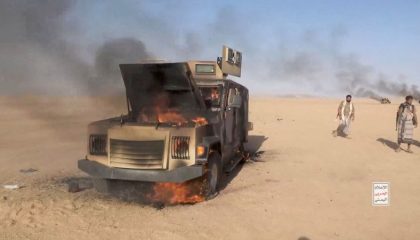
The incident involving the downing of a US Army Apache helicopter by Iran has further highlighted this inconsistency. While the attack was a significant escalation, Trump’s reaction has been subdued, with him stating on Tuesday that “Nevertheless, the United States must, of necessity, respond to this attack.” Yet, he quickly downplayed the event, calling it “not a big deal” in the same day’s interview with the Wall Street Journal. This selective emphasis on the threat while minimizing its impact underscores a strategic calculation: to give Iran the benefit of the doubt without committing fully to retaliation.
Leverage and the Path to War
Iran’s ability to prolong the conflict has been amplified by Trump’s indecisiveness. By repeatedly offering Tehran favorable terms and softening his own demands, the president has inadvertently granted the country more leverage. The ceasefire, which was supposed to be a temporary reprieve, has instead become a platform for Iran to test the limits of US resolve. This dynamic has allowed the nation to press forward with its goals, even as hostilities have resumed in recent days.
“I didn’t want to be Jimmy Carter, you know — I didn’t feel like being Jimmy Carter.”
Trump’s use of historical parallels has also played a role in shaping public perception. By invoking Carter’s experience with the Iran hostage crisis, he has framed his current approach as a lesson learned. However, this comparison may mask a deeper reluctance to confront Iran directly. His comments suggest that he prefers a measured response over a full-scale military campaign, even as the situation grows more volatile. This hesitation has been evident in his willingness to extend deadlines and modify his initial demands, creating a cycle of delay that Iran has capitalized on.
The Political Calculus of Delay
With the 2026 midterm elections looming, Trump’s strategy appears to be a blend of pragmatism and self-preservation. By delaying a decisive response, he has effectively shifted the narrative to Iran, positioning the country as the aggressor and himself as the reluctant mediator. This has allowed him to maintain domestic support while avoiding the risks associated with an extended war. Yet, the economic strain on the US and the growing instability in the region have raised questions about the sustainability of this approach.
The administration’s handling of the ceasefire has also exposed internal contradictions. On April 7, Trump unveiled a fragile agreement that lacked clear parameters, leaving room for ambiguity. As Iran’s actions continued to challenge the terms of the deal, Trump and his team struggled to maintain consistency. This has led to a perception of instability, both in the ceasefire and in the administration’s commitment to its success. The result is a situation where Iran has not only secured more favorable terms but also reinforced its position as a key player in the conflict.
Despite these challenges, Trump’s threat to restart the war remains a constant. His rhetoric suggests that he is still capable of taking decisive action, even if his recent behavior has been hesitant. The question is whether this threat will translate into tangible steps or remain a figment of his own imagination. For now, the pattern of self-deception continues, with Trump’s actions and words creating a reality that serves his political and strategic interests while leaving Iran in a stronger position.
As the conflict intensifies, the balance of power between the US and Iran has shifted. Trump’s reluctance to commit fully has given Iran the confidence to push for more concessions, while the president’s occasional displays of resolve keep the door open for escalation. This duality has defined the current phase of the crisis, where the line between diplomacy and confrontation remains blurred. The coming weeks will likely determine whether this approach leads to a lasting resolution or further entrenches the stalemate, with the 2026 midterms as a potential catalyst for either outcome.