Sandego.net – “`html
Low-Wage Employment and Public Assistance: A Growing Challenge
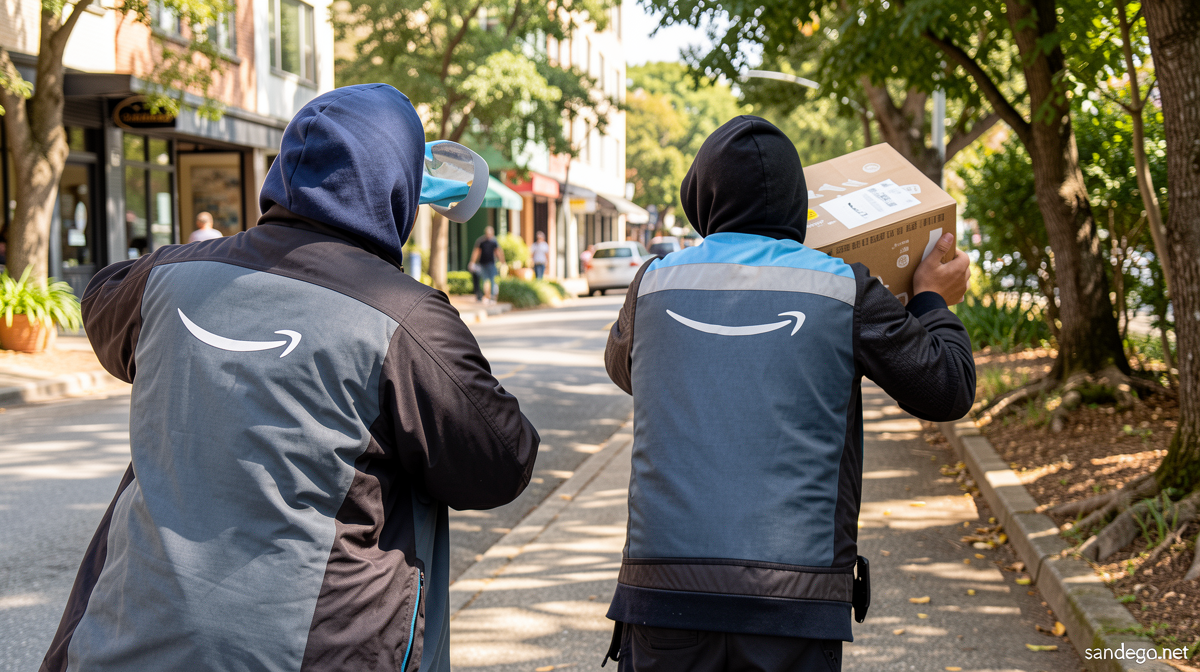
A recent investigation by the Government Accountability Office reveals that an increasing segment of the American workforce—particularly those employed by Amazon and various gig economy platforms—are finding themselves dependent on federal safety net programs. Released on Wednesday, this comprehensive analysis highlights how even individuals with steady jobs are struggling to afford essential necessities such as nutritious meals and medical coverage. The findings underscore a broader affordability emergency sweeping across the nation, where employment no longer guarantees financial stability for millions of households.
Significant Increases in Benefit Enrollment
According to Senator Bernie Sanders of Vermont, who initiated both the current and previous examinations, the proportion of Amazon personnel utilizing food assistance and Medicaid has surged dramatically. By September, enrollment figures had almost tripled compared to the agency’s last assessment in 2020. Within the eleven states reviewed by researchers, approximately 12,350 Amazon staff members participated in the food stamp program, while roughly 11,350 individuals received Medicaid coverage. This represents a substantial shift from earlier years when such benefits were less common among corporate employees.
Additionally, transportation and delivery services have emerged as major employers of benefit recipients across multiple regions. Five years ago, this trend was notably absent. Companies including Uber, Lyft, DoorDash, Grubhub, and Instacart now rank among the leading employers for SNAP and Medicaid participants in several states. The GAO’s examination encompassed eleven states collectively housing nearly twenty percent of the U.S. population, providing a representative snapshot of national trends.
Corporate Responses and Criticisms
Walmart maintained its position as one of the primary employers of benefit recipients across all examined states, mirroring its status in 2020. Meanwhile, FedEx experienced remarkable growth in benefit usage, with Medicaid enrollment more than tripling and food stamp participation nearly doubling over the same timeframe. Senator Sanders emphasized the moral implications of these statistics, stating that workers should not endure poverty while employed by highly profitable corporations.
“No one who works for a company making billions in profits should be living in poverty,” Sanders declared in a formal statement, reiterating his longstanding position that major businesses must compensate their employees adequately.
Amazon contested the report’s conclusions, maintaining that its compensation structure ranks among the most competitive within the sector. The company highlighted that full-time, regular employees receive health insurance coverage starting on their first day for merely five dollars weekly for individual plans. Furthermore, Amazon spokesperson Rachael Lighty explained that benefit eligibility depends on overall household earnings and family composition rather than single-income levels.
“Eligibility for both SNAP and Medicaid is based on total household income and family size, not individual wages or benefits – so employers that offer part-time options for those who want them, like we do, are likely to have more people who are eligible,” Lighty noted.
Recent Investment and Industry Context
Since the onset of the coronavirus pandemic, Amazon has significantly broadened its operational footprint. In late 2025, the corporation announced a substantial one-billion-dollar commitment aimed at enhancing compensation and lowering healthcare expenses for fulfillment and transportation personnel throughout the United States. This initiative raised the typical base salary to exceed twenty-three dollars per hour. Similarly, Walmart—the nation’s largest private employer with numerous entry-level positions—has elevated starting wages for associates by ninety-three percent since 2015, bringing the average hourly rate to eighteen dollars.
CNN contacted FedEx and Flex, a trade organization representing ridesharing and delivery applications, for additional commentary. The GAO’s analysis incorporated 2024 Census Bureau information, revealing that approximately fourteen million adults who held employment at some point during that year participated in Medicaid. Additionally, 10.6 million adults resided in households receiving Supplemental Nutrition Assistance Program benefits, the official designation for food stamps. Most of these individuals maintained full-time schedules, with a significant portion working in five primary sectors, including transportation, food preparation, and service industries.
Eligibility Requirements and Policy Changes
Historical comparisons show that in 2020, roughly twelve million wage-earning adults received Medicaid coverage, while nine million obtained food stamps, according to the earlier GAO assessment utilizing prior-year Census information. To qualify for food assistance, applicants must demonstrate annual earnings below 130 percent of the federal poverty threshold, equating to approximately forty-two thousand dollars for a family of four. Certain states implement higher income ceilings. Medicaid participants generally cannot exceed 138 percent of the federal poverty limit, representing about twenty-two thousand dollars for a single person, although states that declined program expansion maintain stricter thresholds.
This GAO report emerges alongside significant policy modifications affecting millions of benefit recipients. Under President Donald Trump’s One Big Beautiful Bill Act, signed into legislation last summer, tens of millions of food stamp and Medicaid beneficiaries must now fulfill work obligations. Recipients are required to complete at least eighty hours monthly through employment, volunteering, educational pursuits, or job training initiatives to preserve their eligibility. Supporters of the mandate argue it will foster greater self-reliance among low-income Americans and help them overcome poverty. Conversely, opponents warn that stricter requirements could result in increased hunger and reduced healthcare access for vulnerable populations. The expansion of existing work requirements within SNAP has already begun implementation, contributing to ongoing debates about the effectiveness of these policies. “`
Related SEO Topics
- Home
- Artikel terkait More Amazon and gig workers are turning
- Americans — including many Republicans — are losing faith in capitalism, polling shows
- Man who killed Minnesota lawmaker Melissa Hortman sentenced to life as family describes trauma, loss
- Her murder went unsolved for 30 years. The suspect vanished under a new alias until now
- Vote on CDC nominee clinched with change to CDC’s website on vaccines and autism
Frequently Asked Questions
What is More Amazon and gig workers are turning?
More Amazon and gig workers are turning is the main topic covered in this article, with practical context to help readers understand the subject clearly.
Why does More Amazon and gig workers are turning matter?
More Amazon and gig workers are turning matters because it helps readers compare options, avoid common mistakes, and make a more informed decision.
How should readers use this More Amazon and gig workers are turning guide?
Use the key points, examples, and related links in this page as a starting point, then review the latest details before making a final decision.