Space Debris Rules Ignite FCC Turf War as Collisions in Space Are a Growing Concern Sandego.net – Collisions in space are a growing concern for
Space Debris Rules Ignite FCC Turf War as Collisions in Space Are a Growing Concern
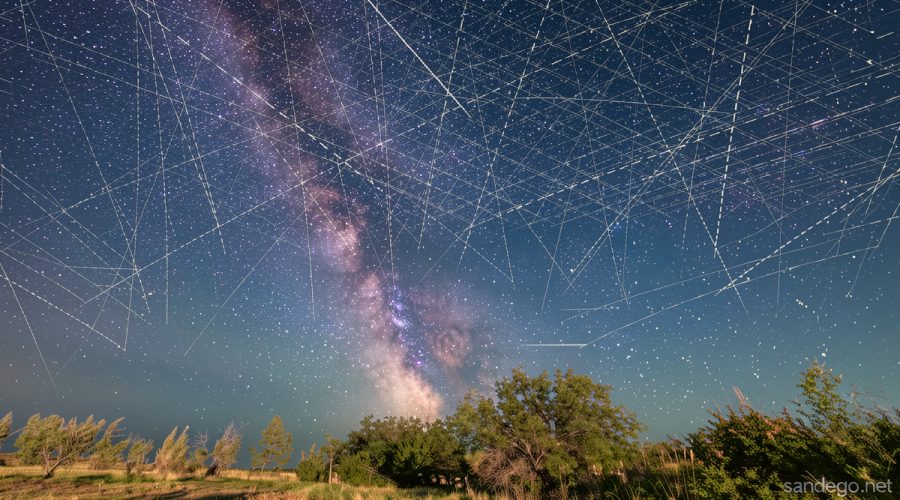
Sandego.net – Collisions in space are a growing concern for satellite operators and space agencies alike. The sky above Earth is becoming increasingly crowded, and the potential for catastrophic collisions between spacecraft is rising alongside it. With more than 18,000 operational and defunct satellites currently circling our planet—a figure that has more than doubled within just six years—the likelihood of orbital accidents has grown substantially. Most of these objects occupy low-Earth orbit, creating a congested environment where even minor miscalculations could trigger cascading debris fields capable of rendering vast orbital regions unusable for generations.
Historically, space collisions have been uncommon events, yet the consequences of such incidents can be devastating. The recent adoption of updated regulations by the Federal Communications Commission aims to address these mounting concerns through what officials describe as a modernization of satellite approval procedures. These new provisions establish “space safety” requirements that would fundamentally change how operators manage their orbital assets. As collisions in space are a growing issue, the FCC’s new framework seeks to prevent future disasters through real-time data sharing and improved tracking systems.
Real-Time Data Sharing to Prevent Collisions
Under the newly adopted framework, satellite operators must share tracking information in real time with space traffic management systems. This transparency allows authorities to develop a comprehensive picture of orbital positions, reducing the historical difficulty of predicting potential collisions. While the technical requirements themselves have drawn limited opposition, the rules have ignited a broader jurisdictional dispute regarding which federal entity should ultimately govern space operations. The concern over collisions in space are a growing priority for regulators trying to keep pace with commercial expansion.
The FCC has served as the primary satellite regulator for decades, deriving its authority from its power to manage electromagnetic spectrum—the radio waves enabling wireless data transmission between spacecraft, aircraft, and ground stations. However, as commercial space ventures have expanded dramatically, congressional lawmakers have proposed transferring regulatory oversight to the Department of Commerce. Proponents argue that Commerce could provide more effective sector oversight while collaborating closely with industry participants to maintain American competitiveness in global space markets.
Political Pushback on FCC Authority
Support for transferring regulatory power spans party lines. Republican Brian Babin and Democrat Zoe Lofgren, the ranking members of the House Science Committee, jointly wrote to the FCC in February requesting that the commission either withdraw or modify its proposed rules. Their correspondence emphasized that existing federal statutes “contain no clear congressional authorization empowering the FCC to regulate space safety, space traffic management, or broader non-communications space operations.” With collisions in space are a growing threat, lawmakers want clarity on who holds the reins.
The FCC has not publicly addressed the committee’s letter, nor has it responded to media inquiries. Meanwhile, Republican staff on the House Science Committee reported that Babin and Lofgren subsequently sent a follow-up communication to FCC chair Brendan Carr, asking him to delay the vote and engage in discussions with legislators. Despite these appeals, the commission proceeded with a unanimous vote on Wednesday morning to approve the space traffic regulations.
“We’re in a gray area right now,” Tom Stroup, president of the Satellite Industry Association, told CNN. “Not a lot had been done with respect to space sustainability” or preventing in-space collisions.
Industry Growth Demands Clear Governance
The regulatory uncertainty reflects the rapidly evolving space industry landscape. Companies including SpaceX, OneWeb, and Amazon are deploying hundreds to thousands of new satellites, raising fundamental questions about oversight authority. Both Congress and President Donald Trump have expressed preference for the Department of Commerce to assume the role of space traffic coordinator and regulator. However, these transition efforts have stalled partly due to uncertainty surrounding budget appropriations necessary for the agency to fulfill expanded responsibilities.
The Department of Commerce has not yet provided comment regarding the ongoing debate. Stroup emphasized that time is critical given the industry’s ambitious expansion plans. SpaceX, for instance, aims to launch a constellation containing up to one million satellites as part of its strategy to establish orbital data centers. Regarding the FCC’s new sustainability framework, Stroup noted that “one could argue that should have been done five years ago,” but stressed that “We can’t wait another five years.” As collisions in space are a growing reality, the industry needs answers now.
SpaceX has maintained close relationships with the Space Situational Awareness community and publicly acknowledges the importance of space traffic management. Nevertheless, the FCC’s rules could establish industry-wide standards for debris mitigation and collision avoidance. The debate over regulatory authority continues, but the urgency remains clear: with collisions in space are a growing concern, action cannot be delayed any longer.
Related SEO Topics
Frequently Asked Questions
What is Collisions in space are a growing?
Collisions in space are a growing is the main topic covered in this article, with practical context to help readers understand the subject clearly.
Why does Collisions in space are a growing matter?
Collisions in space are a growing matters because it helps readers compare options, avoid common mistakes, and make a more informed decision.
How should readers use this Collisions in space are a growing guide?
Use the key points, examples, and related links in this page as a starting point, then review the latest details before making a final decision.