
ICE officer charged with assault in shooting during Minneapolis immigration crackdown
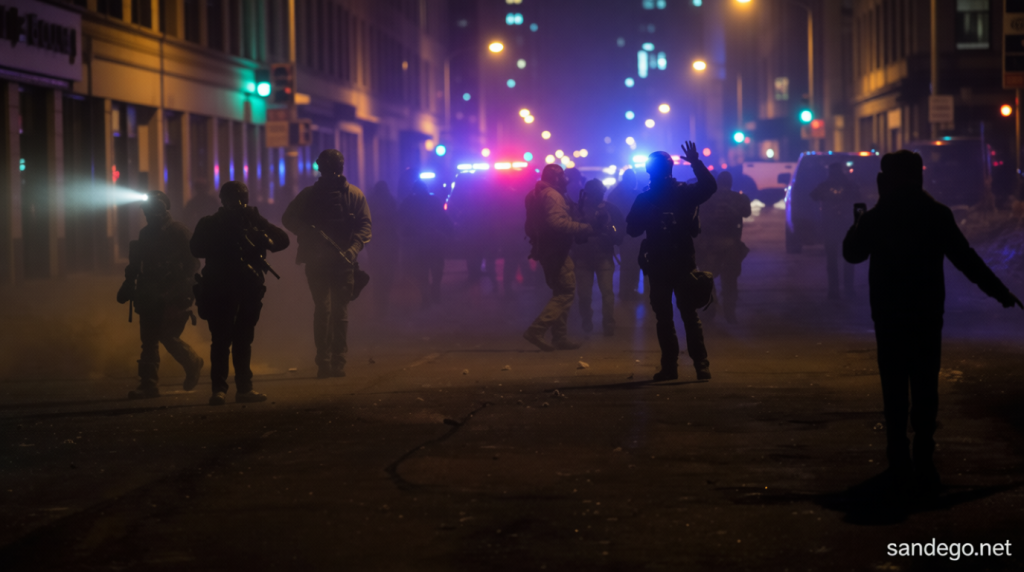
ICE Officer Charged with Assault in Minneapolis Shooting
ICE officer charged with assault in shooting – In a recent development, a federal immigration enforcement agent has been charged with multiple counts of assault following a January shooting in Minnesota. According to Hennepin County Attorney Mary Moriarty, the incident involved two Venezuelan immigrants who were allegedly targeted by U.S. Immigration and Customs Enforcement (ICE) officers. The charges against the agent, Christian Castro, include four counts of second degree assault and one count of falsely reporting a crime. Moriarty announced the legal action during a Monday news conference, detailing the circumstances that led to the arrest.
The January event unfolded during a high-profile immigration operation in Minneapolis, where ICE agents were actively pursuing individuals suspected of violating immigration laws. Julio Cesar Sosa-Celis and his cousin Alfredo A. Aljorna were among those involved. Initially, the Department of Homeland Security (DHS) claimed that the men had attacked an agent during a traffic stop, prompting the officer to fire a defensive shot. However, new evidence has cast doubt on this account, leading to a significant shift in the narrative.
Initial Claims and Subsequent Reversal
At the time of the shooting, DHS described the situation as a confrontation in which Sosa-Celis fled from his vehicle and then on foot, resisting and violently assaulting an ICE agent. The agency stated that Aljorna, another man present, joined the attack with a snow shovel or broom handle, forcing the officer to fire a defensive shot. These details were part of the initial report released on January 15, which framed the incident as an act of aggression by the immigrants against law enforcement.
“Castro was never under threat during the incident, and he was not hit by a shovel, a broom, or another object,” Moriarty emphasized during her Monday remarks.
Yet, the Justice Department quickly offered an alternate version of events the following day. In a legal filing supporting criminal charges against the men, the DOJ noted that Aljorna was actually driving the vehicle agents were chasing. When the car came to a stop, Aljorna exited and joined Sosa-Celis in striking the officer with a shovel or broom. This contradicted the earlier DHS narrative, which had portrayed the two men as the primary aggressors.
By February, the Justice Department had reversed its position, filing a motion to dismiss the charges against Sosa-Celis and Aljorna. The decision cited errors in the information provided by federal prosecutors to the court, with the DOJ asserting that the initial account had misrepresented the sequence of events. At the same time, ICE admitted that its agents had made false statements under oath about the incident, leading to administrative leave for two of them. The agency’s director, Todd Lyons, acknowledged the misstatements in a statement at the time, attributing them to a review of video evidence that revealed discrepancies.
Video Evidence and Shifting Allegations
The key to the case’s reversal lies in newly analyzed video footage. Previously, the DHS had relied on a specific sequence of events to justify the shooting, but the video showed a different timeline. It indicated that the agent’s actions may have been more aggressive than initially described, with the two men only striking the officer after he fired the shot. This footage, combined with conflicting accounts from law enforcement, has prompted a reevaluation of the incident.
Castro, the agent charged with assault, was reportedly not hit by any object before firing his weapon. This detail is crucial, as it challenges the claim that the shooting was a defensive act. The video appears to capture the moment when the officer, possibly in a state of heightened tension, took action without immediate provocation. The footage also raises questions about the accuracy of the initial report, which had been used to justify the arrest of the Venezuelan immigrants.
The discrepancy between the DHS’s original account and the DOJ’s later filing highlights the complexity of the case. While the first version portrayed the men as aggressors, the second suggested they were merely reacting to the officer’s actions. This shift underscores the importance of video evidence in clarifying the events of a high-stakes confrontation. The fact that two agents were placed on administrative leave further emphasizes the internal review of the incident and its potential impact on ICE’s credibility.
Implications for Immigration Enforcement
The Minneapolis shooting has sparked broader discussions about the tactics used during immigration raids. Critics argue that the incident reflects a pattern of excessive force by federal agents, particularly in situations where individuals are detained under the threat of deportation. The initial charges against the immigrants were based on the assertion that they had attacked an officer, but the DOJ’s reversal suggests that the evidence supporting this claim may have been incomplete or misleading.
As the case progresses, the focus has shifted from the immigrants’ alleged actions to the responsibility of the agent involved. The charges against Castro are not just a legal matter but also a public relations challenge for ICE. The agency’s admission of false statements has drawn scrutiny, with some calling for a full investigation into the circumstances surrounding the shooting. Meanwhile, the two Venezuelans, who were initially targeted, now face the possibility of being exonerated.
Despite the DOJ’s decision to drop the charges, the incident remains under review. The Justice Department has stated that it is examining the agents’ untruthful statements to determine whether they constitute criminal negligence or misconduct. This process is expected to take time, as officials work to reconcile the conflicting accounts and assess the validity of the evidence. Until then, the case will continue to be a focal point for debates about immigration enforcement practices and the use of force by federal agents.
The Minneapolis shooting is a developing story, with new information emerging as the investigation unfolds. CNN has sought comment from the Department of Homeland Security, hoping to gain insight into the agency’s current stance on the incident. Additionally, the news outlet is working to confirm whether Castro has legal representation, as the case may proceed to trial or further administrative review. As the facts continue to shape, the outcome of this case could have lasting implications for both the individuals involved and the broader immigration enforcement community.
With the initial charges against the immigrants now withdrawn, the spotlight has turned back to the officer who fired the shot. The legal battle over the incident highlights the challenges of balancing national security objectives with due process in immigration enforcement. As more details come to light, the public will remain closely watching to see how the case is resolved and what it reveals about the conduct of ICE agents during high-pressure operations.
The case also raises questions about the role of video evidence in modern law enforcement. In an era where surveillance footage can capture every detail of an incident, the accuracy of initial reports becomes critical. The conflicting narratives presented by DHS and the DOJ demonstrate how quickly the truth can be reshaped by new evidence, even in the face of sworn testimony. This situation has led to calls for transparency and accountability, as the actions of federal agents are scrutinized in the context of a broader immigration crackdown.
For now, the charges against Castro stand as a reminder of the potential consequences for law enforcement in high-stakes encounters. The case will likely serve as a case study in the importance of thorough investigations and the need for consistent narratives in the courtroom. As the story continues to develop, it remains a significant moment in the ongoing dialogue about immigration enforcement and the use of force by federal officers.
