
Top divers join perilous mission to recover Italian tourists’ remains from Maldives sea cave
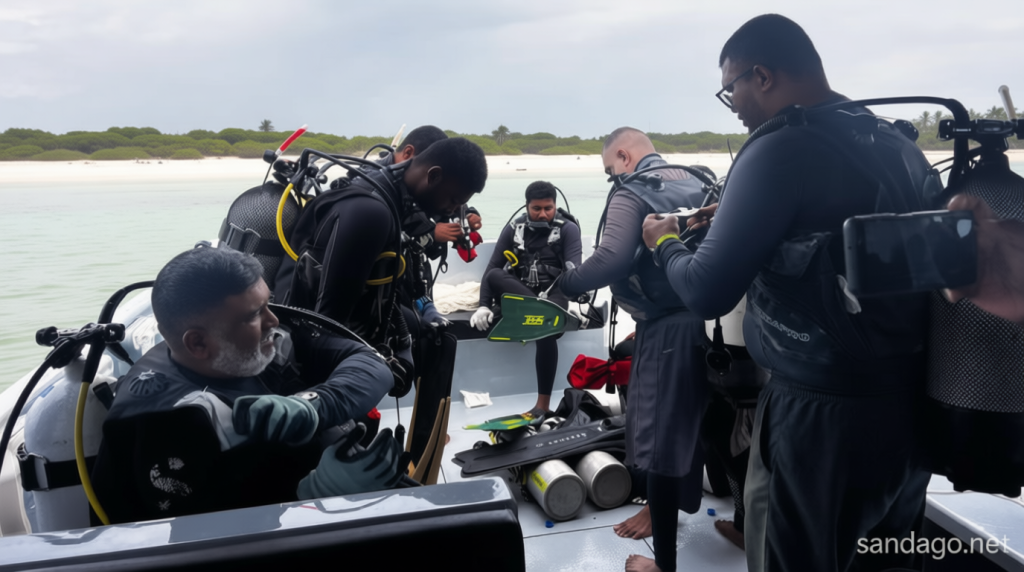
Global cave diving experts descend on Maldives to retrieve Italian tourists’ remains from submerged cavern
Top divers join perilous mission to recover – Maldives authorities have enlisted international cave diving specialists to continue efforts to recover the bodies of four Italian nationals who perished during a scuba diving expedition in the Indian Ocean archipelago. This operation follows the tragic loss of a military officer during a prior search attempt, adding to the urgency of the mission. The divers, including three Finnish experts from the Divers Alert Network (DAN), have arrived in the region to coordinate a more refined strategy for navigating the treacherous underwater environment.
Maldives’ chief government spokesperson, Mohamed Hussain Shareef, confirmed the Finnish team’s arrival and their plan to collaborate with local maritime rescue personnel. “These divers have been recommended by Italy and have conducted deep underwater missions in various global locations,” Shareef stated, emphasizing their seasoned expertise. The mission’s complexity has drawn attention to the unique challenges of the cave system, where conditions are said to be exceptionally hazardous for even the most skilled professionals.
“They are specialists in navigating confined spaces under pressure, which is critical here,” said Laura Marroni, a key coordinator for the DAN Europe Foundation. “Finland is known for its extensive network of flooded mines and deep caves, some of which are among the most difficult environments in the world.”
The multinational team is set to expand with the inclusion of a fourth diving expert, expected to join the Finnish contingent by the end of the day. Additionally, specialized equipment from Australia and the United Kingdom will be deployed to support the operation. This brings the total number of divers involved to a critical level, as the task demands precision and resilience in a setting where even minor miscalculations can lead to fatal outcomes.
The tragedy unfolded on Thursday when five Italian divers were lost while exploring the Vaavu Atoll. The expedition, which included 20 Italian nationals aboard the Duke of York vessel, was part of a larger diving venture. According to the Italian foreign ministry, the divers were in the process of investigating the cave when disaster struck. The body of Gianluca Benedetti, a trained diving instructor, was discovered at the entrance of the cavern, indicating the others may still be trapped within its depths.
The four Italians believed to be inside the cave are Monica Montefalcone, an associate professor of ecology at the University of Genoa; her daughter Giorgia Sommacal; marine biologist Federico Gualtieri; and researcher Muriel Oddenino. Their deaths have sparked a renewed push to retrieve their remains, with the cave’s depth and darkness posing significant obstacles. The recovery mission has already cost another life, underscoring the perilous nature of the task.
“Sgt. Mohamed Mahudhee, a senior military diver, lost his life on Saturday during a second dive into the cavern,” Shareef reported. “His partner noticed he was struggling and rushed to assist, but it was too late. This highlights the extreme challenges of operating in such an environment.”
The funeral ceremony for Mahudhee took place in the Maldivian capital, Malé, where thousands attended to honor the fallen soldier. The event drew high-profile figures, including President Mohamed Muizzu, tourism officials, military personnel, and foreign diplomats. Shareef noted that the cave’s depth, which reaches 70 meters (approximately 230 feet) below the surface, is comparable to the height of a 20-story building. The cavern’s length of 200 meters further complicates navigation, as divers must traverse narrow tunnels leading to a vast inner chamber.
Each dive into the cave is restricted to roughly three hours to account for oxygen consumption and decompression needs. During Saturday’s attempt, divers employed a balloon to mark the cave’s entrance, enabling the remaining team to locate the path more efficiently. However, the unpredictable currents and complete absence of light in the depths have made the operation exceptionally difficult. “You need a high level of expertise to manage this kind of dive,” Shareef added, reflecting on the technical demands of the mission.
Authorities suspect that complications during the decompression phase may have contributed to Mahudhee’s death. After surfacing, divers must remain in shallow waters to adjust to the pressure changes, a process that can be risky if interrupted. The cave’s silt-filled interior also hampers visibility, complicating efforts to track the missing divers. This has led to concerns about the stability of the underwater environment and its impact on the recovery process.
“It’s unclear whether the currents were a direct cause, but the cave’s depth and silt are undeniably hindering progress,” said John Volanthen, a British Cave Rescue Council officer with experience in high-stakes rescues. He played a pivotal role in the 2018 operation to save the Thai soccer team, describing the current situation as “a blend of technical precision and environmental unpredictability.”
Carlo Sommacal, the husband of Monica Montefalcone and father of Giorgia Sommacal, expressed uncertainty about the incident’s cause. “Something must have happened down there,” he said, citing his wife and daughter’s extensive experience in diving. The Associated Press noted that Montefalcone had survived a 2004 tsunami while diving off the Kenyan coast, a testament to her skill and composure under pressure.
As the recovery mission enters its second phase, teams are preparing for multiple dives to locate the remaining bodies. The cave’s labyrinthine structure and deep, dark recesses make it a daunting site for even the most experienced divers. With the expertise of international professionals and advanced equipment, authorities remain optimistic about success, though the risks remain high. The operation not only seeks to bring closure to the families of the victims but also aims to highlight the critical role of deep-sea rescue teams in extreme conditions.
Maldives, with its vast ocean territory—nearly 3,000 times larger than its landmass—has long been a hub for diving tourism. However, this incident has shifted focus to the dangers inherent in exploring its natural wonders. The collaboration between local and international teams underscores the global nature of such rescues, as no single nation can tackle the complexities of underwater recovery alone. The mission now serves as a reminder of the fragility of human life in the face of nature’s formidable challenges.
As the search continues, the divers face not only the physical hazards of the cave but also the emotional weight of their task. Each descent into the depths carries the hope of finding a solution, yet the risk of further loss looms large. The international community watches closely, recognizing the significance of this operation in the broader context of marine exploration and rescue efforts. With every passing hour, the stakes rise, and the determination of the divers remains unwavering in their pursuit of answers beneath the waves.
