
The Bryson DeChambeau Show captivates the crowds, even on a bad day. Is that fascination enough for a truce with the PGA?
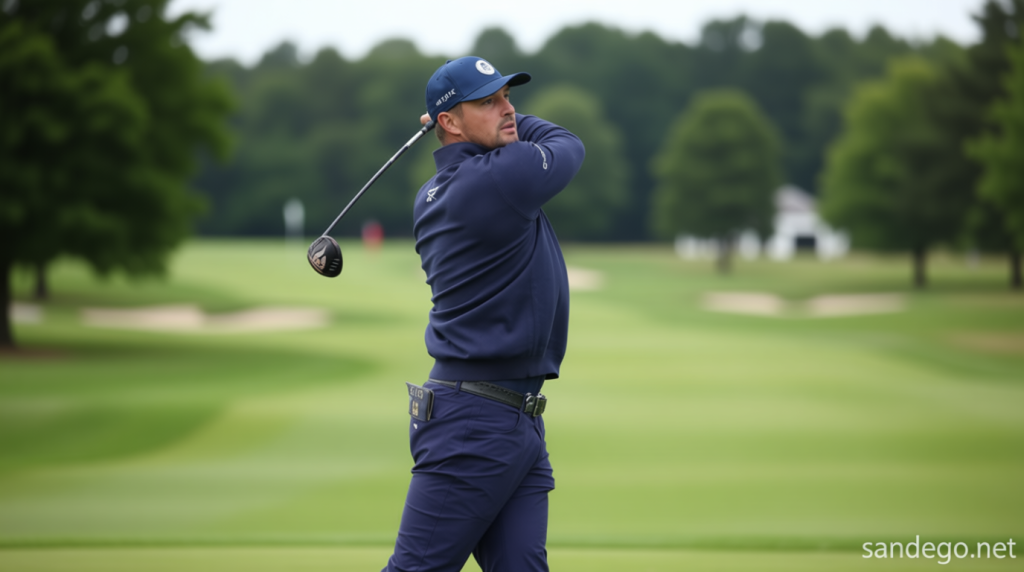
The Bryson DeChambeau Show captivates the crowds, even on a bad day. Is that fascination enough for a truce with the PGA?
The Bryson DeChambeau Show captivates the crowds – Despite a first-round performance that left much to be desired, Bryson DeChambeau’s presence on the golf course remains magnetic. After signing his scorecard to seal a disastrous round, he didn’t linger at the clubhouse. Instead, he cut through the player’s parking lot and marched straight to the driving range, as if determined to salvage something from the wreckage. Two buckets were placed beside him, and he launched into a series of swings, pausing only to watch a video of his stroke on an iPhone or to fend off cameramen who had set up behind his practice area. The repetitive motion of his arms, the focused intensity of his gaze, and the unrelenting drive to improve were all on full display. Even in defeat, DeChambeau’s energy was impossible to ignore.
DeChambeau’s struggles on the course were evident from the outset. He shot a brutal 6-over 76, pushing his cumulative score to a staggering plus-17 over his previous three major championships. The day was a rollercoaster of misfortune, with one errant shot landing on a staircase and settling beneath a tent labeled “Level Blue On the Fairway.” The irony of the moment was not lost on anyone, but the ball itself seemed indifferent, bouncing away as if it had no clue it was part of a dramatic storyline. Yet, DeChambeau turned this mishap into a highlight, managing to save par despite the chaos.
His play was a mix of brilliance and blunder, with drives veering right and putts flying in every direction. On the par-3 eighth hole, a second shot soared high enough to bring rain down onto the green, creating a surreal, almost cartoonish scene. The shot required only a final loop to complete its absurdity, but it ended in a double bogey. As the round unfolded, his body language shifted dramatically—from calculated determination to confusion, then to visible frustration. This emotional arc is typical for DeChambeau, who often channels his inner turmoil into the sport he loves.
Amid the turmoil, DeChambeau’s actions on the course became a symbol of his resilience. When he found himself stuck in a difficult lie near the end of the round, he didn’t panic. Instead, he practiced relentlessly, taking long, deliberate swings while his caddies and rivals paused to observe. The scene was almost theatrical, with DeChambeau’s movements drawing more attention than the golf itself. His aggressive pace, even when others slowed to chat with their caddies, underscored his relentless drive. And when he chomped on a piece of beef jerky with the fervor of a man chasing redemption, it was clear that his focus was as strong as ever.
The Road to Reconciliation
DeChambeau’s current woes come at a pivotal moment for his career and the LIV Golf movement. As a two-time US Open champion, he is both a symbol of the breakaway league and a key figure in its fight for survival. The Saudi Public Investment Fund, which once provided a financial lifeline, is now withdrawing support, leaving LIV in a precarious position. For DeChambeau, the stakes are high. His contract with LIV expires at the end of this year, but returning to the PGA Tour won’t be simple. He’s not only one of the original rebels but also a central figure in the lawsuit alleging that the PGA used its monopoly to punish players who defected to LIV. A reunion would require compromises, penalties, and perhaps a few heartfelt reconciliations.
The PGA Tour has made some concessions, including easing its strict social media rules, which DeChambeau has always criticized. As a proud YouTuber, he has used the platform to build his brand, and the possibility of a solo career on the digital stage looms if a deal can’t be reached. But the chasm between the two sides remains wide. Neither the PGA nor DeChambeau wants to admit fault, and both are clinging to their egos. It’s a classic case of stubbornness undermining progress, even when the outcome is clear.
“Whoa.” “Jesus!” “Holy moly.” “Oh s**t.”
These exclamations from the crowd encapsulated the day’s blend of awe and exasperation. DeChambeau’s ability to command attention, even when his shots were falling short, is a testament to his unique charisma. The PGA Championship audience, accustomed to watching top-tier golf, found themselves captivated by the spectacle of his struggles. While his performance was far from flawless, the drama of each mishap—whether a ball landing on a staircase or a putt bouncing off the green—kept viewers engaged.
DeChambeau’s appeal lies in his unapologetic style. Unlike the subtlety of traditional golf, he thrives on spectacle, delivering power with every swing. The PGA Tour, known for its meticulous approach, has long struggled to balance tradition with innovation. DeChambeau, however, embodies the modern golfer’s hunger for excitement. His presence at Aronimink, even in a subpar round, reminded fans why he remains a standout figure in the sport. The contrast between his erratic play and the polished performances of his peers highlighted the raw energy that makes him unforgettable.
Though the day was a setback, DeChambeau’s actions suggested he wasn’t ready to give up. He continued to swing with purpose, as if each motion was a step toward redemption. The driving range became his sanctuary, a place where he could reclaim control and silence the critics. For the PGA Tour, this persistence is both a challenge and an opportunity. They need DeChambeau’s star power to attract audiences, but they also want to maintain their authority. The question remains: can the allure of his showmanship bridge the divide, or will ego keep them apart?
As the PGA Championship continued, DeChambeau’s performance served as a microcosm of the larger battle between the PGA Tour and LIV Golf. The audience’s reactions—ranging from shock to admiration—reflected the tension in the air. While his scorecard told a different story, the way he carried himself on the course made it hard to dismiss his potential. The tournament, already a battleground for the future of the sport, became a stage for DeChambeau’s unlikely redemption. Whether he could turn the tide or simply add another chapter to his story remains to be seen, but one thing is certain: the show must go on.
