
Xi’s long game with Trump: What I’ve learned after covering 30 years of US-China ties
Xi’s long game with Trump: What I’ve learned after covering 30 years of US-China ties
Xi s long game with Trump – Over three decades of coverage, the evolving narrative of US-China relations has revealed a profound shift in focus. When I first reported on the relationship in the late 1990s, the key issues between the two nations—especially in high-level dialogues—were often encapsulated by the “three Ts”: Tiananmen, Tibet, and Taiwan. These topics were deeply tied to China’s human rights record, with Tiananmen symbolizing the 1989 crackdown on pro-democracy protests and Tibet representing the Beijing-controlled Himalayan region once led by the Dalai Lama’s exile. As the years passed, the themes of these meetings have transformed, giving rise to a new set of priorities under the current administration.
From Values to Economics: A New Trio of Ts
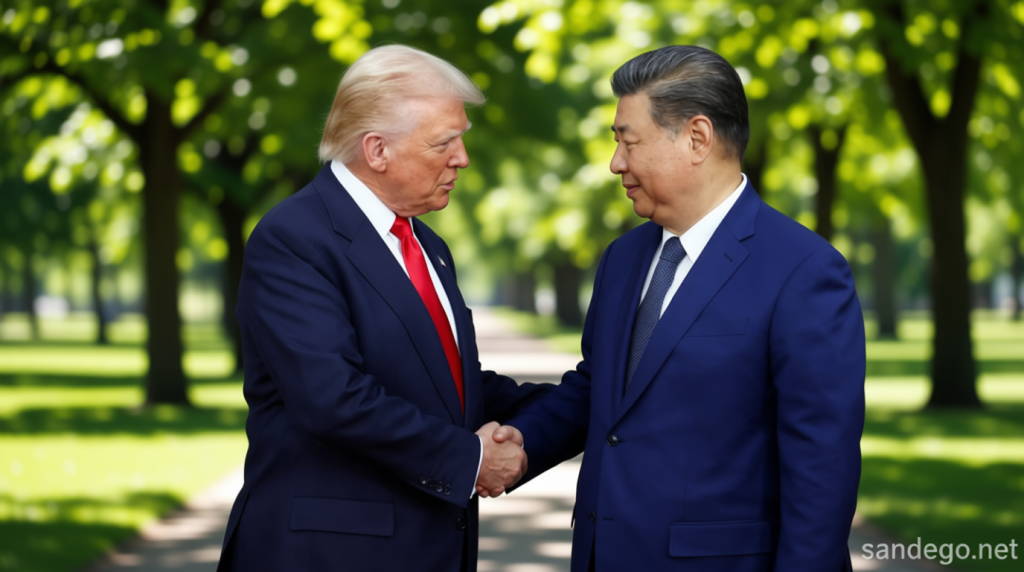
In recent weeks, the summit in Beijing between President Donald Trump and Chinese leader Xi Jinping has spotlighted a different trio of Ts: tariffs, technology, and Taiwan. The inclusion of Tehran as the fourth T marks a significant evolution in the global chessboard of diplomacy. While Taiwan, the self-governing island claimed by Beijing, remains a focal point, the discussion now centers more on economic and strategic interests rather than ideological disputes. This transition reflects a broader shift in how the United States and China approach their bilateral relationship, prioritizing trade and technological competition over human rights debates.
US Secretary of State Marco Rubio, once a vocal critic of China’s policies, has become notably more reserved in recent years. His earlier activism, which drew Beijing’s ire, has given way to a quieter stance as the administration increasingly delegates foreign policy to the Treasury Department. Scott Bessent, the cabinet secretary leading trade negotiations, has taken the helm in steering the most consequential bilateral ties. This move underscores a strategic realignment, where economic leverage supersedes the moral imperatives of past administrations.
Xi’s Consolidation of Power and the Global Shift
Xi Jinping, the most influential Communist leader since Chairman Mao Zedong’s passing in 1976, has demonstrated an unrelenting grip on China’s political, economic, and military frameworks. His policies have restructured the economy with state-backed initiatives, bolstered military capabilities through centralized control, and reinforced ideological cohesion within the party. This top-down approach, characteristic of a one-party system, has allowed China to project global influence with unprecedented consistency. The current geopolitical landscape, shaped by Xi’s assertiveness, now sees the United States grappling with its own internal divisions and external challenges.
Donald Trump’s tenure has played a pivotal role in this transformation. His early term laid the groundwork, but the intensity of his actions since returning to the White House in 2025 has significantly tilted the balance in favor of Beijing. By upending established trade norms and security alliances, Trump has created an environment where China can capitalize on both strategic and moral advantages. Critics argue that his policies have not only weakened US alliances but also diminished the country’s ability to counter China’s growing presence.
“Nation-Building Trump” is a moniker that has stuck in Chinese social media, reflecting the perception that his decisions have inadvertently strengthened China’s global standing.
The war with Iran, launched by Trump’s administration, exemplifies this dynamic. While the conflict has sown chaos in the Middle East, it has also diverted US attention and resources from other critical regions. China, meanwhile, has maintained a steady hand, leveraging its control over rare earth minerals—essential for advanced weaponry and technology—to assert dominance. With oil prices fluctuating and the US embroiled in prolonged conflicts, China’s early commitment to green energy has positioned it as a more resilient economic power. This resilience is seen as a bargaining chip in negotiations with Trump, who seeks Xi’s support to pressure Beijing’s ally in Tehran.
Economic Challenges and Strategic Maneuvers
Despite China’s economic strength, it faces its own set of challenges. The country’s manufacturing and service sectors have been embroiled in self-defeating price wars, while domestic consumption remains sluggish. High youth unemployment and a demographic crisis, marked by declining birth rates, have further complicated the picture. Yet, Xi’s leadership has shown a knack for navigating these pressures. By offering billions in purchases of American agricultural products and Boeing jets, he can ensure Trump highlights tangible “deliverables” from the summit, crucial for maintaining domestic political support ahead of mid-term elections.
The “Board of Trade” concept, proposed by Trump officials, aims to streamline bilateral negotiations. However, China’s bureaucratic machinery—comprising over 7 million civil servants—has proven adept at adapting to such structures. The establishment of additional councils at the summit suggests a calculated effort to manage both sides of the equation, ensuring China’s interests are prioritized without alienating key US stakeholders.
A Declining Empire and Rising Superpower
The Chinese public, inundated with state media narratives, has increasingly viewed the United States as a declining empire. Coverage of Trump’s domestic and international actions—particularly the chaos in the Middle East and within the US itself—has fueled this perception. Surveys show a growing alignment of global leaders with Xi’s China, even among American allies. This shift is not merely a result of policy but also of cultural and ideological perceptions, as the world becomes more attuned to China’s model of development.
While the idea of China benefiting from US distractions may seem clichéd, it is rooted in reality. The Iran war, for instance, has strained US resources, with its military operations depleting ammunition at a time when China controls the global supply of rare earths. These elements are vital for modern weapon systems, giving China a strategic edge. The combination of economic resilience and political cohesion allows Xi to present a vision of China as the unshakable force driving global progress, even as the US struggles to maintain its traditional leadership role.
In this evolving landscape, the interplay between US and Chinese policies continues to redefine the world order. What was once a relationship defined by human rights debates is now a complex dance of tariffs, technology, and strategic partnerships. As the next chapter unfolds, the lessons from three decades of coverage remain relevant: the ability to adapt, the power of economic leverage, and the enduring impact of leadership on international dynamics.
