
How many ships are crossing the Strait of Hormuz?
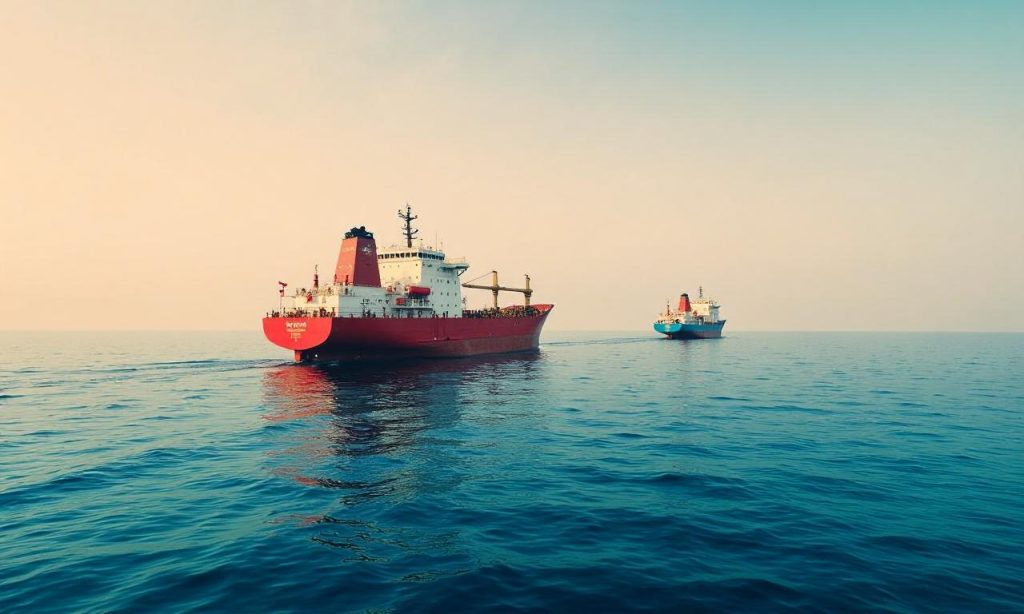
How Many Ships Are Crossing the Strait of Hormuz?
Despite the initiation of a U.S. naval blockade, four vessels connected to Iran have traversed the Strait of Hormuz, as revealed by ship-tracking data. However, two of these ships have since altered their course, according to location updates from MarineTraffic. The U.S.-sanctioned tanker Rich Starry, which declared it was transporting cargo, initially moved eastward from Sharjah, UAE, through the strait during the night but later shifted direction. Similarly, the bulk carrier Christianna, which passed through the waterway on Monday following a stop at Bandar Iman Khomeini in Iran, also reversed its path. Another vessel, the U.S.-sanctioned Elpis, transited the strait on Tuesday, with MarineTraffic indicating it may have originated from Iran’s Bushehr port, though its position on the eastern side of the strait remained stationary in the late evening.
Tracking information also highlights two Iranian-flagged ships departing from near Chahbahar port, located east of the Strait of Hormuz along Iran’s southern coast, after the blockade began. The cargo ship Ashkan3 and container ship Shabdis both left the vicinity on Tuesday and appear to have ventured over 500 kilometers beyond Iranian waters. Yet, the accuracy of vessel locations remains challenging due to potential location spoofing or incomplete data submissions, as noted by analysts.
Blockade and Vessel Movement
U.S. Central Command confirmed that six ships adhered to orders to turn back, stating that “no ships from Iranian ports made it past the blockade.” However, BBC Verify’s analysis of 18 vessels crossing the strait between the collapse of ceasefire discussions and the blockade’s announcement on Sunday evening revealed that at least 16 had ties to Iran. Some operated under the Iranian flag, while others had visited Iranian ports. Prior to the conflict, an average of 138 ships navigated the strait daily, according to the Joint Maritime Information Centre.
“You’ve had nearly 800 ships stuck in there for several weeks. Most of them are now loaded with cargo so the priority is going to be to get them out,” said Richard Meade, editor-in-chief of Lloyd’s List.
The disruption has reverberated globally, destabilizing energy markets and underscoring the reliance of international supply chains on this critical Gulf-to-Indian Ocean passage. Jakob Larsen of the Baltic and International Maritime Council warned BBC Verify about the “risk of further escalation to involve direct attacks on ships” as the blockade intensified. Additionally, ships that have successfully passed through the strait have taken a more northern route, near Iran’s coastline, deviating from the usual southern path through the waterway’s central region.
Uncertainties and Safety Concerns
Thomas Kazakos, secretary general of the International Chamber of Shipping, emphasized the lingering uncertainty around sea mines. “We need to make sure that we have clear confirmation that the safety of navigation for the ships and the seafarers are being agreed,” he stated. The Iranian Islamic Revolutionary Guard Corps (IRGC) Navy outlined permitted routes to avoid potential collisions with sea mines, designating a central area as “dangerous” for vessels to bypass. Meanwhile, two U.S. destroyers—USS Frank E Petersen and USS Michael Murphy—are deployed to clear the mines, as reported by Centcom.
