A Judge Allowed Brendan Sorsby to Return to Texas Tech Amid Gambling Scandal
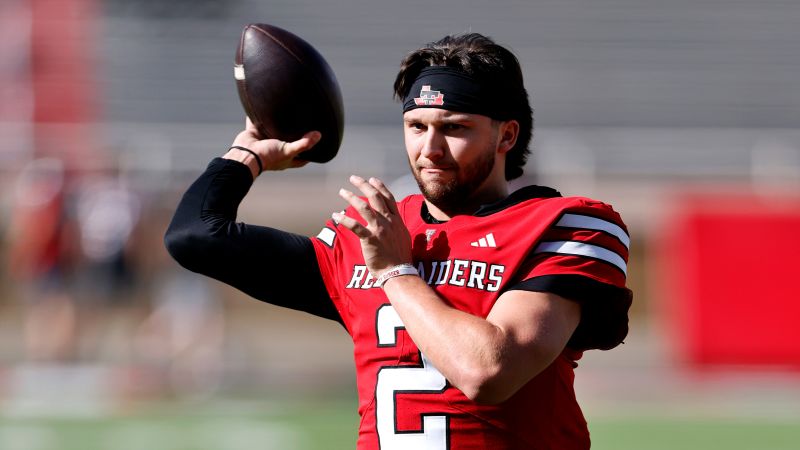
Sandego.net – Monday’s ruling by a Texas judge has sparked new controversy in college sports, granting Brendan Sorsby a temporary injunction to play for Texas Tech despite his gambling activities. The decision comes amid ongoing scrutiny of athletes’ involvement in sports betting, which has raised questions about the integrity of collegiate competition. Sorsby, a quarterback who had been declared ineligible by the NCAA, is now set to resume his role with the Red Raiders after a legal challenge highlighted the tension between personal behavior and athletic opportunity.
From NBA Investigations to College Basketball Scandals
The intersection of sports betting and athletes has become a focal point in recent months. In October, federal authorities launched a major investigation into NBA point-shaving schemes linked to organized crime, uncovering networks that manipulated game outcomes for profit. Two weeks ago, prosecutors detailed how Terry Rozier, a player implicated in the probe, accepted $100,000 to deliberately injure himself during a game, enabling gamblers to secure substantial gains. This case exemplifies the broader issue of athletes risking their careers for financial gain, a pattern that has now extended to college basketball.
Since January, over two dozen college basketball players have faced permanent bans for game-fixing. The most recent additions to this list included four individuals from Alabama State, who were deemed ineligible after their alleged involvement in betting rings. Many of these players were lured by career criminals, some of whom had previously been charged with murder, promising quick cash in exchange for compromising the game. The NCAA’s rules, which prohibit athletes from wagering on sports while competing, were meant to prevent such scenarios, but enforcement has proven inconsistent.
Despite these guidelines, the association between betting and college sports has grown more complex. Sorsby’s case underscores how athletes can navigate the rules with seemingly clever strategies. While at Indiana, he wagered more than $90,000 on sports, including over 40 bets on the Hoosiers. The NCAA accused him of betting on opposing players to “overachieve” in games against his team, a charge that adds layers to the scandal. Though he admitted to betting on his own team, he never directly manipulated a game’s outcome during his college career.
The Legal Battle and Its Implications
Monday’s ruling by Judge Ken Curry, based in Lubbock—Texas Tech’s home city—has drawn sharp criticism for its leniency. The judge argued that Sorsby would suffer “probable, imminent, and irreparable injury” if barred from playing, conveniently overlooking the long-term consequences of his gambling habits. Sorsby’s attorneys claimed the NCAA’s actions were overly harsh, suggesting the organization was targeting his mental health condition rather than his actions.
“Whatever the reason for his behavior, he broke the rules and should receive an exception that no other athlete, in history, has ever received,” the NCAA stated in a formal statement. This line reflects the organization’s frustration with the case, which challenges its authority to enforce betting regulations. However, the judge’s decision has created a precedent that may embolden others to test the limits of NCAA policy. Critics argue that allowing Sorsby to return to the field sends a message that personal betting can be forgiven if it doesn’t directly affect a game’s result.
Sorsby’s gambling history dates back to high school, where he began wagering on obscure events like Turkish men’s league basketball. By the end of his freshman year, he admitted to being “truly” addicted, a vulnerability that may have led him to place bets on his own teams. His attorneys framed this as a mental health issue, arguing that the NCAA’s rules were too rigid and that his continued participation in the NFL draft would be jeopardized without the opportunity to play.
A Contradiction in College Sports Rules
The NCAA’s stance on gambling is often cited as a model for protecting athletic integrity, yet its enforcement of the rule in Sorsby’s case has been questioned. Major professional leagues have stricter guidelines. For example, Major League Baseball prohibits bets on youth games, while the NHL and NBA bar athletes from wagering on their own league events. The NFL is particularly strict, banning players from placing bets on any games, even those not involving them directly, and restricting their presence in sportsbooks during the season.
Had Sorsby reached the NFL, his betting history likely would have resulted in immediate termination. But the judge’s decision to let him return to college football suggests a disparity in how different leagues handle the issue. The ruling also raises concerns about the NCAA’s ability to balance accountability with compassion, especially when dealing with athletes who may struggle with addiction.
In a twist of irony, the judge’s leniency highlights the broader addiction to football that permeates college athletics. Sorsby’s case is emblematic of a system that prioritizes the game’s prestige over the personal struggles of its participants. The judge’s argument that Sorsby would suffer if denied the field seems to ignore the damage his gambling might do to his own career, as well as the ripple effects on college sports as a whole.
The Bigger Picture: A Slippery Slope in College Sports
While the NCAA maintains that its rules are clear and necessary, the Sorsby case illustrates how easily they can be circumvented. The judge’s decision to allow him to play, despite his own betting on teams he represented, may set a precedent for future athletes. This could lead to a broader acceptance of betting on one’s own team, weakening the NCAA’s ability to prevent game-fixing.
“The NCAA’s rules are designed to protect the integrity of the game,” one analyst remarked, “but this ruling shows they’re not always applied uniformly.” The case also highlights the role of financial incentives in shaping athlete behavior. Sorsby’s attorneys emphasized that the NCAA’s punishment was disproportionate, given his commitment to seeking help for his addiction. However, the judge’s focus on immediate consequences may overlook the long-term risks, both for Sorsby and the credibility of college sports.
As the debate continues, the Sorsby case serves as a microcosm of the larger crisis facing college athletics. The NCAA’s rules, once seen as a robust safeguard, are now being tested by a system that rewards performance but allows for personal lapses. Whether this decision marks a turning point or a continued decline in the sport’s standards remains to be seen. One thing is certain: the line between athlete and gambler is growing thinner, and the consequences could be far-reaching.
“Whatever the reason for his behavior, he broke the rules and should receive an exception that no other athlete, in history, has ever received.”
The ruling may also prompt questions about the NCAA’s role in enforcing rules. While it has taken a firm stance on college basketball players, its approach to football has been more flexible. This inconsistency has fueled criticism, with some arguing that the organization is using different standards for different sports. For Sorsby, the decision offers a chance to redeem himself, but for college sports as a whole, it may signal a shift toward greater tolerance of betting-related misconduct.