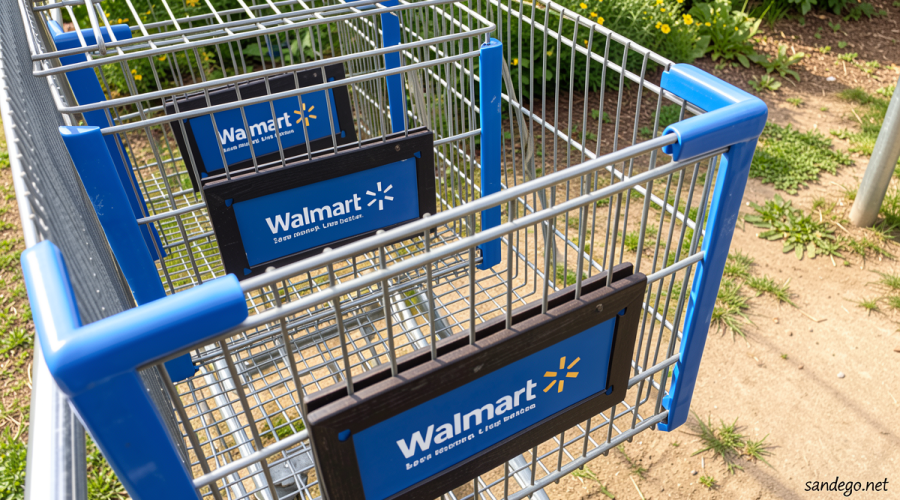
Walmart’s Global Moment: VIP Tours for World Cup Tourists
A Retail Giant Captivates International Visitors
Sandego.net – The Statue of Liberty stands as an enduring symbol of America, and the Hollywood sign has become synonymous with entertainment capital. Yet in recent years, something unexpected has emerged as a cultural touchstone for travelers: Walmart. The nation’s biggest retailer has found itself at the center of a viral phenomenon, drawing millions of views on social media platforms through videos created by international visitors experiencing the American big-box store for the first time.
These clips, featuring tourists from around the world marveling at oversized products and unique American offerings, have accumulated thousands of comments and millions of views. Recognizing this organic enthusiasm, Walmart has decided to harness this momentum by offering two exclusive VIP tours designed to help visitors “explore the oversized products, iconic snack aisles and uniquely American finds” within its massive retail locations.
Tour Details and World Cup Integration
The first tour will be held in New Jersey, timed to coincide with the World Cup final. The second experience will take place in Miami following the quarterfinal match between Norway and England. Both tours are reserved for the first twenty individuals who arrive in line for a special World Cup parking lot experience that Walmart is organizing in collaboration with Laliga, Spain’s premier soccer league.
Participants in these guided experiences will receive custom Walmart passports complete with aisle stamps, promotional merchandise, knowledgeable tour guides, and curated product samplings. While the excitement is palpable, Walmart has clarified that guests will not be departing with their own industrial-sized drums of ranch dressing as keepsakes.
TikTok Fame and International Reactions
America’s corporate brands have long been recognized as global powerhouses, driven by devoted customers who shop with remarkable enthusiasm. This year, however, US TikTok users discovered that Walmart has become an integral part of America’s international image. Irish tourist Mick Madeiros captured attention on TikTok by expressing amazement that Walmart sells Fruity Pebbles cereal in substantial, heavy bags—comparing them to the same packaging used for dog food.
Meanwhile, English visitor Harry Gunns described the vibrant chips aisle as “absolute insanity in all the best ways.” Australian travelers have even adopted Walmart as a pregame destination, chanting “We are going to Walmart” in what some observers see as evidence that America lacks traditional third spaces for socializing.
Perhaps the most surprising moment came when Lamine Yamal, the eighteen-year-old Spanish soccer prodigy, was photographed pushing a Walmart cart out of a store in Fort Oglethorpe, Georgia.
FIFA Guidelines and Creative Marketing
World Cup sponsorship operates under tight FIFA regulations, which has prompted unusual modifications at existing venues. MetLife Stadium, traditionally the home of the New York Jets and Giants, has been rebranded as “New York/New Jersey Stadium” because the insurance company is not an official FIFA sponsor. Similarly, Levi’s Stadium in Santa Clara, California, was temporarily renamed San Francisco Bay Area Stadium, with its logo covered by a tarp cut precisely to the outline of the Levi’s emblem.
This concealed logo became the foundation for a global marketing campaign by the company, which began covering its signage in the same manner at stores in World Cup-crazed nations including France, Brazil, and Mexico.
Expert Perspective on Brand Recognition
According to Alexander Chernev, a marketing professor at Northwestern University, these strategic moves by iconic American companies demonstrate significant brand power. “If customers ‘can still recognize the logo, that actually gives you more awareness than if you haven’t done anything to begin with,'” he explained.
While Walmart is not an official World Cup sponsor either, leveraging social media conversation allows the company to benefit from the tournament without paying FIFA—particularly valuable when audience attention spans are fragmented. “The impact of advertising online is becoming less and less impactful because of media clutter,” Chernev noted. “So, more and more companies are looking for different ways to engage with customers.”
Even for those unable to attend the in-person tours, Walmart continues showcasing its stores to international visitors through social media channels. One store associate named Ann was recently featured on the corporate Walmart account, highlighting must-see items for first-time visitors. She enthusiastically presented colossal jars of peanut butter, ranch dressing, and jalapenos, remarking, “You can make a bunch of sandwiches with that!”
Correction: This story has been updated to clarify the town in which Lamine Yamal visited a Walmart.