The Smell of Death Lingers in Venezuela’s Ruined Streets as Overwhelmed Hospitals Race to Save Lives
A Nation on the Brink
Sandego.net – Before the recent seismic disasters, Venezuela’s infrastructure was already strained by years of mismanagement and economic hardship. The two consecutive earthquakes that struck the country last Wednesday exposed the fragility of its systems, particularly in healthcare. At Dr. José Manuel de Los Ríos Children’s Hospital in Caracas, the situation has deteriorated to the point where only four children can be treated simultaneously in the intensive care unit. Dr. Huníades Urbina-Medina, a physician at the facility, recalled that the hospital once handled up to ten patients at a time. “But for at least a decade, we’ve lacked enough staff, medications, and mechanical ventilators,” he said, highlighting the long-standing crisis.
The earthquakes have intensified the challenges facing Venezuela’s hospitals. While the official death toll remains at over 1,700 and more than 5,000 injured, the true number may be much higher. The U.S. Geological Survey estimates that the magnitude 7.2 and 7.5 quakes could have caused tens of thousands of fatalities. However, the government has only gradually updated the casualty figures, leaving many to question the accuracy of the data. This pattern echoes past incidents, such as the 1999 earthquake in La Guaira, where the administration failed to release an official death count for weeks.
Hospitals in Crisis
Dr. Urbina-Medina emphasized that no hospital in Venezuela was prepared for a catastrophe of this scale. “We’re dealing with daily emergencies, but this has pushed us beyond our limits,” he explained. The lack of essential resources has left medical teams struggling to provide adequate care. In addition to personnel shortages, many hospitals lack basic supplies like bleach and disinfectant, complicating efforts to maintain hygiene in overcrowded conditions.
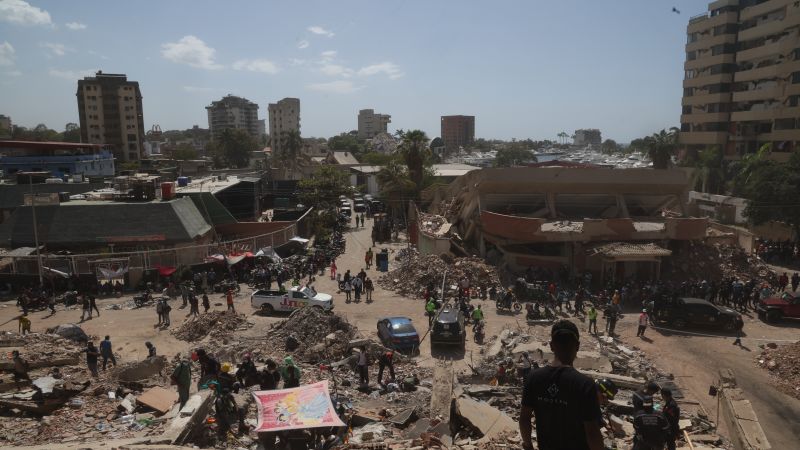
Preliminary reports suggest that 432 schools in Caracas alone have been damaged by the earthquakes. These schools, now serving as temporary shelters, house thousands of displaced families. Despite the destruction, some undamaged buildings remain operational, offering a lifeline to those seeking refuge. Drone footage captures the devastation, showing collapsed structures and shattered streets where rescue operations continue to search for survivors.
Survivors in the Rubble
On Monday, Ecuadorian rescuers made headlines by pulling a 12-year-old boy alive from the rubble in La Guaira. This success came during the so-called “golden window” for survival, a critical period after an earthquake when rescue efforts are most effective. However, as this window closes, the chances of finding more survivors diminish. The boy’s rescue, though, offers a glimmer of hope amid the widespread destruction.
Among those still waiting for news is Mirella Herrera, who has spent days outside her son’s destroyed apartment building, scanning the debris for any sign of him, his wife, and their children. “It’s maddening,” she said, her voice trembling. “I feel desperate and anguished, but I keep walking, staying hydrated, and wondering how they must be. If they’re still alive, they’re probably desperate to escape.” Her determination reflects the resilience of families in the face of overwhelming odds.
Blame and Defiance
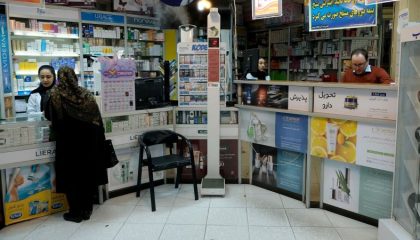
Before the earthquakes, the Venezuelan government had long defended its healthcare system, attributing its shortcomings to U.S. economic sanctions. Dr. Andrés Cortiz, a volunteer with the British charity Healing Venezuela, noted that the system’s vulnerabilities were evident long before the tremors. “Many hospitals are in ruins, and the remaining ones are overwhelmed,” he said. “We’re missing basic supplies like disinfectant, which is crucial for preventing infections in crowded wards.”
Cortiz also highlighted the brain drain of medical professionals, a trend exacerbated by the country’s economic decline. Over the past decade, qualified staff have left Venezuela for better opportunities abroad, leaving hospitals understaffed and under-resourced. This exodus accelerated after then-President Nicolás Maduro was detained by U.S. authorities in January, prompting the government to end Cuba’s medical mission—a vital source of healthcare in underserved regions.
Odor of Decay
More than 24 hours after the earthquakes, the scent of decay has become a constant presence in Caracas. Collapsed buildings now emit a pungent smell that lingers in the air, a stark reminder of the devastation. Yet, this odor does not deter families who have set up makeshift camps near the ruins. “We keep coming back, hoping for a miracle,” said one mother, her eyes red from exhaustion. “Even if it means sleeping on the ground, we won’t leave until we know what’s happened to our loved ones.”
While the government focuses on incremental updates to casualty numbers, the reality on the ground is more dire. The ICU at Dr. José Manuel de Los Ríos Children’s Hospital has become a frontline of desperation, with limited capacity to treat the influx of patients. The 12-year-old girl, crushed under a collapsed structure, represents the human toll of the disaster. Her agony is palpable, and her survival depends on the availability of critical care—a luxury many are denied.
A Longstanding Struggle
As the dust settles, the earthquakes have laid bare Venezuela’s deepening crisis. The country’s economic sanctions and mismanagement have eroded its ability to respond to emergencies, creating a system ill-equipped for such scale. Dr. Urbina-Medina described the hospitals as “living testaments to the collapse of our infrastructure,” emphasizing the need for immediate international aid. “Without more resources, we’ll be forced to make impossible choices,” he warned.
The aftermath of the earthquakes has also disrupted education, with schools forced to close or repurpose their spaces. This shift underscores the interconnected nature of Venezuela’s challenges, where healthcare and education systems are both struggling under the same pressures. For families like Herrera’s, the dual crises of disaster and decline have created a precarious existence, where survival hinges on the resilience of individuals and the strength of communal support.
Despite the grim outlook, some hope remains. Rescuers continue their efforts, and communities band together to care for the injured. Yet, the scent of death that lingers in the streets serves as a haunting symbol of the nation’s plight. As the government struggles to provide clear answers, the people of Venezuela face the long road to recovery, one that begins with the simplest act of staying hopeful in the face of overwhelming loss.