Corruption Charges Lead to Overnight Arrests of Iraqi Officials in Green Zone
Sandego.net – On Sunday morning, Iraqi authorities conducted a surprise operation targeting several high-ranking political figures, detaining them on accusations of corruption. The Iraqi News Agency, the country’s state-run media outlet, confirmed the arrests, citing a statement from former Deputy Minister of Oil Adnan al-Jumaili. Al-Jumaili, who was apprehended in June, reportedly provided the evidence that led to the action. Among those taken into custody were members of Parliament whose immunity had been revoked, marking a significant escalation in efforts to root out graft within the government.
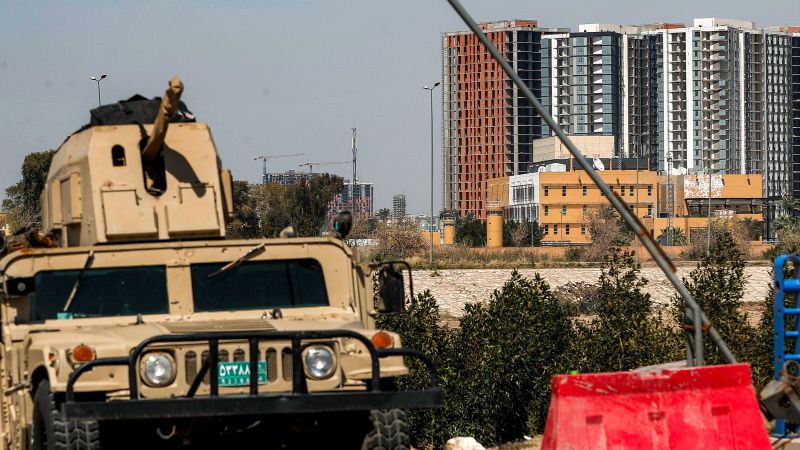
The operation focused on the Green Zone, a heavily secured area in Baghdad housing critical government offices and foreign embassies. Security forces sealed all entry points to the zone before dawn, conducting searches and seizing documents during the raids. The Green Zone, often referred to as the heart of Iraqi administration, has become a recurring target for anti-corruption campaigns, reflecting the deepening scrutiny of power-holding elites. While the exact number of detainees remains unclear, preliminary reports suggest seven individuals were arrested, with five identified as parliamentary representatives.
Among the arrestees were prominent members of the political bloc led by former Prime Minister Mohammed Shia al-Sudani, who had previously dominated the nation’s political scene. The bloc, which secured the largest number of seats in the November parliamentary elections, was already embroiled in internal disputes over leadership. Al-Jumaili’s arrest last month had sparked tensions, as his allegations against the party’s core members intensified the perception of corruption within the group. The current operation, however, appears to have broader implications, targeting individuals who may have benefited from systemic mismanagement of public funds.
“The arrests were made following a comprehensive investigation that uncovered extensive financial irregularities,” stated a security agency report obtained by The Associated Press. “Five members of Parliament, along with two senior officials, were detained as part of a coordinated effort to dismantle networks of embezzlement and influence peddling.”
Al-Sudani’s political alliance, known as the Coordination Framework, had long been a coalition of Shiite parties with strong ties to Iran. Despite securing a majority in the November elections, the bloc faced a leadership crisis when it could not agree on a candidate for prime minister. This deadlock led to al-Sudani’s resignation, paving the way for Ali al-Zaidi, a businessman and political newcomer, to take over. Zaidi’s selection was praised by U.S. officials as a pragmatic move that balanced regional interests with reformist aspirations.
The arrests are expected to reverberate across Iraq’s complex political landscape, where corruption allegations frequently intertwine with power struggles. The Green Zone, a symbol of stability in a country plagued by political instability, now stands as a focal point for accountability. Analysts suggest that the operation may embolden critics of the current government, particularly those from opposition factions, to demand similar measures against their rivals. The timing of the raids, coinciding with al-Sudani’s recent exit, could signal a shift in the balance of influence between traditional power brokers and emerging reformers.
Corruption in Iraq has long been a bipartisan issue, with accusations often directed at both ruling and opposition parties. The detention of members from al-Sudani’s bloc highlights the extent to which graft has permeated even the most influential political groups. While the specific charges against the detainees remain under investigation, the operation has raised questions about the transparency of public spending and the role of key institutions in perpetuating it. The Iraqi News Agency emphasized that the arrests were part of a broader strategy to “cleanse the government of illicit practices and restore public trust.”
As the political landscape continues to shift, the impact of these arrests could extend beyond individual cases. The Coordination Framework, which has historically maintained a tight grip on power, may face internal challenges as some of its members are removed. Meanwhile, the rise of Ali al-Zaidi as a consensus candidate has been seen by some as a step toward more inclusive governance, though his administration will need to address the corruption scandals that have shadowed his predecessors. The United States, which has supported Zaidi’s leadership, will be closely monitoring the situation, as Iraq’s political stability is critical to regional security.
Experts note that the Green Zone’s role as a hub for political negotiations and decision-making makes it a prime location for such operations. The raids, conducted without prior warning, underscore the urgency with which authorities are tackling corruption. However, the effectiveness of these measures depends on the transparency of the investigations and the willingness of the judiciary to hold officials accountable. The arrests also highlight the growing reliance on forensic evidence and intelligence-gathering to dismantle entrenched power structures.
With the political tensions in Iraq reaching a new peak, the overnight raids have intensified debates about the role of anti-corruption efforts in shaping the country’s future. While some view the action as necessary to curb systemic abuse, others fear it could be used to target specific factions and consolidate control. The situation in the Green Zone remains a microcosm of the broader challenges facing Iraq, where economic hardship and political fragmentation often collide. As the investigation unfolds, the arrests may serve as a catalyst for both reform and renewed conflict within the nation’s political circles.
The allegations against the detainees include accusations of misusing public funds, bribery, and unauthorized contracts. These charges, if substantiated, could reshape the dynamics of Iraq’s legislative and executive branches. The Iraqi News Agency reported that the operation was part of a multi-agency effort involving security forces and intelligence units, indicating a well-orchestrated strategy. As the political landscape evolves, the success of these measures will likely determine whether Iraq can move toward a more transparent and equitable governance model.
While the immediate focus is on the detained officials, the broader implications of the raids are significant. The Coordination Framework’s loss of key members may weaken its influence, potentially opening the door for alternative political forces. However, the process of replacing those implicated in corruption is not without challenges, as it requires navigating the intricate web of alliances and rivalries that define Iraqi politics. The arrest of members from al-Sudani’s bloc, in particular, could complicate the transition of power and affect the stability of the new government.
International observers have expressed cautious optimism about the arrests, noting that they represent a critical moment in Iraq’s fight against corruption. However, the long-term success of these actions will depend on the establishment of robust legal frameworks and the prosecution of cases without political bias. The Green Zone, as a symbol of both opportunity and oppression, continues to be a battleground for the nation’s future. As the investigation proceeds, the outcome may serve as a barometer for the health of Iraq’s democratic institutions and the resolve of its leadership to address systemic issues.