A Record Heat Wave Intensifies Across Europe, Spurring Demand for Sustainable Solutions
Sandego.net – Europe is currently experiencing an unprecedented heatwave, with temperatures in May surpassing historical records and extending into the current week. This extreme weather pattern has underscored the urgent need for innovative strategies to mitigate the effects of climate change on urban environments. As the continent grapples with rising summer temperatures, experts are turning to natural alternatives to address the growing demand for energy-efficient housing. Among these, hemp has emerged as a promising material, offering a dual benefit of thermal regulation and environmental sustainability.
The Case for Hemp in Building Insulation
Hemp, derived from cannabis plants with negligible THC content, is gaining attention for its unique ability to manage indoor temperatures. When incorporated into insulation systems, it acts as a natural thermal buffer, reducing the need for artificial heating and cooling. “As summer conditions become more intense, we need materials that adapt to these changes,” explains Olivier Beghin, co-founder of IsoHemp, a Belgian enterprise specializing in hemp-based construction solutions. Beghin emphasizes that hemp’s properties provide a practical response to the region’s heating challenges, particularly in older structures that lack modern insulation.
“We have a good solution in order to insulate against the heat.”
EU’s Ambitious Energy Efficiency Goals
The European Union has set a target for carbon neutrality by 2050, with the building sector identified as a critical area for progress. According to EU reports, approximately 40% of the energy consumed across the bloc is used in residential and commercial buildings, primarily for heating, cooling, and hot water. This statistic highlights the sector’s potential to drive emissions reductions. Hemp, with its biodegradable and recyclable qualities, is positioned as a key player in this transition. “Hemp can play a significant role in reaching this objective,” says a EU representative, noting its ability to absorb CO2 during production.
Applications and Market Expansion
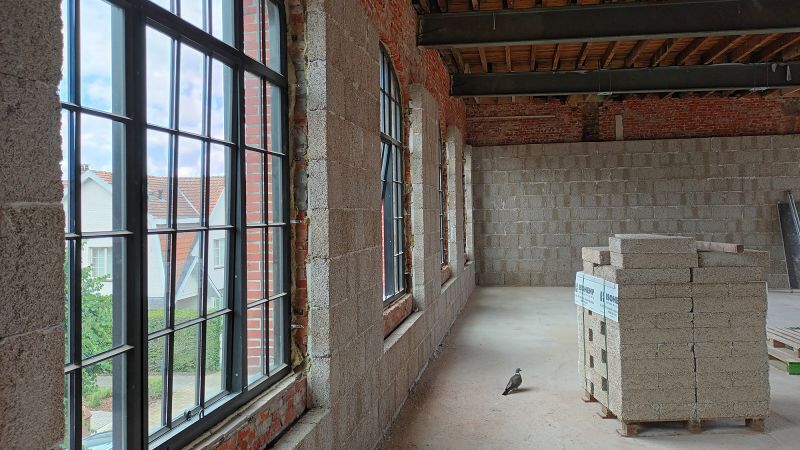
IsoHemp’s hemp blocks, blended with lime binders, are designed to be versatile for both interior and exterior wall applications. The company’s products are already being utilized in over 2,000 projects this year, ranging from public housing in Belgium to a six-story residential complex in France and a historic 17th-century structure in Versailles. Beghin points to older buildings as the primary market for hemp insulation, citing that roughly 30% of European structures were constructed before 1945 and often suffer from inadequate insulation. By adding internal insulation to these walls, energy savings of 15 to 20% can be achieved, while maintaining breathability to prevent mold growth.
“They need a product that can still breathe.”
Advantages Beyond Thermal Regulation
Beyond its temperature control capabilities, hemp offers additional environmental benefits. Hempcrete, a composite material made from hemp, lime, and water, is naturally resistant to pests, fire, and moisture. This resilience reduces maintenance costs and enhances the longevity of structures. Unlike petroleum-based insulation, which contributes to carbon emissions during production, hemp is considered carbon neutral or even carbon negative, depending on its formulation. Studies suggest that hemp’s rapid growth rate allows it to sequester twice as much CO2 as traditional trees, making it an attractive option for eco-conscious developers.
Challenges and Innovations in Hemp Construction
Despite its advantages, hempcrete faces some technical limitations. For instance, its structural strength is insufficient for use as a standalone load-bearing material, requiring integration with supporting frameworks. Additionally, spray-on applications can take up to eight weeks to dry, prompting companies like IsoHemp to develop precast blocks that streamline the process. Beghin highlights that the cost of hemp insulation varies based on market conditions and usage, placing it in the middle-upper price range compared to conventional alternatives.
Government Support and Industry Growth
Support for hemp-based construction is growing, with several countries setting ambitious targets. The Netherlands aims to incorporate 30% bio-based materials into 30% of new homes by 2030, while France’s RE2020 regulation encourages the use of biodegradable materials in public buildings. In the UK, Greencore Homes plans to construct 10,000 homes using hempcrete panels by 2035, backed by £8 million in government funding. This investment reflects a broader trend toward sustainable materials, with the EU’s hemp production expanding by 84% since 2015. As of 2022, the bloc now grows hemp on 33,000 hectares, up from 21,000 hectares in 2015, with France accounting for over 60% of the total and Troyes being a major supplier for IsoHemp.
A Growing Ecosystem of Hemp Builders
While IsoHemp leads the market in Europe, other companies are also contributing to the development of hemp-based solutions. The global thermal insulation market, which includes hemp products, is projected to reach $38.7 billion by 2027, with Europe maintaining its position as the largest market. This growth is driven by increasing awareness of climate impacts and the push for renewable materials in construction. Steve Allin, director of the International Hemp Building Association, notes that hemp construction remains concentrated in specific regions, including France and the UK, due to established supply chains and regulatory support.
The Path Forward for Hemp in Europe
As the EU prepares for stricter emissions standards, with public buildings required to be zero-emission by 2028 and all new structures meeting the same benchmark by 2030, the adoption of hemp is expected to accelerate. This shift aligns with the material’s inherent qualities, from its ability to regulate indoor climates to its positive carbon balance. While challenges such as drying times and structural limitations persist, innovations in product design and manufacturing are addressing these gaps. With continued investment and policy backing, hemp is poised to become a cornerstone of Europe’s green building revolution, offering a scalable solution to the continent’s escalating energy demands.