I Went to a $5,000 ‘Man Camp’ in California. It Took a Surprising Turn
Sandego.net –
Has anyone ever made you feel like they’re peering directly into your essence? It’s an unsettling sensation, one that leaves you unmoored. I experienced this when a woman across from me locked eyes with me during a session at a remote retreat. Her words felt like a scalpel: “I feel like we’re missing whatever you’re wanting to connect on.” It was life-coach jargon for “I see through your fluff.” She didn’t blink. There was no retreat, no hiding. The moment demanded honesty. I was ready to surrender.
Exploring the Manosphere’s Flip Side
My journey to Sonoma, California, was rooted in a broader narrative: the manosphere, a term describing a network of young men who’ve adopted a militant stance against traditional gender roles, often linked to misogyny. The pandemic exacerbated their isolation, creating a perfect storm for loneliness and confusion. Yet, amid the chaos, a solution emerged. Lori Jean Glass, a life coach and founder of Pivot, was offering a male-only retreat, a radical approach to redefining masculinity.
Unlike the typical manosphere, which thrives on defiance, Glass’s camp aimed to heal. She began her career in licensed treatment facilities, then shifted focus to women’s retreats. Now, her team of female coaches guides men through a five-day immersion in self-reflection. The concept was intriguing, but the price tag—$5,000—raised questions. Was this retreat a lifeline or a luxury trap?
Inside the Retreat: A Journey of Self-Discovery
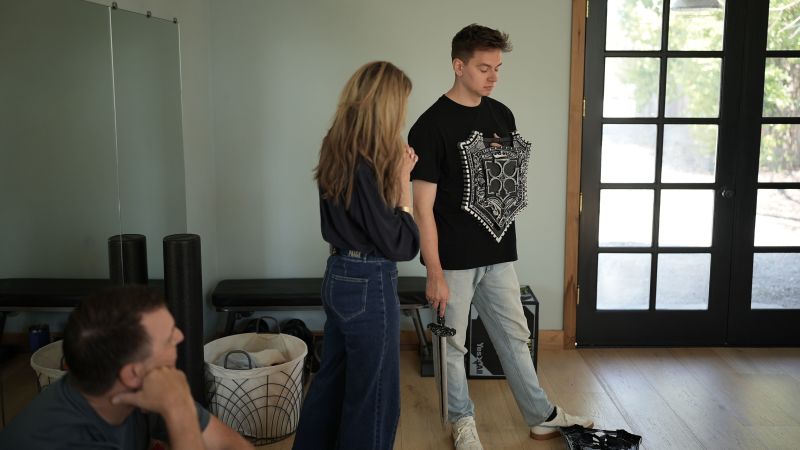
The retreat was more than a vacation; it was an experiment in vulnerability. Glass insisted we leave our phones behind, a decision that felt like severing a lifeline for journalists. We arrived after a two-hour drive from San Francisco, greeted by her with a mix of enthusiasm and apprehension. “We’re all in this together,” she said, hinting at the intensity of what lay ahead.
Within minutes, the men began to open up. Matt, a former NFL player, shared his grief over his father’s passing. “I was holding onto the idea of being strong,” he said, his voice cracking. Jason, who had lost his wife to breast cancer, spoke of his struggle to redefine his role as a caregiver. “I felt like I was losing myself,” he admitted. Geoff, meanwhile, worried about his children’s independence. “They’re growing up too fast,” he said, his tone laced with nostalgia.
These stories were raw, unfiltered. The retreat wasn’t about grand gestures or sweeping declarations—it was about listening, reflecting, and connecting. Glass’s team facilitated discussions, encouraging men to confront their insecurities. The process felt intimate, almost therapeutic. But was it enough to counter the manosphere’s influence?
From Skepticism to Reflection
As a journalist, I’d always believed in keeping my personal narrative separate from the story. But this retreat challenged that belief. I’d arrived with a notebook, ready to document, yet found myself recording my own thoughts. “You can’t just observe this,” Glass said during our first session. “You have to feel it.”
Her approach was unconventional. While her team had coaching backgrounds, none were licensed psychotherapists. Yet, the environment was carefully curated. California, known for its wellness culture, seemed the ideal backdrop for such a journey. The retreat combined mindfulness exercises, group therapy, and storytelling. It was a blend of self-help and experiential learning.
Initially, I was skeptical. Could a five-day program truly address the deep-rooted issues in the manosphere? What if the men’s wounds were too deep to heal in such a short time? But as the days passed, I began to see the value. The men weren’t just sharing stories—they were rebuilding their sense of identity.
One evening, we sat in a circle, recounting our fears and hopes. “I used to think being a man meant never showing weakness,” said one participant. “Now I realize it’s about embracing it.” Another confessed, “I’ve been so focused on proving myself that I forgot to live.” These moments were rare, yet powerful.
The retreat’s intensity was undeniable. By day three, the group had formed a bond, a camaraderie that felt both comforting and unsettling. We laughed, we wept, and we wrestled with our pasts. The process was cathartic, but it also left me questioning my own assumptions.
Journalism and the Inner Journey
As the week unfolded, the line between observer and participant blurred. I wasn’t just reporting on men’s struggles—I was living them. “This is the most personal assignment I’ve ever had,” I told David Culver, my colleague and fellow participant. “I’m not just telling their story. I’m writing mine too.”
It was a revelation. Journalism had always been about detachment, about capturing the world without letting it touch you. But here, I was forced to confront my own biases. I’d assumed the manosphere was a monolith, a movement of toxic men. Yet, through the retreat, I saw the complexity. These men were not just fighting against stereotypes—they were fighting to be understood.
The camp’s impact extended beyond the individual. It was a microcosm of a larger movement, one that sought to reclaim masculinity. Glass’s vision was clear: to create a space where men could explore their emotions without judgment. “Masculinity isn’t broken,” she said in a video reflection. “It’s just been narrowed. We’re expanding it.”
By the final day, the men had transformed. They weren’t the same people who had arrived a week earlier. The retreat had stripped away layers, exposing vulnerabilities that had long been hidden. For some, it was a breakthrough. For others, it was the beginning of a long journey.
As I packed my things and prepared to leave, I thought about the questions that had driven me here. Was this expensive escape the answer to the crisis facing men? Perhaps not entirely, but it was a step. In a world where traditional masculinity often feels like a prison, this camp offered a glimpse of freedom.
Back in San Francisco, I replayed the experience. The manosphere had framed men as isolated, but the retreat revealed a different truth: that many men were simply searching for connection. They needed a space to speak, to listen, and to heal. And for some, that space was the first time they’d ever felt seen.
A New Understanding of Masculinity
Leaving the retreat, I carried a new perspective. Masculinity wasn’t just about strength or stoicism—it was about evolution. The camp had shown me that men, like women, could benefit from emotional exploration. It wasn’t about rejecting the old ways but redefining them.
As I drove away, the weight of the week settled on my shoulders. I hadn’t just covered a story—I’d become part of it. The experience had challenged my role as a journalist, forcing me to balance objectivity with vulnerability.
And yet, I felt a sense of purpose. The men had found a way to reclaim their identity, to break free from the confines of the manosphere. It was a small victory, but one that mattered.
In the end, the retreat wasn’t just about healing. It was about hope. A hope that men could redefine their place in the world, not by rejecting their past, but by embracing a more authentic version of themselves.