Iran’s Man in Charge: The Key Negotiator in U.S. Talks
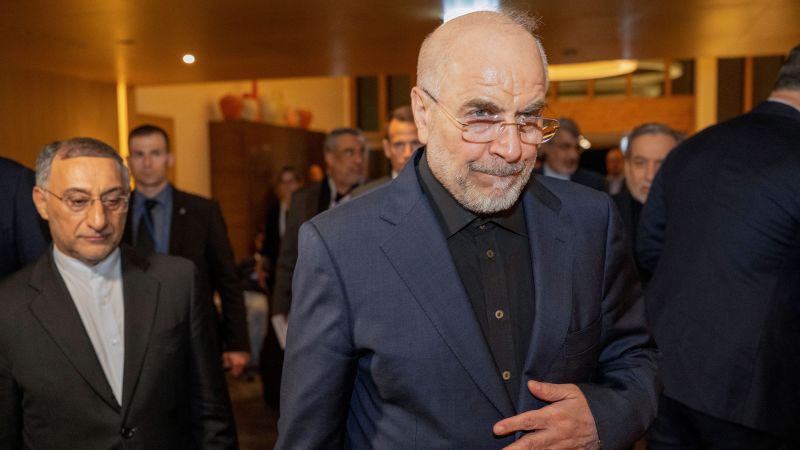
Sandego.net – Iran’s man in charge, Mohammad Bagher Ghalibaf, has taken the lead in the nation’s high-stakes negotiations with the United States. As the Iranian delegation arrived in Zurich, Switzerland, during the weekend, Ghalibaf was the first to step off the plane, underscoring his central role in shaping Tehran’s diplomatic strategy. His presence highlighted a critical shift in Iran’s approach, with the hashtag “#Mindab168” appearing in his social media posts, referencing the March attack that killed 168 children in southern Iran. Ghalibaf’s message, “I consider the innocent children of Mindab and all martyrs of dear Iran to be watching over my every action,” signaled both resolve and the emotional stakes of the talks.
Rise to Leadership in a Turbulent Era
Ghalibaf’s ascent to the top of Iran’s diplomatic team followed a period of intense upheaval. The strikes that targeted Iran’s leadership, including the assassination of Supreme Leader Ali Khamenei and Ali Larijani, created a power vacuum that Ghalibaf capitalized on. Now serving as the speaker of Iran’s parliament, he represents a blend of political experience and military acumen, having previously commanded the air force. His role in the current talks with the U.S. marks a pivotal moment for the country, as he navigates the delicate balance between hardline factions and the need for international dialogue.
Ali Vaez of the International Crisis Group noted that Ghalibaf’s position emerged through a process of elimination. “Iran’s man in charge has become a symbol of stability after years of internal and external challenges,” Vaez said. “His ability to maintain composure under pressure is key to rebuilding trust with the U.S.” The Trump administration’s decision to select Ghalibaf as the primary negotiator was strategic, aiming to engage with a figure more senior than the foreign minister and to underscore the gravity of the discussions.
The U.S. Strategy: Trust and Authority
For the U.S., Ghalibaf’s inclusion in the talks represented a calculated move to secure credibility. According to Ali Ahmadi of the Geneva Center for Security Policy, Washington sought a senior Iranian representative to justify Vice President JD Vance’s involvement. “The U.S. needed someone like Iran’s man in charge to validate the presence of Vance in these critical negotiations,” Ahmadi explained. This choice reflected the administration’s desire to engage with a leader who could both command respect and demonstrate flexibility.
Despite the initial distrust, Ghalibaf’s pragmatic approach has earned recognition. “He combines real influence with a willingness to compromise,” Vaez added. The talks in Islamabad, Pakistan, in April marked the highest-level direct dialogue between Iran and the U.S. since the 1979 revolution. Three rounds of trilateral discussions were held under the guidance of mediators, hinting at a fragile path toward resolution. Ghalibaf’s ability to maintain a firm stance while engaging in dialogue has been central to these efforts.
Defiance and Distrust: A Negotiator’s Dilemma
Yet, Ghalibaf’s leadership has not been without controversy. During a press conference, he acknowledged the delegation’s initial skepticism toward the U.S. “In Islamabad, I told Mr. Vance directly: ‘We entered these negotiations with complete distrust of you,’” he stated. This sentiment echoes Iran’s broader frustrations with the Trump administration’s aggressive posture, including military strikes and rhetorical pressure. Ghalibaf’s insistence on maintaining Iran’s hardline credentials has also shaped the talks, as he seeks to protect national interests while avoiding outright confrontation.
During a recent call with Fox News, Trump emphasized his demands on Iran. “You close it [the Strait of Hormuz] and you won’t have a country,” he reportedly said, challenging Ghalibaf’s team. The negotiator quickly responded on X, questioning the U.S.’s ability to follow through. “Don’t they ever think to themselves that if their threats had actually worked, they wouldn’t have reached this level of desperation today?” Ghalibaf’s retort captured the mutual distrust that continues to define the relationship between the two nations.