Eight Texas Protesters Linked to Antifa Face Federal Sentencing for Immigration Center Shooting
Sandego.net – On Tuesday, eight individuals accused of ties to Antifa received federal prison sentences for their involvement in a shooting incident outside a Texas immigration detention center. The attack, which left a police officer injured, was described by prosecutors as an act of terrorism. Among the defendants, a former U.S. Marine Corps reservist was sentenced to the maximum of 100 years, marking a significant escalation in the case against the group. The sentencing followed a trial where the defendants were charged with participating in the July 4 demonstration that led to the violent confrontation.
Prosecutors Frame Attack as Threat to Democracy
US District Judge Reed O’Connor, one of two judges presiding over the case, declared the event not a protest but “an assault on democracy.” His remarks underscored the severity of the charges, emphasizing the need to deter similar actions. “The need to deter this type of conduct is high,” O’Connor stated, reflecting the government’s stance on the incident. The seven remaining defendants received prison terms ranging from 30 to 70 years, with their legal battles highlighting the broader ideological conflict between far-left activists and law enforcement.
“People with that kind of extremist beliefs need extra time in prison,” said Prosecutor Frank Gatto, who argued for harsh penalties. “They believe violence is justified.”
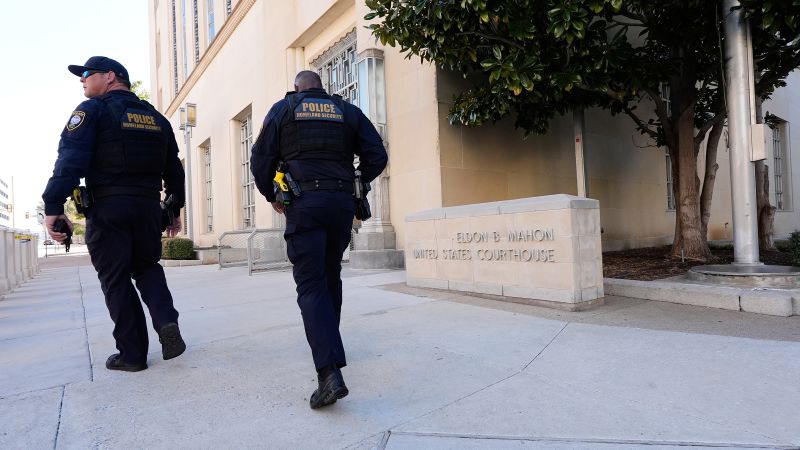
Family members and supporters of the defendants gathered outside the Fort Worth federal courthouse to express dismay over the sentences. Hope Song, whose son Benjamin Song received the longest term, contested the government’s claim that her child intentionally targeted the officer. “He didn’t intend to hurt anyone,” Song said, during a press conference that drew public outcry. Her assertions contrasted sharply with the prosecutors’ narrative, which framed the shooting as a deliberate act of terror.
Antifa as a Decentralized Movement Under Scrutiny
Prosecutors maintained that the eight defendants are members of Antifa, a loose coalition of anti-fascist groups that oppose far-right ideologies. The organization, which lacks a centralized structure, has become a focal point of the Trump administration’s efforts to label left-wing activists as extremists. Last fall, Trump signed an executive order classifying Antifa as a domestic terrorist entity, despite the absence of a formal domestic terror list akin to the one used for international organizations.
While Antifa is often associated with militant tactics, its members describe themselves as grassroots advocates committed to confronting white supremacists. The shooting at the Prairieland Detention Center near Dallas, however, has been used as a pivotal example to justify broader federal crackdowns on such groups. The case has sparked debates about the balance between protecting free speech and addressing threats to public safety.
Defense Argues for Leniency, Cites Innocence
Phillip Hayes, Benjamin Song’s attorney, challenged the prosecution’s portrayal of his client as an extremist. “This is a bunch of kids and young adults who really have a really big heart and really wanted their voice to be heard,” Hayes said outside the courthouse. He contended that the shooting was a result of chaotic circumstances, with Song’s actions described as “suppressive fire” rather than premeditated violence. “The judge gave as much as he could,” Hayes added, noting that his client’s life before the incident was marked by academic success and military service.
“It was never intended that anybody get hurt. It was never intended that any shots would be fired,” Hayes said, reiterating his belief that the defendants were simply defending detained immigrants.
Other defendants and their families pleaded for leniency, emphasizing the peaceful intent of the gathering. Autumn Hill, a participant in the demonstration, described the event as “more like a party” and denied any expectation of violence. “We didn’t want any destruction or harm,” she said, while her sister, Savanna Batten, was highlighted as a compassionate individual with aspirations to start a bakery. Amber Lowrey, Batten’s family member, added that her sister’s activism began with animal rights and later expanded to anti-war and human rights causes. “She’s the best person I know,” Lowrey stated, underscoring the personal stakes in the case.
Guilty Pleas and Legal Strategy
Several of the defendants opted to plead guilty to charges of providing material support to terrorists, bypassing a trial. This strategy allowed prosecutors to secure convictions without the burden of a full courtroom battle. However, the decision to plead guilty has been met with criticism, with some arguing it reflects a broader trend of pressuring activists to accept harsher sentences.
The sentencing of Benjamin Song to 100 years has drawn particular attention, as it represents the maximum penalty under federal law. Critics warn that the case could set a precedent for other protests, potentially undermining First Amendment protections for organizations operating within the U.S. “This could have wide-reaching implications for free speech,” one legal analyst noted, pointing to the risk of conflating legitimate activism with extremist behavior.
Broader Context and Similar Cases
Recent developments in the legal battle against Antifa have been mirrored in other regions. Last week, federal prosecutors in Minnesota charged 15 individuals with obstructing the Trump administration’s immigration enforcement efforts. These defendants were accused of setting up blockades at government buildings and hurling ice chunks at federal vehicles, actions that prosecutors claimed were part of a coordinated effort to impede arrests and deportations.
The Texas case adds to a growing list of incidents where Antifa activists face federal charges for their demonstrations. While the group is often associated with militant tactics, its members have consistently denied ties to terrorism, arguing that their actions are rooted in a commitment to social justice. “We are not terrorists,” said one defendant during the trial, a statement that clashed with the prosecutors’ assertion of the shooting as a “direct threat to the democratic process.”
As the sentences take effect, the debate over Antifa’s role in American society continues. Supporters see the group as a vital force for grassroots resistance, while critics view its actions as a challenge to law and order. The Texas shooting, with its severe penalties, has become a symbol of the administration’s efforts to criminalize protest movements. Whether the case reinforces or weakens First Amendment protections remains a topic of intense discussion among legal experts and civil liberties advocates.
Legacy of the Case
The decision to sentence the eight protesters to decades in prison has raised questions about the justice system’s approach to ideological conflicts. With the former Marine’s 100-year term, the case highlights the potential for extreme punishment in politically charged incidents. Meanwhile, the courtroom drama has drawn public attention to the personal stories behind the charges, including the aspirations of young activists who were once seen as idealistic defenders of human rights.
As the legal proceedings conclude, the impact of the case on future protests looms large. The Federal Bureau of Investigation and Justice Department have used the Texas shooting to demonstrate their commitment to prosecuting individuals they deem as threats to national security. The rhetoric surrounding the trial, however, has also intensified scrutiny of how free speech is interpreted in the context of political movements. For now, the sentences serve as a stark reminder of the high stakes involved in clashes between activists and authorities in the modern political landscape.