
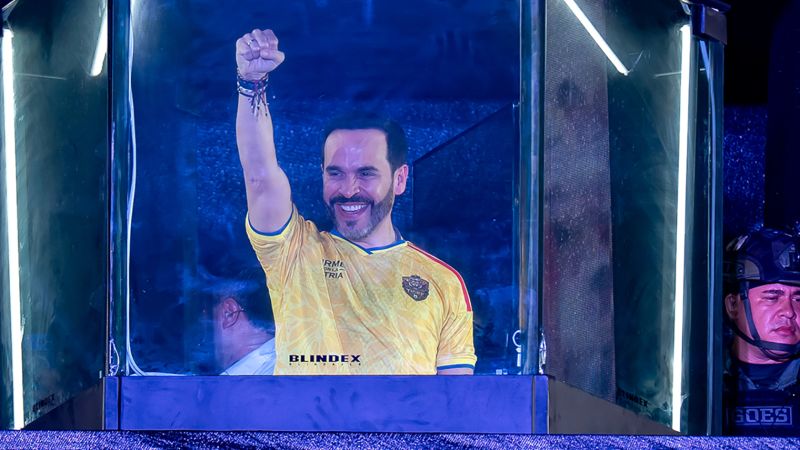
Colombia’s Presidential Race: The Tiger Emerges as Far-Right Leader
Sandego.net – Colombia’s presidential race has seen a significant shift as Abelardo de la Espriella, a Trump-endorsed far-right populist, rises to the forefront with support from the country’s right-wing electorate. Known as “The Tiger,” the 47-year-old candidate is positioned as a bold alternative to traditional political figures, promising swift reforms to tackle crime and security challenges. His campaign, which emphasizes a hardline approach to law enforcement and economic austerity, has resonated with voters disillusioned by years of political gridlock and ineffective governance.
The Tiger’s current lead in the preliminary vote count, with 99.91% of ballots tallied by Sunday, has reignited debates about Colombia’s future direction. While he faces competition from his government-backed rival, Iván Cepeda, the race remains closely contested. Both candidates have acknowledged the results but remain cautious, aware that the final certification by electoral commissions will determine the outcome. This moment marks a pivotal point in Colombian politics, as the nation eyes a potential transformation in leadership and policy.
A Political Outsider with Global Ties
Despite his limited political experience, de la Espriella has built a strong campaign by tapping into international networks. His dual citizenship—U.S., Italian, and Colombian—has drawn both praise and criticism. Supporters argue his foreign connections offer strategic advantages, particularly in advocating for economic reforms and security partnerships. Critics, however, question whether these ties might prioritize external interests over domestic priorities, a concern that has shaped public perception of his leadership.
The Tiger’s alignment with Latin American leaders like El Salvador’s Nayib Bukele and Argentina’s Javier Milei underscores his appeal to a broader populist movement. This coalition, united by a focus on reducing public spending and cracking down on criminal elements, has given de la Espriella a platform to challenge the status quo. Yet, his lack of deep institutional roots in Colombia raises questions about his ability to secure long-term alliances and implement major reforms without facing resistance from entrenched political groups.
From Legal Advocacy to Political Power
De la Espriella’s background as a criminal lawyer has become a cornerstone of his political identity. His defense of high-profile clients, including Alex Saab—a financier linked to Venezuela’s ousted leader Nicolás Maduro—has reinforced his image as a defender of the powerful. This reputation, combined with his work on cases involving U.S. officials, has positioned him as a figure who blends legal expertise with a pragmatic, often controversial, approach to governance.
His strategy for governing hinges on leveraging his legal acumen to advocate for sweeping changes. Proposals such as mega-prisons and budget cuts mirror the policies of leaders like Milei in Argentina, who favor direct, uncompromising measures. While these plans appeal to voters seeking decisive action, they also risk undermining social welfare programs that have long supported Colombia’s most vulnerable citizens. The Tiger’s campaign remains more about rhetoric than detailed policy, leaving room for interpretation in his future governance.
The Challenge of a Fractured Congress
One of de la Espriella’s immediate challenges lies in his party’s limited influence within Colombia’s legislative bodies. The “Defenders of the Homeland” movement, which he leads, holds no seats in Congress or the Senate. This forces him to rely on alliances with traditional right-wing parties to advance key legislation, potentially diluting his populist agenda. His choice of Vice President José Manuel Restrepo, a former finance minister, signals an effort to blend hardline security with fiscal pragmatism, aiming to appeal to both centrist and conservative factions.
De la Espriella’s dual citizenship also introduces complexities. While he embraces his U.S. passport as a symbol of global credibility, naturalized citizens are expected to uphold a pledge of allegiance to their home country. This could create tensions if his foreign ties are seen as favoring American interests over Colombia’s sovereignty. He has argued that his U.S. nationality provides protection against threats, a claim that aligns with his broader narrative of being a leader unbound by domestic constraints.
Peace Agreement Under Scrutiny
As the presidential race intensifies, the fate of Colombia’s peace agreement with the Revolutionary Armed Forces of Colombia (FARC) remains a key issue. De la Espriella’s emphasis on security and law enforcement has raised concerns among peace advocates, who fear his policies might prioritize military action over reconciliation efforts. His campaign’s stance on the peace process could determine whether Colombia continues its path toward lasting stability or shifts toward a more confrontational approach to conflict resolution.
A Nation at a Crossroads
Colombia’s voters are now faced with a critical choice: support a candidate with strong international ties and a focus on security, or back a more traditional leader who emphasizes stability and institutional continuity. The Tiger’s rise reflects a growing appetite for change, particularly among younger and urban voters who are drawn to his decisive rhetoric. However, the success of his presidency will depend on his ability to translate this momentum into tangible policies that address both security and economic concerns.