It’s a 6-3 Supreme Court: Ideological splits mount ahead of major end-of-term rulings
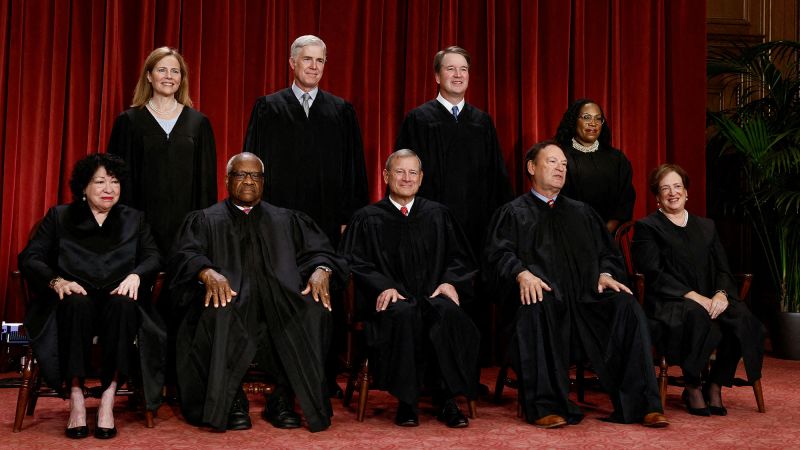
Sandego.net – The U.S. Supreme Court has set a notable mark this term, with its ideological divide already producing more 6-3 rulings than the entire previous year’s session. As the justices race to conclude their most contentious pending cases before the end of June, the frequency of partisan splits has become a defining feature of their decision-making process. This pattern has intensified during President Donald Trump’s second term, as the court faces sharp scrutiny from both political extremes. With seven such decisions already issued this year—just one more than the previous term—conservative and liberal factions have increasingly emerged as the primary fault lines in major rulings. These cases, which span issues like presidential authority and transgender rights, may further solidify the court’s reputation for being deeply divided along ideological lines.
The Rise of 6-3 Rulings
Recent cases have highlighted the court’s growing reliance on ideological alignment to resolve complex legal matters. For example, in a ruling that barred a Rastafarian man from suing prison officials over the cutting of his dreadlocks, the justices split 6-3, citing federal law as justification. Similarly, a decision allowing Exxon to sue the Cuban government for property seized in 1960 also saw a 6-3 majority. These rulings, while legally grounded, have drawn criticism for their perceived partisan undertones. The most impactful 6-3 decision to date was the April ruling that weakened the Voting Rights Act’s oversight of redistricting. This decision empowered Republicans to redraw congressional boundaries in Southern states like Louisiana and Alabama, creating favorable conditions for the GOP in this year’s midterm elections.
“The court’s tendency to decide important cases along 6-3 partisan lines is a serious problem for the court’s legitimacy,” said David Cole, a Georgetown Law professor and former legal director of the American Civil Liberties Union. “The justices are supposed to be guided by law, not politics.”
Cole emphasized that even if some divides stem from differing legal philosophies rather than political loyalty, the trend of splitting along party lines undermines the court’s credibility as an impartial institution. While the justices often highlight the 40% of cases decided unanimously, critics argue that these technical rulings lack the broader significance of the 6-3 decisions, which shape major societal and political outcomes.
Justice Perspectives on the Trend
Some justices have defended the court’s approach, acknowledging the prevalence of 6-3 rulings but emphasizing their legal rationale. At the George W. Bush Presidential Center, Justice Amy Coney Barrett, a conservative appointee, noted that the media’s focus on partisan splits overlooks the actual majority of unanimous decisions. “The higher share of unanimous rulings is not the narrative that’s portrayed in the media,” she remarked, pointing to the court’s ability to resolve disagreements without ideological polarization.
Justice Neil Gorsuch, Trump’s first Supreme Court nominee, echoed this sentiment during a speech at the Reagan Library. “Nine justices appointed by five different presidents over 30 years, representing diverse backgrounds, have managed to reach unanimous decisions 40% of the time,” he stated. “That’s something.” Gorsuch’s comments reflect a broader effort by the court to balance the narrative of division with evidence of consensus in less politically charged cases.
A Mixed Record of Consensus and Conflict
Despite the 6-3 trend, the court has not been entirely divided. A February ruling on Trump’s global tariffs, for instance, saw three conservative justices join three liberals in the majority, demonstrating rare moments of bipartisanship. Last week, the justices unanimously upheld the Second Amendment in a case involving a Texas man’s right to bear arms despite his frequent marijuana use. Such decisions underscore that ideological splits are not universal, but they remain the norm in high-profile cases.
However, the 6-3 pattern has become a focal point for both supporters and detractors. Critics argue that the court’s increasing reliance on partisan divisions signals a departure from judicial impartiality, while proponents see it as a reflection of the justices’ legal philosophies. The data from SCOTUSblog supports this dynamic, showing that nearly 14% of the court’s merits decisions from 2020 to 2024 were split along ideological lines. Even before the final stretch of the term, the justices have been vocal in their disagreements, with written opinions and public statements revealing growing tensions over their role in shaping policy.
“Even if many divides reflect differences in legal worldview, not politics, the more they divide along party lines, the less credibility the court has as an institution,” Cole said.
As the court prepares to release its next set of rulings on Thursday, the balance between consensus and conflict remains a critical factor in its legitimacy. With a dozen cases still pending, the share of unanimous decisions is expected to drop significantly. The remaining rulings—particularly those on presidential power and transgender rights—could further cement the 6-3 pattern, leaving the justices to navigate the political crosshairs of their final term. This ongoing divide raises questions about the court’s ability to maintain its role as a neutral arbiter in an increasingly polarized nation.
The 6-3 trend also highlights the enduring influence of ideological appointments. The composition of the court, shaped by decades of political maneuvering, has created a dynamic where legal disagreements often mirror partisan affiliations. While some justices argue that this reflects the diversity of legal thought, others see it as a threat to the court’s perceived impartiality. As the term nears its conclusion, the impact of these splits on the judiciary’s public image and future rulings will continue to be a subject of intense debate.