Private clubs cost thousands to get in — and they’re booming
Sandego.net – Amid rising inflation and economic uncertainty, the demand for exclusive private members’ clubs in London and New York has reached unprecedented levels. These upscale establishments, often requiring steep annual fees and a rigorous selection process, have become hotspots for the elite, offering a blend of luxury, networking, and timeless charm. The trend isn’t limited to one city—it’s a global phenomenon, with membership-based venues proliferating across urban centers. Yet, their appeal lies in more than just access to elite spaces; they represent a cultural shift toward curated experiences in a world increasingly fragmented by digital distractions and financial pressures.
The Sloane Club: A Legacy of Opulence
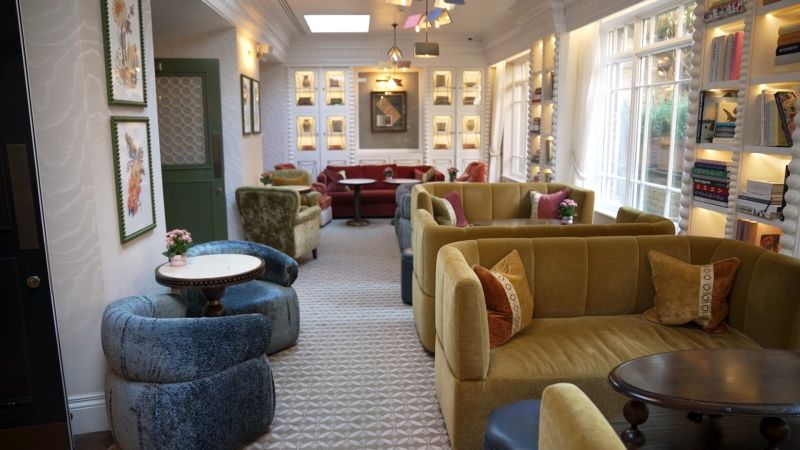
Nestled in the affluent Chelsea district of London, The Sloane Club has long been a symbol of exclusivity. Established in 1922, it was founded by one of Queen Victoria’s daughters and has since witnessed centuries of social and political evolution. Its interior, a labyrinth of elegant rooms, still exudes a sense of grandeur. From the moment you cross its threshold, the atmosphere is one of quiet sophistication—rows of mahogany bookshelves line the library, while a striking oil painting in the dining room captures the essence of a bygone era. The club’s modern iteration, however, reflects a deliberate effort to adapt to contemporary tastes. After a significant renovation, it now targets younger members, though entry remains selective.
“We do give a preferential rate for our under-35s community,” Neena Jivraj Stevenson, the club’s managing director, told CNN. “That’s £1,700 ($2,264) a year, with a lower joining fee” of £450 ($602). Over 35? Sorry, that’s at least £2,300 ($3,065) a year plus a £950 ($1,271) joining fee.
This pricing strategy highlights a broader trend: private clubs are redefining their value propositions to attract diverse demographics. While older members face higher fees, the club’s efforts to engage a younger audience—through discounted rates and modern amenities—suggest a calculated attempt to sustain relevance. The Sloane Club’s story is emblematic of a larger industry revival, where exclusivity is not just a privilege but a strategic asset.
A Global Surge in Membership Clubs
The explosion of private clubs isn’t confined to London’s historic districts or New York’s glamorous streets. Across the globe, urban hubs are witnessing a renaissance in members-only spaces, driven by a combination of cultural nostalgia and economic pragmatism. London, often regarded as the birthplace of such establishments, has long been a benchmark. White’s Club, which opened in 1693, remains the oldest example, but the city’s current boom is a testament to its enduring appeal. Industry insiders estimate that London now hosts over 130 private clubs, a number that has surged in recent years.
New York, by contrast, has taken a more recent turn toward this trend. While the city still lags behind its British counterpart in sheer quantity, its post-pandemic surge has been dramatic. According to Matt Hobbs, founder and CEO of Copper Beech, a London-based advisory firm for the industry, the past five years have seen more new clubs open than in the preceding three decades. Among the latest additions are Maxime’s, Chez Margaux, and The Twenty Two, a British offshoot that caters to New York’s elite. These clubs aren’t just about luxury—they’re about creating communities in an age where traditional social spaces are shrinking.
Membership fees for these clubs range widely, from approximately $3,000 to $15,000 annually, with initiation costs often exceeding $1,000 and occasionally surpassing $200,000. The high price tags serve as both a barrier to entry and a guarantee of exclusivity. For investors, this dynamic is a win-win: the fees ensure a steady demand, while the waitlists signal the clubs’ enduring value. “More clubs have opened in the last five years than the previous 30,” Hobbs remarked, emphasizing the rapid growth of the sector.
The Pandemic’s Role in Fueling Demand
Many experts attribute the surge in private club membership to the pandemic’s impact on social habits. As lockdowns disrupted traditional gatherings, people began seeking more controlled environments for interaction. “The pandemic turbocharged people’s need to connect,” said Hobbs, noting that private clubs offer a unique blend of safety, privacy, and curated social experiences. This need for belonging in a “curated space for like-minded people” has become a powerful draw, particularly for those who feel the pressure of daily life.
London’s nightlife has felt this shift acutely. The Night Time Industries Association (NTIA) reports a 16% decline in venues since the pandemic, with many smaller bars and pubs struggling to stay afloat. “High-end environments are flourishing because their customers are making strong money,” said Michael Kill, NTIA’s chief executive. This observation underscores a broader economic trend: as everyday expenses rise, the wealthy are willing to invest in experiences that elevate their status and provide a sense of community.
Andrew Rigie, executive director at the New York City Hospitality Alliance, echoed similar sentiments. “Thousands of neighborhood restaurants and pubs are really struggling,” he told CNN. “Their customer base is more price-sensitive, and the cost to run a small business in New York City continues to climb.” In this climate, private clubs offer a sanctuary for those who can afford the premium, while also creating a sense of exclusivity that smaller venues can’t match. The result is a thriving ecosystem where the wealthy gather, undisturbed by the noise of the outside world.
The Business of Belonging
For investors, private clubs are more than just social spaces—they’re a lucrative business model. The combination of high fees and long waitlists provides a buffer against market fluctuations, ensuring a steady revenue stream. Jamie Caring, a London-based hospitality consultant, noted that the industry’s interest in private clubs has grown exponentially. In 2019, he received a couple of inquiries each month, but now the volume has increased to about a dozen. “Partly attributable to greater awareness of my business, but more so a statement about the growth of luxury hospitality,” he said.
Real estate developers, too, have recognized the value of private clubs. These spaces are often positioned as the centerpiece of multi-use complexes, drawing attention to the entire development. “They’re thinking, ‘Well, (clubs are) the highest echelon of belonging… How can I add something that makes (the complex) more PR-worthy, have a bigger draw, or creates more desire and prestige?’” Caring explained. This strategy not only enhances the property’s appeal but also justifies its premium pricing, as the club becomes a selling point for investors and residents alike.
Despite the economic challenges facing many urban areas, private clubs continue to thrive. Their success is rooted in a combination of historical prestige, modern amenities, and the psychological comfort of exclusivity. As the demand for curated experiences grows, these establishments are poised to remain a cornerstone of elite urban life. Whether in the heart of London or the bustling streets of New York, the private club boom reflects a desire for connection in a world that often feels disconnected—proving that even in times of uncertainty, the pursuit of belonging remains a powerful motivator.