
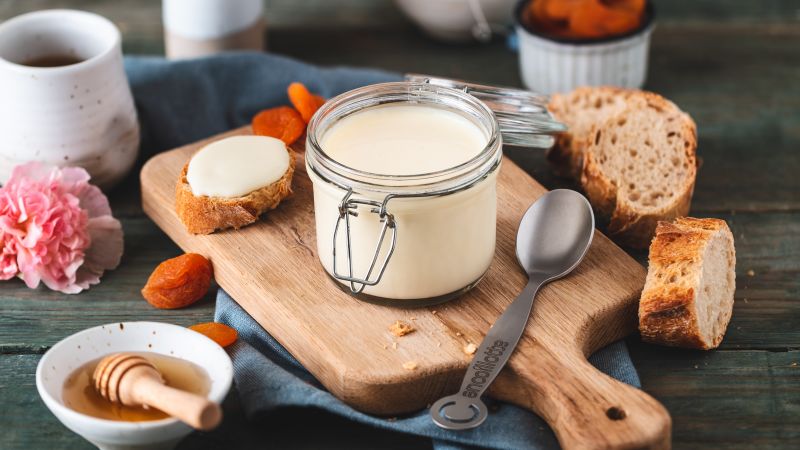
Why a 2,000-Year-Old Low-Fat, High-Protein Cheese Is Taking Over French Dairy Aisles
Sandego.net – France is witnessing a quiet shift in its dairy landscape, driven by a once-forgotten cheese that’s now gaining traction in grocery stores. The product in question, cancoillotte, has quietly reentered the spotlight, sparking interest among consumers and creating a ripple effect in the cheese section. Though its origins date back centuries, the creamy, spreadable cheese is now being hailed as a modern health trend, thanks to a unique blend of tradition and contemporary appeal.
A Hidden Gem Rediscovered
Produced in the Franche-Comté region, cancoillotte has long been a staple of local cuisine but remained obscure beyond its home base. Its history traces back over two millennia, with roots in the eastern part of the country near the Swiss border. Yet, despite its age, the cheese’s reputation as a high-protein, low-fat alternative has only recently begun to spread. This resurgence can be attributed to a handful of French influencers who have brought it into the mainstream, challenging the assumption that traditional dairy products are always indulgent.
“Why didn’t anyone tell me about this? Because my diet has just changed forever,” says Johan Papz, a 30-year-old French influencer whose viral TikTok video has amassed 2.2 million views since April 23. “It’s the best day of my life.”
Johan, who chose to keep his legal surname private, shares his experience of growing up in Lyon, where he often savored cancoillotte over roasted potatoes and meat. He recalls it as a rich, gooey treat, unaware of its nutritional benefits until a conversation with a gym buddy changed his perspective. During a discussion about dietary choices, his friend highlighted cancoillotte’s unique profile: low in fat and high in protein. Intrigued, Johan set out to test the claim, only to be amazed by the cheese’s affordability and versatility.
The cheese’s specifications are striking compared to conventional French cheeses. While many traditional varieties average 15 to 30 grams of fat per 100 grams and 200-400 calories, cancoillotte offers a stark contrast. A 100-gram serving contains just 8 grams of fat and 130 calories, with 16 grams of protein. This makes it an appealing choice for those seeking to balance indulgence with health, especially in a country known for its cheese-centric culture.
Despite its benefits, cancoillotte has faced skepticism. Julie Morin, president of the Association for the Promotion of Cancoillotte, admits that the cheese has often been dismissed as outdated or unexciting. She describes it as “ringard,” a French term meaning old-fashioned or corny, which has made it a difficult sell in the past. “It’s true that it can be seen as an old product for older people, and not very modern,” Morin tells CNN. “It’s hard to pronounce, even for the French, and there are a lot of misconceptions about its appeal.”
From Farm to Fame
However, the cheese’s journey from obscurity to popularity has been remarkable. Morin, who also serves as director of Fromagerie Poitrey-La Belle Etoile, a cheesemaker in the region, notes that sales at her company surged by 10% in May alone. The Association’s efforts to promote cancoillotte have also seen a dramatic rise, with demand increasing by 25% in the same month. “Sales skyrocketed thanks to this, and we actually ran out of stock,” she says. “We didn’t expect to be so successful on social media.”
The surge in popularity is closely tied to Johan’s influence. With a following of 1.5 million, his videos have become a platform for food experimentation and lifestyle recommendations. In one viral clip, he demonstrates how cancoillotte can be used as a “cheat code” for a healthier diet, drizzling it over roasted potatoes and eating it directly from the pot. “I share a lot about my food journey. I work out six times a week and try to recommend healthy options for people who still want to have fun while eating, and control their protein intake and calories,” he explains.
But Johan’s advocacy extends beyond cancoillotte. His content has also played a role in popularizing other French specialties, such as the croissant-cookie hybrid known as the crookie and the Algerian hazelnut spread El Mordjene. These items, once niche, have found international audiences thanks to his creative storytelling and relatable approach. Now, with cancoillotte in the mix, his reach continues to shape the country’s culinary trends.
The Science Behind the Spread
What sets cancoillotte apart is its production process, which involves a combination of skimmed cow’s milk and a unique aging method. The milk, a byproduct of butter and cream production, is fermented and coagulated into curds. These curds are then drained, pressed, and aged at 194 degrees Fahrenheit (90 C) with butter, water, and salt. The result is a soft, spreadable cheese that can be enjoyed in both hot and cold formats, offering a texture that’s neither too firm nor too brittle.
Its flavor profile is equally diverse, ranging from mild and yeasty to robust and earthy, earning it the nickname “barnyard” cheese among some connoisseurs. While this description might sound unappealing to newcomers, it’s a testament to the cheese’s complex character. Johan, who initially dismissed it as a simple filler for hearty meals, now credits it with transforming his dietary habits. “When I looked at the product, I was honestly in a state of shock,” he recalls. “Eight grams of fat for 100 grams is crazy for a cheese. So I then started eating this every day.”
The cheese’s rise to fame reflects a growing interest in functional foods—products that deliver nutritional benefits without sacrificing taste. In a market where consumers are increasingly prioritizing health, cancoillotte’s attributes have made it a standout. Its ability to be paired with a variety of dishes, from savory to sweet, further broadens its appeal. For instance, it can be used as a substitute for cream in sauces or as a spread on bread, offering a lighter alternative to classic dairy products.
Yet, the impact of cancoillotte’s popularity isn’t limited to individual choices. It’s part of a larger movement in France toward rethinking traditional food items. The nation’s iconic baguette, for example, is facing challenges as consumers seek more diverse options. While cancoillotte doesn’t replace the bread, it complements it by providing a nutrient-dense alternative to cheese, which is often the mainstay of French meals.
A Cultural Reassessment
The success of cancoillotte also highlights how social media can revitalize regional specialties. By showcasing the cheese in a modern, accessible format, influencers like Johan have bridged the gap between tradition and trend. This has not only increased awareness but also encouraged a cultural reassessment of long-standing foods. “The challenge has been to make people understand that this cheese isn’t just for the elderly or the adventurous,” Morin says. “It’s a versatile product that fits into everyday life.”
As demand grows, the cheese industry is adapting to meet the needs of a new generation of consumers. Fromagerie Poitrey-La Belle Etoile, which has seen a significant boost in sales, is now investing in packaging and marketing strategies to sustain this momentum. The Association for the Promotion of Cancoillotte is also working to educate the public, emphasizing the cheese’s health benefits and culinary uses. This effort is paying off, with more shoppers recognizing cancoillotte as a valuable addition to their pantries.
While the cheese’s journey is still unfolding, it’s clear that its revival is more than just a passing trend. By combining historical roots with contemporary health goals, cancoillotte has carved out a unique space in France’s dairy market. As more consumers embrace its benefits, the cheese may soon become a household name, proving that even the oldest traditions can find new life in the modern world.
In a country where cheese is synonymous with culture, cancoillotte’s emergence represents a subtle yet significant change. It challenges the notion that all dairy products are inherently indulgent, offering a practical solution for those seeking balance. Whether as a spread, a topping, or a standalone snack, the cheese’s adaptability ensures its place in both traditional and modern French diets. For Johan and others like him, this renaissance isn’t just about food—it’s about redefining what it means to enjoy a nutritious, satisfying meal.