Democratic States Push Back Against Trump’s Election Interference Plans
Sandego.net – As the November midterm elections approach, states led by Democratic governors and legislators are taking proactive steps to shield their voting processes from perceived federal disruptions. These measures include legislative actions designed to limit the presence of law enforcement at polling sites and prevent federal agencies from accessing critical election data. The latest developments have intensified concerns about the Trump administration’s potential attempts to influence the electoral outcome, sparking a wave of state-level reforms aimed at reinforcing local control over voting procedures.
States Enact Laws to Counter Federal Overreach
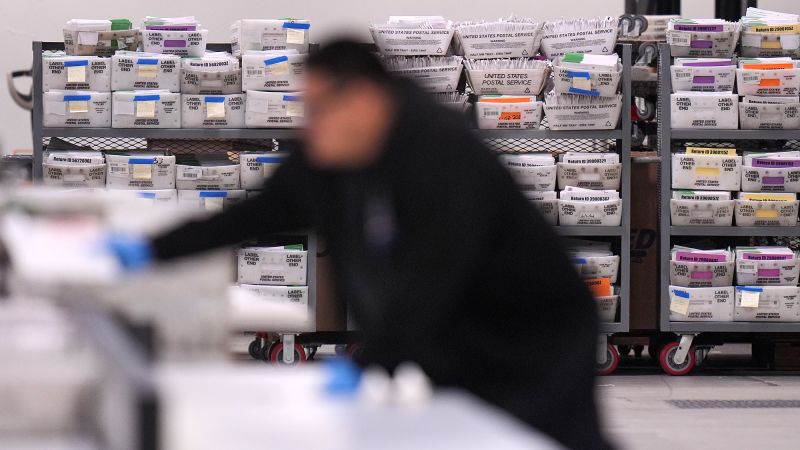
Five states—California, Colorado, Connecticut, Maryland, and Washington—have introduced new legislation to insulate their elections from federal interference. According to the Voting Rights Lab and CNN’s analysis, these laws seek to establish clear boundaries between state autonomy and federal oversight. For instance, California’s law mandates stricter protocols for handling mail-in ballots, while Connecticut’s provision imposes a 250-foot exclusion zone around polling locations, ballot dropboxes, and vote-counting sites for law enforcement without prior approval from election officials.
“The reason why we’ve entertained these steps is because of the shocking and unprecedented statements and actions that Donald Trump and his allies, including in government, have undertaken to threaten and attack our elections,” said Matt Blumenthal, a Democrat and chair of Connecticut’s government administration and election committee.
These reforms are framed as responses to Trump’s persistent claims of election fraud and his administration’s efforts to reshape voting mechanisms. While federal powers are defined by the US Constitution, which grants states primary responsibility for conducting elections, Congress retains authority over federal contests. However, the Trump team has increasingly leveraged executive actions to challenge this balance, prompting states to act independently.
Trump’s Rhetoric and Executive Moves Fuel State Concerns
Since reclaiming the presidency, Trump has repeatedly emphasized the need for “honest elections,” often using this as a justification for expanding federal involvement in state voting systems. His administration has signed executive orders targeting mail-in voting, a method he has criticized without substantial evidence. These orders aim to tighten regulations around absentee ballots, which he has accused of being susceptible to fraud. Additionally, the Department of Justice has pursued legal actions to scrutinize voter rolls in states like Georgia and Arizona, where records from the 2020 election were reportedly seized for further examination.
Trump’s remarks about deploying federal officers to polling places have also raised eyebrows. When asked if he would send Immigration and Customs Enforcement agents or National Guard troops to the polls, he stated, “I would do anything necessary to make sure we have honest elections.” This assertion, combined with statements from other administration officials who have not ruled out similar measures, has deepened anxieties among Democratic lawmakers and election administrators. They fear that federal law enforcement could be used to intimidate voters or disrupt the counting process during the midterms.
White House Defends Federal Role in Elections
In response to the states’ legal actions, the White House has reiterated its commitment to election integrity. A spokesperson emphasized that Trump’s focus on accurate voter rolls and eliminating ineligible voters, such as noncitizens, is a key priority. “This campaign pledge from the President is why millions of Americans sent him back to the White House,” the statement noted. However, critics argue that these claims are used to justify broader interventions into state election processes.
While the administration maintains that its actions are constitutional, the recent moves have already sparked legal confrontations. For example, California and Connecticut have faced disputes with the Trump team over rules that prohibit ICE officers from wearing masks while operating within their borders. These conflicts highlight the growing tension between federal and state authorities as the election season intensifies.
Legal Experts Weigh In on State Laws
Legal analysts suggest that the new state laws are more defensible than previous attempts to limit federal influence. Unlike earlier measures, which relied on vague interpretations of executive authority, the current legislation provides explicit guidelines for state and local officials to follow if federal agencies overstep their bounds. This clarity could help states withstand legal challenges while maintaining their autonomy.
One of the most contentious provisions involves the restriction of law enforcement presence at polling sites. In Maryland, Sen. Cynthia Kagan, a Democrat who co-sponsored a law to preserve mail-in ballot deadlines, expressed frustration with the administration’s approach. “It’s infuriating that the Trump administration believes they can ignore the Constitution of the United States and try to take over our elections,” she said. Her comments underscore the belief that the federal government is attempting to undermine the constitutional framework that upholds state control over elections.
California’s law, which was signed into effect recently, is described as a necessary response to the administration’s “legitimate anxiety” about federal interference. Governor Gavin Newsom highlighted the importance of ensuring that election procedures remain transparent and free from undue influence. Meanwhile, Colorado and Washington have also introduced measures to protect their voting systems, including provisions that allow for quicker adjustments to ballot-counting timelines and enhanced safeguards for mail-in ballots.
State-Level Reforms as a Strategic Response
The coordinated efforts of Democratic-led states reflect a strategic response to perceived threats. By enacting these laws, they aim to create a legal buffer against federal actions that could alter the electoral landscape. For example, Connecticut’s new rule not only bars law enforcement from approaching polling locations without permission but also grants election officials the authority to set conditions for federal participation. This could empower local administrators to reject federal interventions if they believe they are jeopardizing the integrity of the process.
Experts note that these measures align with the states’ constitutional rights to manage elections. While the federal government has the power to set rules for national contests, it cannot override state authority unless there is a clear legal justification. The recent laws are designed to provide that justification, ensuring that state officials have the tools to defend their procedures against federal overreach. This approach has been praised by some as a proactive way to safeguard democratic processes, even as tensions between the two levels of government escalate.
As the midterms draw closer, the interplay between state and federal powers will likely become more pronounced. The reforms passed by Democratic states are not only a reaction to Trump’s rhetoric but also a demonstration of their determination to maintain control over the election process. With legal challenges anticipated, these laws may serve as a critical defense against any attempts to disrupt the voting system at the ballot box or during the counting phase.
The urgency of these actions is underscored by the timeline leading up to November. Lawmakers in the affected states are working to finalize provisions and ensure that all measures are implemented before the election. This includes training election staff, updating voting protocols, and preparing for potential federal actions. The goal is to create a robust framework that protects voters’ rights while countering the administration’s efforts to influence the outcome.
As the political landscape shifts, the battle over election procedures continues to unfold. The states’ legislative moves represent a clear assertion of their independence, even in the face of a federal administration that has shown a willingness to challenge traditional boundaries. Whether these laws will hold up in court or lead to further conflicts remains to be seen, but they mark a significant step in the ongoing effort to secure the integrity of the November elections.