Strait of Hormuz Closure Sparks Hesitation in Maritime Trade
Sandego.net – Recent days have seen a marked decline in the number of vessels traversing the Strait of Hormuz, a critical waterway for global oil shipments. Even prior to Iran’s announcement on Saturday that the strait was once again closed, maritime operators had already scaled back their movements through the narrow passage. According to data from marine intelligence firm Kpler, only 25 ships passed through the strait on Thursday, a stark contrast to the bustling activity that had characterized the region before the conflict. This slowdown became more pronounced on Friday, as the first round of talks between Iran and the United States to finalize their agreement collapsed, leading to a further reduction in traffic.
Security Concerns Drive Operator Caution
Analysts suggest the decrease in activity is not a dramatic exodus but a gradual shift. Matt Smith, a lead oil analyst, noted that while there is a slight uptick in vessel traffic, it remains minimal. “It’s not like you’re suddenly seeing a mass departure,” Smith explained to CNN. “The movement has picked up, but it’s not significant. We’re still waiting for a ‘first mover’ to signal a return to normalcy.”
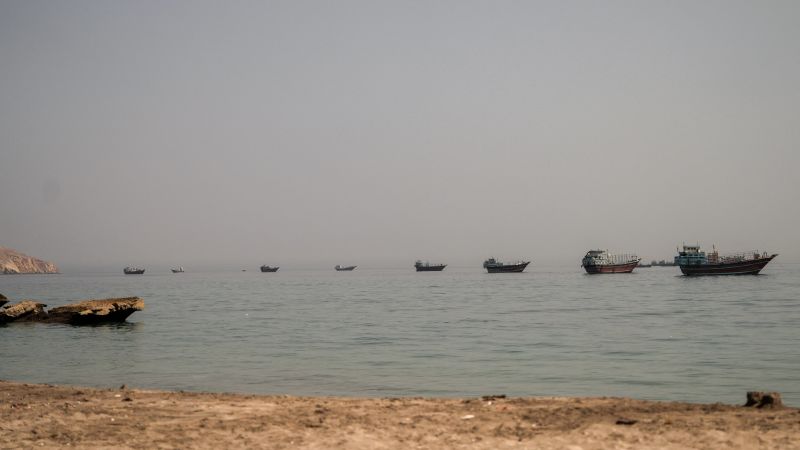
The last substantial flow of ships through the strait occurred in mid-April, when Iran briefly reopened the waterway for commercial use. However, even at that peak, the traffic level was far below pre-war norms. Before the conflict, approximately 100 to 120 oil tankers passed through the strait daily, a number that has now dwindled to single digits. Nearly 500 ships, including 220 oil tankers, remain stranded in the Persian Gulf, highlighting the ongoing disruption.
Challenges to Restore Normal Operations
Experts agree that the situation will take months to stabilize. Smith emphasized that ship operators are still cautious, with many hesitating to commit to resuming regular routes. He anticipates that it may take weeks for the 120 oil tankers currently in the Gulf to navigate out, while the 100 empty vessels will require additional time to refuel and depart. “The confidence needed to restart operations isn’t there yet,” he said.
Security concerns linger, according to Jakob Larsen, chief safety and security officer at BIMCO, a major coalition of ship operators. “Despite the ceasefire agreement, the shipping industry remains in a state of uncertainty,” Larsen stated in a Thursday statement to CNN. “The central part of the strait is mined and difficult to navigate, with only the inshore zones near Oman and Iran considered safe.” However, even these areas are not entirely free of risks, as congestion and navigational challenges persist, making the passage precarious.
Practical Hurdles for Ship Operators
While security is a primary issue, logistical and technical obstacles also play a role in delaying the recovery. The Lloyds Market Association highlighted concerns about ships’ seaworthiness after prolonged anchoring, as well as the availability of fuel and supplies. “It’s not just about the green light to sail,” said Ben Bailey, director of the Mission to Seafarers charity. “Operators must ensure their vessels are in optimal condition, and they need to replenish resources before resuming transit.”
Another challenge is the accumulation of barnacles on ships’ hulls during months of inactivity. Bailey noted that seafarers are eager to return home but are tempered by apprehension over the safety of their journeys. “The mood among crew members is one of cautious optimism,” he remarked. “They want to leave, but the uncertainty about the strait’s security keeps them on edge.”
Insurance and Risk Factors
Maritime insurers, including Lloyds of London, have also contributed to the hesitation among operators. Following the war’s outbreak, these companies withdrew coverage for war risk, leaving many shipowners without financial protection. “It wasn’t just Iran that closed the strait,” said Tom Kloza, an independent oil analyst and Gulf Oil adviser. “Lloyds and other insurers effectively shut it down by halting their policies.”
The lack of war-risk insurance has forced operators to weigh the costs of potential damages against the risks of crossing the strait. Until insurers declare their policies will cover such incidents, the market remains hesitant. This uncertainty has compounded the challenges, as operators struggle to plan long-term movements without assurance of financial backing.
Impact on Oil Production and Trade
The slowdown in shipping has ripple effects on the region’s oil production and refining industries. Much of the infrastructure was halted early in the conflict when tankers were unable to transport crude, disrupting supply chains. Restarting operations will require time, as facilities need to recalibrate and rebuild capacity. Even if traffic resumes, the process of replenishing the Gulf’s oil reserves will be slow, with new tankers needing to traverse the same hazardous routes to deliver supplies.
Tom Kloza warned that vessel owners are reluctant to return to the Persian Gulf, fearing they might face another prolonged standoff. “The key to recovery is ensuring this peace agreement lasts,” he said. “If it doesn’t, the cycle could repeat, and operators will be hesitant again.”
Amid these challenges, the plight of seafarers has drawn attention. An estimated 20,000 crew members are still stuck on ships, unable to disembark due to the strait’s closure. While many express a desire to return home, the risk of navigating the waterway keeps them in limbo. “The seafarers are hopeful, but their optimism is tempered by anxiety,” said Bailey. “They’re ready to go, but the safety of the route is still a question mark.”
As the situation evolves, the focus remains on restoring confidence in the strait’s security. With both Iran and the United States committed to the ceasefire, the hope is that this will eventually lead to a return to normal operations. However, the path to recovery is fraught with complexities, requiring cooperation between governments, insurers, and operators to ensure the waterway becomes a reliable conduit once more. Until then, the Persian Gulf will continue to be a hub of uncertainty, where ships linger, crews wait, and the global oil supply remains vulnerable to disruption.
“We don’t know the answer to that,” Kloza added. “Maybe it gets viewed as a safe piece of water, but I think we’ve got a long way to go till we get to that.”