DHS Abandons Georgia Warehouse Conversion to Detention Mega Center, City Reports
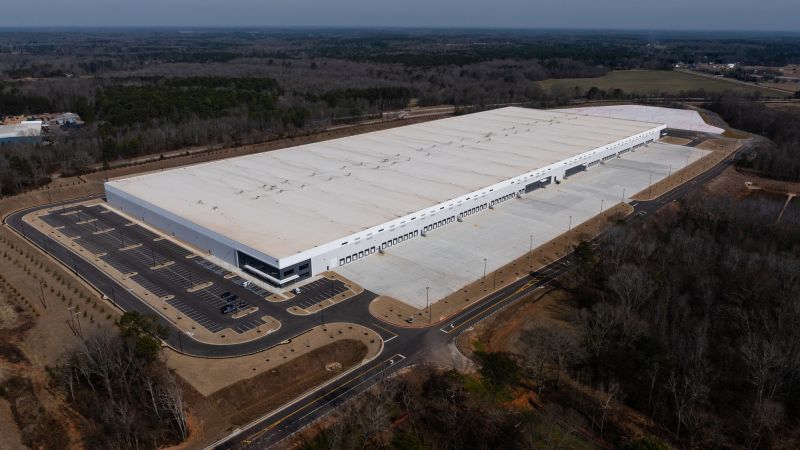
Sandego.net – The Trump administration has officially withdrawn its proposal to transform a warehouse in the small Georgia town of Social Circle into a large-scale immigration detention facility, marking a notable shift in its strategy. This decision, made just four months after the federal government finalized its purchase of the property, has sparked mixed reactions from local officials and residents who had previously voiced strong opposition to the plan.
Local Government’s Response to Revised Plans
According to a statement released by the city on Thursday, representatives from the Department of Homeland Security (DHS) informed local leaders that the initiative to create an Immigration and Customs Enforcement (ICE) detention center within the city would no longer proceed. The city’s announcement emphasized the uncertainty surrounding the warehouse’s future, stating that it was unclear whether the property would be sold or repurposed for an alternative use. However, officials expressed hope that the site would eventually be returned to private ownership, which they believe would benefit the local economy and community growth.
“The City is hopeful that the property will ultimately return to the local tax base and once again contribute to the economic vitality and long-term success of the Social Circle community,” the city’s statement noted.
While the decision to scale back the project is a relief for the city, it remains to be seen if other similar initiatives will face the same fate. The local government’s initial concerns centered on the potential strain the facility would place on the town’s infrastructure, given its population of approximately 5,000 residents. The plan had envisioned housing up to 10,000 detainees and employing 2,000 to 2,500 staff, a figure that dwarfed the city’s current needs.
Financial Details and Property Purchase
The federal government acquired the property for $128.5 million, a significant increase from its original sale price of $29.3 million in 2023. This fourfold markup has raised questions about the cost-effectiveness of the project and its long-term implications for the local community. The city’s statement highlighted the financial commitment involved, suggesting that the decision to abandon the plan could be a strategic move to address concerns about taxpayer burden and local impact.
Meanwhile, the broader context of the DHS’s detention expansion program has come under scrutiny. The department had initially announced plans to convert seven warehouses across multiple states into immigration detention sites. However, recent reports indicate that these plans are now being reevaluated, with some facilities being reconsidered for alternative uses. The change in direction follows the appointment of Markwayne Mullin as the new Homeland Security secretary, who has since emphasized the need to streamline the process of detaining individuals deemed to be the most serious threats to public safety.
Political Backing and Public Pressure
Despite the administration’s shift, the decision has been welcomed by two U.S. senators representing Georgia, Jon Ossoff and Raphael Warnock. Both Democrats had consistently opposed the warehouse conversion plans since their inception, arguing that the proposal would negatively affect the city’s residents and infrastructure. Their support for the reversal underscores the growing influence of public opinion in shaping immigration policy.
“From the beginning, the Social Circle community united against this proposal, which risked overwhelming the city’s infrastructure,” said Ossoff in a statement. “This news proves yet again that public pressure and opposition works.”
Public sentiment in Social Circle was particularly strong, given the town’s location in a politically red county where Trump secured over 70% of the vote in the 2024 presidential election. While the administration has historically favored aggressive immigration enforcement, the local community’s resistance has prompted a rethinking of the program’s scope and implementation. The decision to abandon the warehouse plan reflects a balance between the federal government’s objectives and the growing demand for more localized control over immigration policies.
Legal Challenges and Ongoing Uncertainty
Legal battles over the detention facility expansion have intensified, with several lawsuits filed in different states. In Utah, for example, the Salt Lake City area has been a focal point of these legal challenges, as local officials and advocacy groups argue that the project threatens the dignity of detainees and the quality of life for residents. Despite the reversal in Social Circle, the federal government has yet to officially file documents confirming a withdrawal from all seven sites, leaving the legal cases in limbo.
“The decision to now sell or abandon these facilities is fiscal recklessness and an insult to every taxpayer,” stated a spokesperson for the Utah Democratic Party. “Salt Lake City is home to immigrants, refugees, and families who have built their lives here, and we will not stand by while the federal government attempts to warehouse human beings in our community like inventory.”
Local leaders in Salt Lake City have expressed skepticism about the DHS’s commitment to the project, noting that no definitive proof of the change in plans has been provided yet. “We won’t believe it until we see the documentation,” said Eric Biggart, a spokesperson for the Salt Lake County mayor’s office. The hesitation among officials highlights the complexity of the situation, as they await further clarity on the federal government’s next steps.
Regional Implications and Community Concerns
Similar concerns have been raised in nearby communities, such as Oakwood, Georgia, which is just 40 miles from Social Circle. There, a warehouse was also slated for conversion into a detention processing center, and residents there are closely monitoring the developments. The cautious optimism expressed by Social Circle officials mirrors that of Oakwood, as both towns grapple with the potential economic and social impacts of federal immigration policies.
The reversal of the Social Circle plan could signal a broader trend within the DHS’s immigration strategy, potentially reducing the scale of detention operations in the U.S. While the administration maintains its focus on removing individuals deemed to be the most dangerous to the country, it has also acknowledged the need to optimize the use of existing resources. This approach aligns with the department’s recent emphasis on partnerships with state and local governments to manage immigration enforcement more efficiently.
As the debate over immigration detention continues, the case of Social Circle serves as a microcosm of the larger tensions between federal authority and local communities. The decision to abandon the warehouse conversion has not only addressed immediate concerns but also set a precedent for future projects, demonstrating the power of grassroots activism in influencing policy outcomes.