After Recent Endorsement Struggles, Trump Shifts Strategy in South Carolina Governor’s Race
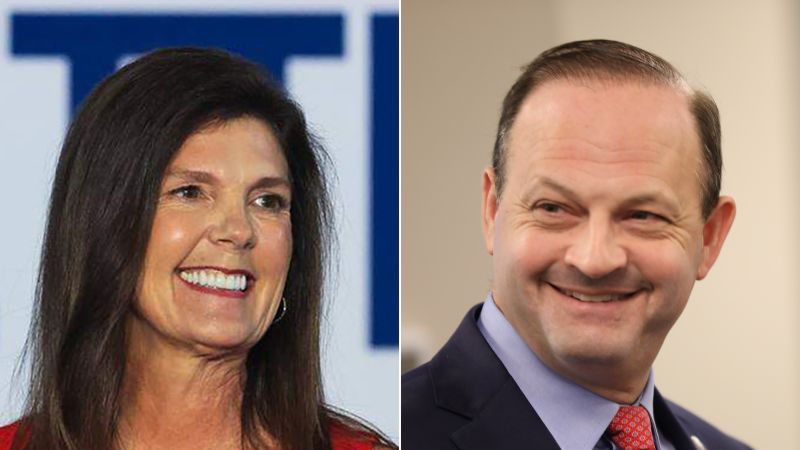
Sandego.net – President Donald Trump’s endorsement strategy has faced scrutiny in recent weeks, following notable setbacks in the Iowa and Georgia gubernatorial races. However, on Friday, he made a pivotal move by endorsing both Republican candidates in South Carolina’s upcoming governor’s race, Lt. Gov. Pamela Evette and Attorney General Alan Wilson. This dual endorsement signals a strategic recalibration, as Trump seeks to bolster his influence in a state where his political clout has been challenged. The decision comes after a series of missteps that have left his allies questioning his ability to secure victories in key battlegrounds.
The Double-Endorsement Gambit
Trump’s decision to back both Evette and Wilson marks a departure from his previous approach, which often leaned heavily on a single favorite. In the early stages of the South Carolina primary, he had expressed unwavering support for Evette, declaring her his “Complete and Total Endorsement.” Yet, as the race progressed, the president’s backing of Evette was not enough to ensure her victory. Evette finished a few percentage points ahead of Wilson in the June 9 primary but fell short of the 50% threshold needed to avoid a runoff. This outcome has prompted Trump to pivot, offering a shared endorsement to both candidates in hopes of consolidating support.
“With either one you can’t go wrong,” Trump stated in a post on Truth Social, underscoring his confidence in both contenders. This statement, however, has sparked debate among political analysts, who argue that the president’s support may now be seen as a compromise rather than a decisive advantage. Evette’s campaign, which had previously relied on Trump’s backing, now faces the challenge of maintaining momentum despite the dual endorsement.
Shifting Allegiances in the Race
The runoff race has drawn significant attention as several candidates who failed to advance to the second round have thrown their weight behind Wilson. This includes U.S. Reps. Ralph Norman and Nancy Mace, who have rallied to support the attorney general. Meanwhile, U.S. Sen. Tim Scott, a prominent figure within the Republican Party, also endorsed Wilson on Friday. These endorsements highlight the dynamic nature of the race, where alliances and perceptions can shift rapidly.
Wilson’s campaign has capitalized on the president’s endorsement by leveraging social media. Shortly after Trump announced his support, Wilson updated his profile to reflect the partnership, emphasizing his alignment with the former president. “I’ve proudly stood with President Trump from the very beginning, defended him when others would not, and fought alongside him against the radical left,” Wilson stated in a news release. “I am deeply honored to have his support because he understands I am focused on making South Carolina more affordable for families and profitable for businesses.”
In contrast, Evette’s team has attempted to maintain their narrative of being Trump’s preferred choice. Her campaign highlighted her earlier lead in the primary, citing her position as the president’s endorsed candidate. “I was proud to come in first as President @realDonaldTrump’s endorsed candidate for Governor on June 9th. Looking forward to doing it again on June 23rd,” Evette wrote on social media. The message suggests that her campaign is determined to turn the tide, even as the runoff approaches.
Historical Context and Strategic Implications
Trump’s move to endorse two candidates in South Carolina echoes a similar tactic from his 2022 campaign in Missouri, where he supported two Senate hopefuls with the same first name, Eric Schmitt and Eric Greitens. The Washington Post had previously noted the possibility of such a double endorsement, highlighting its potential to strengthen the Republican base. This time, the dual support aims to unify the party’s efforts in a state traditionally aligned with conservative values.
Despite this, the impact of Trump’s endorsement on the race remains uncertain. While Wilson has gained momentum from the backing of multiple candidates, Evette still retains the support of term-limited Gov. Henry McMaster, a close friend of Trump and a key figure in the state’s politics. This personal connection may provide Evette with a unique advantage, particularly among voters who value traditional Republican leadership.
Trump’s strategy has also been influenced by recent setbacks. In Iowa, his chosen candidate, Rep. Randy Feenstra, lost to businessman Zach Lahn, prompting the president to publicly criticize his advisors for providing incomplete information. Similarly, in Georgia, healthcare executive Rick Jackson defeated Trump-backed Lt. Gov. Burt Jones, leading the former president to attempt to salvage the situation by branding Jackson as a “TRUMP Campaign” candidate. These incidents have likely shaped his decision to distribute support more broadly in South Carolina.
The Road Ahead for South Carolina Republicans
The upcoming runoff on June 23 represents a critical juncture for South Carolina’s Republican Party. The state has historically been a reliable red stronghold, but recent primary results have raised concerns about its loyalty to Trump’s agenda. For instance, in a special session earlier this month, GOP lawmakers rejected an effort to redraw the state’s congressional map to eliminate its lone Democratic district. This decision, despite Trump’s push, has signaled a growing divide within the party.
South Carolina’s political landscape is now a mix of traditionalists and reformers. Wilson, who has long served as the state’s attorney general, is seen as a steady hand, while Evette represents a younger, more progressive faction. Trump’s endorsement of both candidates could be interpreted as a way to bridge these divides, ensuring that the Republican Party remains cohesive in the face of internal challenges.
However, the dual endorsement may also dilute the message. Evette’s campaign had previously emphasized her status as Trump’s favored candidate, which could now be overshadowed by Wilson’s broader coalition. Analysts suggest that the runoff will be a test of how effectively each candidate can rally support, with Trump’s backing playing a crucial role in the final push. The outcome could have implications for the broader 2026 elections, as South Carolina’s preferences often influence national trends.
Legacy and Future Prospects
As the state gears up for the runoff, the question remains whether Trump’s endorsement will be enough to sway voters. The president’s ability to connect with South Carolinian audiences has been a topic of discussion, with some arguing that his message resonates more strongly with older, white voters, while others believe his appeal is waning. The dual endorsement may serve as a reminder of his influence, but it also underscores the challenges of maintaining that power in an evolving political environment.
With the June 23 runoff drawing near, both Evette and Wilson are focused on differentiating themselves. Evette’s campaign has emphasized her record as a leader who aligns with Trump’s vision, while Wilson has positioned himself as a pragmatic problem-solver. The race will ultimately depend on which message resonates most with the state’s electorate, a group that has shown increasing diversity and shifting priorities in recent years. As the dust settles, the results could set a precedent for how Trump’s endorsements shape the outcome of future races in a state that has become a focal point of his political strategy.