Exclusive: Ex-Trump Official Hails US-Iran Framework as Economic Lifeline for Iran
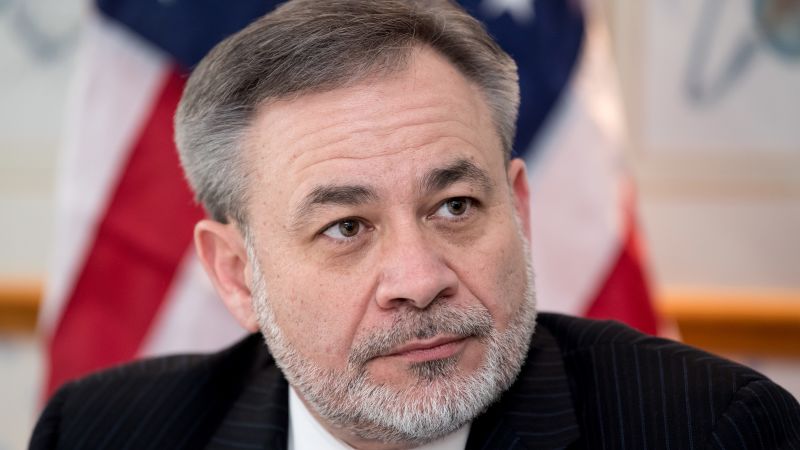
Sandego.net – A major diplomatic agreement between the United States and Iran has emerged as a pivotal moment for the nation’s struggling economy, according to Dan Brouillette, the former Trump administration’s energy secretary. In an exclusive interview with CNN, Brouillette highlighted how the 14-point framework—signed by President Donald Trump this week—could provide immediate relief to Iran, allowing the OPEC member to resume oil and fuel exports, which are critical for its economic recovery. “This agreement is incredibly beneficial for them,” Brouillette remarked, now serving as a distinguished visiting fellow at Columbia University’s Center on Global Energy Policy.
The US Blockade’s Role in Forcing Negotiations
Brouillette acknowledged the effectiveness of the US sanctions in pressuring Iran into talks, particularly during the Trump era. He explained that the economic blockade had been a key tool in pushing Tehran toward compromise, creating a sense of urgency that could lead to a breakthrough. “The sanctions really forced their hand,” he said, noting that Iran’s economic struggles—marked by soaring inflation and widespread unemployment—had intensified under the pressure.
Iran’s inflation rate has climbed past 50%, while basic necessities face severe shortages. Brouillette emphasized that the framework agreement could offer hope to the Iranian people, enabling them to rebuild infrastructure and secure a more stable financial future. “Optimism is essential for their progress,” he stated, adding that the agreement’s success hinges on Iran’s ability to demonstrate sustained cooperation in the coming months.
Bipartisan Criticism of the Deal
Despite the agreement’s potential benefits, it has drawn sharp criticism from across the political spectrum. Some Republicans argue that the deal provides Iran with too much economic cushion, potentially undermining US leverage. Former Vice President Mike Pence, in a recent CNN interview, called the agreement “a sign of appeasement,” suggesting it might embolden Iran’s regional ambitions. GOP Senator Bill Cassidy echoed similar concerns, labeling it “the worst foreign policy decision in decades.”
Brouillette shared these reservations, expressing worry that the framework is “a bit too lenient” for Iran. He pointed out that the deal allows the country to immediately sell oil and fuel, which could generate up to $60 billion annually. “This upfront access to funds might tempt them to reinvest in adversarial activities,” Brouillette warned. He recalled that Iran has historically used its financial resources to support groups opposing its neighbors and the US, such as Hezbollah and Hamas.
Performance-Based Commitments and Strategic Concerns
US officials have clarified that the framework is designed as a performance-based accord, with economic benefits contingent on Iran’s adherence to negotiated terms. “As their compliance improves, we can increase economic support,” said Vice President JD Vance, emphasizing the conditional nature of the agreement. “If they slip back into hostile behavior, we can reassess our stance.”
Brouillette, however, suggested that he might have taken a different approach to the deal’s terms. “I’d have waited for more concrete results before releasing sanctioned funds or creating new investment channels,” he said. His perspective underscores the delicate balance between immediate relief and long-term accountability. “We need to ensure they’re not just capitalizing on the agreement but also making meaningful progress in their commitments.”
Trump, who spearheaded the deal, warned of the consequences of prolonged conflict. “If the war dragged on, we’d face a full-scale economic disaster,” he said during a recent address, referencing the 1929 Great Depression as a cautionary example. “We’re exhausting our reserves in just a few weeks. Without intervention, chaos could follow.”
Oil Reserves and the Strait of Hormuz as Strategic Levers
Brouillette speculated that dwindling oil reserves—both commercial and emergency stockpiles—may have accelerated the deal’s conclusion. “That pressure is real,” he noted, explaining that Iran’s ability to control the Strait of Hormuz, a vital chokepoint for global oil shipments, could be a significant factor in the negotiations. “They’re not limitless resources. If they keep depleting them, there’s a tipping point they’ll reach.”
Recent intelligence assessments indicate that Iran has the capacity to block access to the Strait of Hormuz at will, according to sources cited by CNN’s Zachary Cohen and Natasha Bertrand. Brouillette admitted that while he hopes Iran won’t repeat this maneuver, the country has already shown its capability to do so. “They’re capable of closing the strait again, and it’s right in their backyard,” he said, highlighting the ongoing threat to global energy markets.
The agreement’s success also depends on the rapid replenishment of US oil reserves, particularly in Cushing, Oklahoma, which has seen stockpiles drop to near-critical levels. “We’re on the edge of a crisis,” Brouillette stated, noting that without swift action, the US could face supply disruptions. This urgency, he argued, has made the framework agreement a necessary step to stabilize both nations’ economies.
A Delicate Balance Between Relief and Accountability
Brouillette’s comments reflect the complexity of the deal, which aims to provide economic relief while ensuring Iran remains committed to its obligations. “It’s a gamble,” he said, acknowledging that the framework’s terms might encourage Iran to reinvest in regional destabilization. However, he remains cautiously optimistic, believing the agreement could serve as a catalyst for broader economic reforms. “If they use these funds wisely, it could be a turning point for their economy,” he added.
As the US and Iran navigate this new phase, the framework agreement stands as a symbol of both cooperation and cautious optimism. With Iran’s economic recovery and regional influence now intertwined, the outcome of this deal could shape the future of US-Iran relations for years to come. “We’ve got to monitor their actions closely,” Brouillette concluded. “If they start funding enemies again, we’ll have to rethink our strategy.”
Experts are closely watching how the framework plays out, with its potential to ease Iran’s financial strain while maintaining pressure to adhere to its commitments. The agreement’s success may depend on the balance between immediate relief and long-term accountability, a challenge that will test both nations’ diplomatic resolve in the coming weeks.