White House Cleanup Begins After UFC Fight Night Concludes
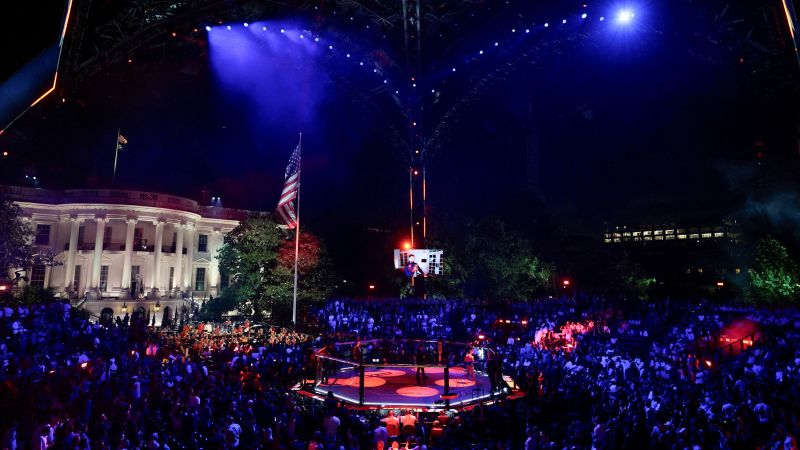
Sandego.net – Following the conclusion of the UFC fight night event on the White House grounds, a series of cleanup and dismantling operations commenced on Monday, marking the start of a multi-day effort to restore the space to its pre-event state. The event, which featured high-profile combat sports action, drew thousands of attendees and required extensive logistical coordination. Now, as the crowd was evacuated from the South Lawn and Ellipse, teams began breaking down the large-scale production setup, a process expected to span over a week.
Efficient Dismantling of Temporary Structures
The removal of the event’s infrastructure began immediately after the final bout. A key component of the setup, the “Claw” lighting system, was slated for disassembly as soon as possible, according to a sworn declaration by Joshua Fisher, the White House management and administration director. The declaration outlined a detailed timeline for the dismantling process, emphasizing that the event’s complexity necessitated careful planning and execution.
“The Claw will be disassembled immediately after the Event concludes. Plans are in place for demobilization to begin at 10:00am on June 15, 2026,” Fisher stated in his declaration, which was submitted as part of a lawsuit aimed at halting the event.
The event’s scale required more than just temporary structures. A seating area for 4,000 spectators was established on the South Lawn, while the Ellipse hosted a fan festival accommodating over 100,000 visitors. This setup involved broadcasting equipment, security measures, and elaborate staging, all of which were deployed in weeks of preparation. The production effort, which included partnerships with private entities and federal agencies, cost approximately $60 million, with UFC covering all labor, construction, and promotional expenses.
Logistical Challenges and Security Measures
Setting up the event posed unique challenges due to the White House’s stringent security protocols. The build process, which began on May 20, was executed under tight deadlines and required daily inspections of equipment transported to the grounds. Each truck carrying staging infrastructure was checked before installation, ensuring compliance with safety and operational standards.
Security provisions were also a central focus. Pedestrian barriers and anti-scale fencing were removed early Monday, while the US Secret Service began dismantling magnetometers and tents around the screening areas. Throughout the morning, as per a UFC schedule detailed in a court filing, merchandise trailers departed, and food and beverage operators started packing up their operations. Broadcast equipment was also prioritized for disassembly, reflecting the event’s need for swift post-event adjustments.
The cleanup process continued into Tuesday, with restrooms being cleared and camera towers dismantled. Staging areas were gradually deconstructed, and interior fencing, along with power units and tents, was removed. By Friday, the schedule projected that all stage materials would be fully loaded out, with exterior fencing removal expected to wrap up by the following Monday. The timeline culminated with the final phase of the operation on June 23, when parking for White House staff—temporarily relocated to Pennsylvania Avenue—would be reopened, and turf remediation efforts initiated.
Event Significance and Collaborative Planning
President Donald Trump’s UFC fight night was not only a celebration of his 80th birthday but also a highlight of programming for the United States’ 250th anniversary. The event took place on the South Lawn, where Trump watched the matches from a cage-side seat, flanked by First Lady Melania Trump and UFC CEO Dana White. The White House’s collaboration with the UFC and other entities underscored the event’s importance as a blend of entertainment and public engagement.
Fisher’s sworn declaration highlighted the event’s multifaceted nature, noting that it involved “a multitude of public and private entities” working together over a significant period. The planning process, which spanned nearly a year, required meticulous coordination to balance the demands of a high-profile fight night with the operational needs of the White House. This included setting up temporary facilities while maintaining the integrity of the presidential residence’s regular functions.
The event also showcased the federal government’s role in providing essential support. Emergency equipment and services such as first aid, law enforcement, and security were supplied by agencies like the Secret Service, though the exact cost to taxpayers remains unclear. This partnership exemplified the collaborative effort between the UFC and government bodies to ensure the event’s success without compromising security or efficiency.
Impact on White House Operations
The logistical demands of the UFC event had a noticeable effect on White House routines. Over 700 to 900 subcontractors, each specializing in different aspects of the setup, were deployed to manage the temporary structures. These workers, combined with the event’s extensive equipment, created a dynamic environment that shifted the focus of the White House grounds from ceremonial use to a combat sports arena.
Despite the temporary disruption, the White House team worked to minimize the event’s footprint. The schedule for breakdown and cleanup was designed to align with the natural flow of the week, ensuring that the space was restored in stages. By the end of the June 23, the White House grounds would be free of event-related debris, allowing staff to resume their usual activities. The process also included addressing any damage to the lawn or surrounding areas, with turf remediation planned as the final step.
The event’s conclusion served as a reminder of the scale of such productions. From the initial setup to the final dismantling, every phase required precision and coordination. As the White House prepares for the next phase of its operations, the UFC’s temporary presence leaves a lasting impression of how high-profile events can transform even the most iconic spaces into bustling venues for global entertainment.
While the event was a celebration for many, it also sparked debate about the use of federal resources for private ventures. Fisher’s declaration acknowledged the collaborative effort but also hinted at the event’s broader implications. The UFC’s investment in the White House grounds demonstrated the growing intersection between sports and politics, with the White House serving as a backdrop for both national commemorations and celebrity-driven spectacles.
As the cleanup progresses, the White House’s role in hosting the UFC fight night highlights its adaptability. The event’s success was a testament to the ability of organizers to manage complex logistics, even in the heart of Washington, D.C. The future of the “Claw” lighting system remains uncertain, though its dismantling signals a return to the White House’s traditional setup. For now, the focus is on restoring the grounds and ensuring that the legacy of the 250th anniversary celebrations endures beyond the event’s conclusion.