Trump Announces Hormuz Reopening, But Industry Skepticism Persists
Sandego.net – President Donald Trump claimed on Monday that the Strait of Hormuz, a crucial maritime passage, has been reopened following a deal with Iran. The agreement, reportedly finalized over the weekend, was intended to ease tensions and restore normal oil flow through the waterway. However, industry insiders remain cautious, questioning whether the situation is truly stable or if the current movement of vessels is just a temporary shift. Trump’s confidence in the deal was evident as he shared updates on social media, highlighting that ships are “starting to move” out of the strait, many carrying oil. Yet, analysts suggest the reality may not align with the administration’s optimistic message.
A Critical Choke Point in Peril
The Strait of Hormuz, a narrow channel connecting the Arabian Sea to the Gulf of Oman, is vital for global energy markets. About 20% of the world’s oil shipments pass through this passage daily, making it a strategic bottleneck. While Trump asserted that the strait is now open, shipping experts argue that the lack of concrete details about the agreement’s terms continues to cast doubt on the situation. “The statements by the US and Iran are currently unclear and do not offer sufficient information regarding key aspects such as timings and safe routes,” stated Jakob Larsen, chief safety and security officer at the Baltic and International Maritime Council (BIMCO). His comments reflect the broader uncertainty among industry players.
“Due to lack of details and a history of overly optimistic reassurances, we believe the security situation for the shipping industry remains volatile, and we still consider it very risky for ships to commence transits at this point,” Larsen added.
Larsen emphasized that ship operators require clear assurances before committing to transit. “Ships trapped in the Persian Gulf will be interested in leaving as soon as it is safe to do so,” he noted. “The next step is for shipowners to be reassured that transiting the Strait of Hormuz is not only permitted but also safe.” This sentiment echoes concerns raised by other maritime analysts, who warn that the absence of confirmed safe passage could delay a full return to pre-crisis levels of activity.
Historical Patterns of Caution
Despite the recent agreement, the volume of ships exiting the strait remains low. Natasha Kaneva, JPMorgan’s head of global commodities strategy, pointed out that “surprising volumes of crude and petroleum products still appear to be transiting the strait” even during periods of heightened conflict. This observation underscores the resilience of the shipping industry in the face of risks, but also highlights the hesitancy to fully resume operations without guarantees. “Despite the ongoing naval blockade and the steep decline in commercial traffic, surprising volumes of crude and petroleum products still appear to be transiting the strait,” Kaneva wrote in a recent client note.
Historically, during previous tentative agreements between the US and Iran, ships often rushed to clear the strait when conditions improved. However, this time, the situation seems different. Bob McNally, founder and president of Rapidan Energy Group, noted that between 0% and 10% of normal oil flows were making it through the strait on most days. “This has helped keep oil prices from rising further,” he explained. Yet, the cautious approach persists, with many vessels waiting for more concrete signs of security before proceeding.
Market Reactions and Insurance Hesitation
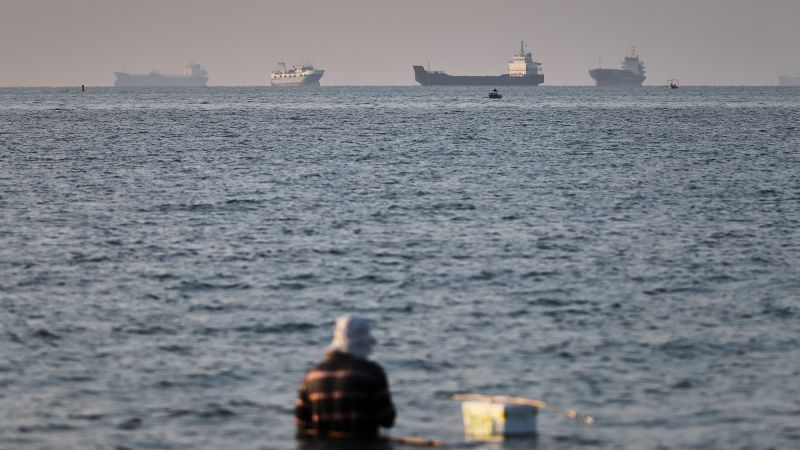
Hope for a swift reopening of the strait sent oil futures plummeting to a three-month low on Monday. Investors anticipated that the agreement would alleviate fears of disruption, but the data tells a different story. Kpler, a leading firm tracking global ship movements, reported that its analysis shows no significant increase in traffic for the 220 tankers and nearly 500 ships currently stranded in the Persian Gulf. “This isn’t a surprise, as the deal isn’t scheduled to be signed until Friday,” said Matt Smith, lead oil analyst at Kpler. He estimated that it may take three to four months before traffic can be deemed “normal.”
“Most ship operators will want to see other ships make it through the strait before they have the confidence to go themselves,” Smith explained. “Maritime insurers, which haven’t yet shown a willingness to insure vessels in case of attacks, are also hesitant to commit to coverage until the situation stabilizes.”
Without insurance, ship owners face even greater reluctance to transit the strait. This creates a standoff, as noted by Smith: “It’s a chicken-and-egg situation.” Major insurers like Skuld have confirmed they have not revised their coverage limitations, leaving ships vulnerable to potential threats. “Any market-wide review of rates, especially the war rates that apply in the Strait of Hormuz, would almost certainly depend on the certainty of safe voyages,” Skuld stated in a recent update.
Path Forward: Balancing Confidence and Caution
While Trump expressed optimism about the deal’s progress, he acknowledged that work is still ongoing. During a meeting with French President Emmanuel Macron at the G7 summit, the president said that “they’re doing a little hunting for a couple of mines that they’ve already found, but … ships are starting to go out now.” He added that “on Friday, it’ll be completely open.” However, the question remains whether this timeline is realistic or if the process will take longer.
Experts agree that transparency and tangible steps are essential to rebuild trust. The agreement’s terms must include not only mine-clearing operations but also protocols for maintaining safe distances between ships and ensuring naval protection. “Shipping lines need assurances that mine-free routes have been established,” Larsen said. “But they also need clarity on how to manage fleet movements safely.” These details are critical for operators who are weighing the risks of navigating the strait against the potential rewards of resuming normal operations.
As the situation unfolds, the interplay between political assurances and practical safety measures will determine the pace of recovery. For now, the Strait of Hormuz remains a focal point of global energy supply chains, with its reopening hinging on a delicate balance of diplomacy and defense. The coming weeks will likely reveal whether the agreement translates into measurable progress or if the cautious stance of the industry continues to dominate the narrative.
CNN’s Matt Eagan, Maisie Linford, and Donald Judd contributed to this report.