US Emergency Oil Stockpile Hits Historic Low Amid Iran Conflict
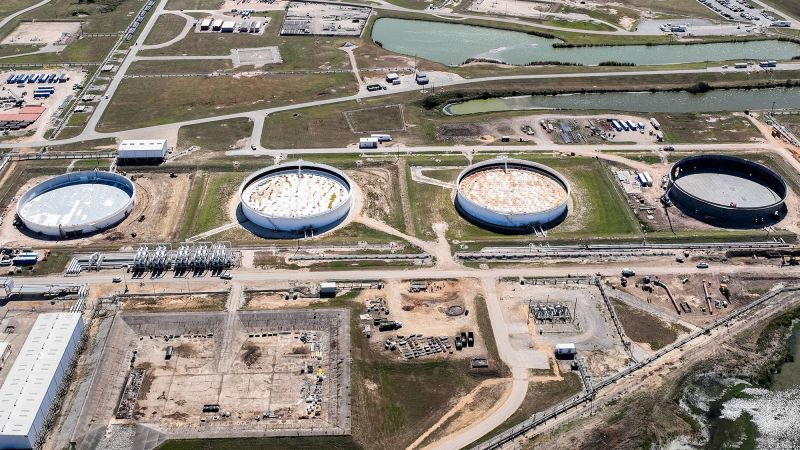
Sandego.net – The Strategic Petroleum Reserve (SPR) in the United States has reached its lowest level since the 1983 era, according to federal data disclosed this week. This dramatic decline is attributed to the Trump administration’s continued efforts to release oil from the reserve in response to the ongoing conflict with Iran. Last week alone, officials drew down an additional 8.9 million barrels, leaving the emergency stockpile at 340.3 million barrels of crude oil. This marks the lowest point since July 2023, when President Joe Biden’s administration set a prior record after Russia’s invasion of Ukraine.
Historical Context and Current Levels
The SPR, established in the 1970s to safeguard against energy crises, has been a cornerstone of U.S. energy policy for decades. However, the current depletion rate underscores a significant shift in strategy. The last time the reserve held fewer barrels than today was July 1983, during the early years of the Reagan administration. At that time, the reserve was being filled for the first time, and the nation’s economy was smaller compared to today’s scale. The current situation, while unprecedented in modern history, mirrors the challenges faced during that period, yet the context has evolved dramatically.
Analysts note that the SPR’s role has expanded beyond its original purpose. While it was initially designed to mitigate supply shocks, the reserve has become a strategic tool for managing energy prices and economic stability. Under the Trump administration, its use has intensified, particularly in response to geopolitical tensions. The release of oil from the SPR is seen as a way to stabilize markets and reduce the impact of rising prices on consumers and businesses.
SPR as a Tool for Energy Stability
“The Strategic Petroleum Reserve releases, combined with other governments’ actions and China’s reduction in exports, have prevented the Armageddon scenario of $150 oil from happening to date,” stated Andy Lipow, president of Lipow Oil Associates. His remarks highlight the collaborative nature of global oil market interventions, which have helped temper price spikes. However, the continuous drawdown of the SPR has raised concerns about its long-term viability.
Back-to-back conflicts have significantly depleted the reserve. Since the war with Iran began in late February, the SPR has lost 75 million barrels, or 18% of its capacity. This loss is partly due to the administration’s proactive measures to address energy price volatility. President Donald Trump, during his 2022 presidential campaign, criticized President Joe Biden for draining the reserve prior to that year’s midterm elections. Now, the Trump team is accelerating the pace of withdrawals, framing them as a necessary step to prepare for this year’s midterms.
Operational Thresholds and Strategic Concerns
With the current stockpile sitting at just under half capacity, officials are sounding alarms about its operational readiness. Mike Sommers, CEO of the American Petroleum Reserve, warned last week that the reserve must maintain at least 20% of its capacity to function effectively. “We’re raising alarm bells right now,” Sommers told CNN’s Phil Mattingly on *The Lead*. “We’re getting to levels where we are starting to be concerned.” His statement reflects the urgency of maintaining a buffer against unexpected disruptions.
The SPR’s reduced size poses a risk, especially during hurricane season. If a major storm strikes the Gulf of Mexico, disrupting production for weeks, the reserve’s diminished stock could leave the country vulnerable. “If we were to get a major hurricane in the Gulf of Mexico that shuts production down for several weeks, that buffer would no longer be there,” Lipow explained. This scenario highlights the delicate balance between immediate crisis management and long-term energy security.
Political Rhetoric and Market Dynamics
Trump’s administration has framed its SPR strategy as a way to protect American interests during global turmoil. By releasing oil, the government aims to stabilize domestic markets and ease pressure on consumers. However, this approach has also sparked debates about the reserve’s sustainability. While the SPR’s releases have helped curb price increases, the rate of depletion raises questions about the ability to replenish stocks in a timely manner.
Despite the current crisis, the SPR remains a vital component of the nation’s energy infrastructure. Its depletion since the war with Iran began has been a direct result of geopolitical events and policy decisions. The 172 million barrels pledged for release in March are a key part of this strategy, but their impact is being felt now. As the administration moves forward, experts warn that the pace of withdrawals may need to slow once this commitment is fulfilled. Yet, the replacement process could lag, especially with the approaching peak of hurricane season.
Broader Implications for Energy Policy
The SPR’s current state reflects the complex interplay between energy markets and political priorities. While the reserve was initially intended to serve as a safety net during emergencies, its role has increasingly become a tool for short-term economic stabilization. This shift has implications for future energy policy, as the administration weighs the need for immediate relief against the long-term consequences of stockpile depletion.
Historically, the SPR has been used to address crises such as the 1973 oil embargo and the 1990-1991 Gulf War. Today, its use is driven by a different set of challenges, including the war in Ukraine and the ongoing conflict with Iran. The reserve’s capacity to respond to these events is critical, but its current levels may limit its effectiveness. As the SPR continues to shrink, there is a growing emphasis on diversifying energy sources and strengthening international partnerships to reduce reliance on the reserve.
Industry experts agree that while the SPR has played a crucial role in recent months, its sustained depletion requires careful planning. The administration must not only replenish the stockpile but also ensure that it remains a viable option for future emergencies. This includes addressing the economic and logistical challenges of maintaining the reserve’s operational status. As the political climate shifts, the SPR’s role in national energy strategy will likely remain a focal point for policymakers and analysts alike.
Ultimately, the SPR’s historic low serves as a reminder of the interdependence between global conflicts and domestic energy policy. The administration’s actions have been a response to immediate threats, but the long-term consequences of these decisions will shape the nation’s approach to energy security for years to come. Whether the SPR can recover in time or if it will require a more permanent adjustment in strategy remains a key question in the evolving energy landscape.