US-Iran Nuclear Talks: A Repeating Pattern of Conflict and Diplomacy
Sandego.net – President Donald Trump has once again set a 60-day timeline for Iran to reach a nuclear agreement, as the specter of American military intervention grows closer. This move echoes a familiar scenario that unfolded in the Middle East just over a year ago, during the weeks leading up to the first Israeli strikes on Iran. The current tension feels like a déjà vu, yet the situation is more complex than it appears, with the same actors and dynamics resurfacing in a new iteration.
The standoff between the United States and Iran is marked by a cycle of brinkmanship and sudden escalation. Trump’s initial proposal in March 2025, urging Iran’s supreme leader to accept a two-month window to negotiate or face force, has returned as a central theme. The plan’s recurrence raises questions about whether the White House is trying to recreate a past pattern or if history is truly repeating itself. With Israel’s Prime Minister Benjamin Netanyahu playing a pivotal role in pushing for military action, the stage is set for a potential repeat of events that devastated the region in recent months.
The Echoes of a Past Crisis
Exactly one year prior, the Middle East found itself in a similar predicament. In April 2025, the prospect of war loomed large as both sides prepared for the next phase of their rivalry. The U.S. had issued a two-month ultimatum, and Israel had already begun planning its next strike. The outcome was swift and severe: On June 13, Israel launched “Operation Rising Lion,” targeting Iran’s nuclear infrastructure and security forces. The attack, which killed dozens of Iranian officials and left a significant portion of their command structure in ruins, triggered a 12-day conflict. The United States, in turn, retaliated, claiming to have dismantled Iran’s nuclear program in a decisive strike.
“The past year may resemble a circle in US-Iranian relations back to the same place, but the trajectory has spiraled downward, for the US and the region as a whole.”
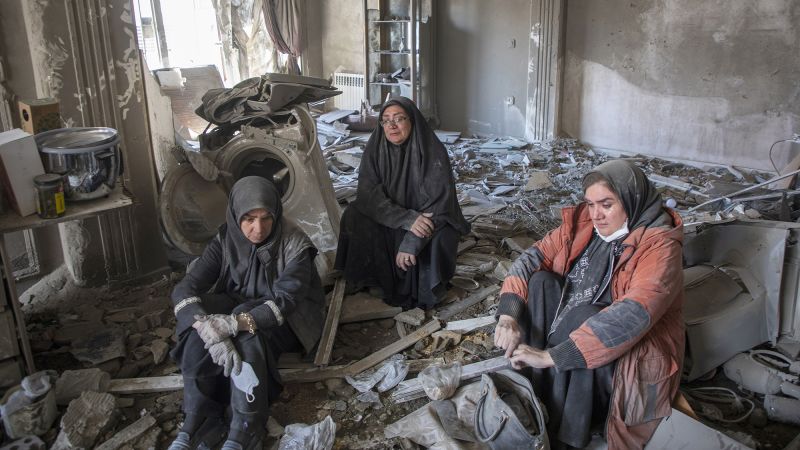
Now, with over 3,000 Iranian lives lost in the conflict and nearly 3,600 Lebanese casualties reported by the country’s health ministry, the same cycle appears to be unfolding. The current push for a new 60-day deadline suggests that the U.S. and its allies are attempting to revive the same strategy, despite the devastation it caused. Yet, the repetition of this approach has left many wondering if it’s a calculated move or a desperate attempt to regain control in a rapidly shifting geopolitical landscape.
The Weight of Consequences
What has the year of conflict achieved, and what has it cost? The violence has reshaped the region, but its impact on Iran’s nuclear ambitions is not clear-cut. While the immediate destruction of facilities and leadership figures may have temporarily stalled Iran’s progress, the long-term implications are less certain. The country’s scientific expertise, though diminished, remains intact, and its ability to rebuild is a critical factor in determining whether a nuclear weapon is still a viable goal.
The past year’s events have also highlighted the fragility of diplomatic progress. The 60-day deadline, now part of a broader memorandum of understanding, signals a return to the same strategy that led to disaster in 2025. Trump’s repeated reliance on this model, despite the challenges it presented, underscores a pattern of decision-making that prioritizes speed over stability. The cycle has been marked by swift declarations of success and equally swift setbacks, leaving the White House to grapple with the consequences of its actions.
Leadership and the Succession of Power
A key question remains: Has the year of violence made Iran’s leadership more or less inclined to negotiate? The assassination of Supreme Leader Mojtaba Khamenei and the destruction of his inner circle have created a power vacuum that may either weaken or strengthen Iran’s position. Some analysts argue that the loss of moderates and the rise of hardliners have entrenched a more rigid stance, making compromise harder to achieve. Others suggest that the trauma of war could open the door to renewed diplomacy, particularly if the new leadership is more pragmatic in its approach.
The U.S. has also faced challenges in its strategy. The initial strikes in February and March 2025, which targeted key Iranian leaders, were followed by a succession of figures who now hold the reins of power. This process has arguably made Iran more resistant to negotiation, as the new leadership may view any agreement as a concession to foreign pressure. The absence of moderates, who were often more open to dialogue, has left the country with a leadership that is less willing to compromise. This shift mirrors the situation in Afghanistan, where repeated strikes on the Taliban leadership led to a more radical and vengeful faction taking control.
The Road Ahead
As the U.S. and Iran navigate this new cycle, the stakes have never been higher. The memorandum of understanding, which includes the 60-day deadline, is a test of whether the current administration can learn from past mistakes. If the fighting resumes, it could be a brutal reminder of how quickly diplomacy can be overshadowed by military action. Yet, the potential for a breakthrough remains, provided both sides are willing to adjust their tactics and priorities.
Trump’s repeated efforts to force a deal through intimidation have proven effective in the short term, but they risk deepening the mistrust that has taken root in the region. The latest push for a new agreement must account for the lessons of 2025, where the combination of American and Israeli strikes led to a prolonged conflict with heavy civilian casualties. The challenge now is to balance the urgency of the deadline with the need for sustainable diplomacy that addresses Iran’s concerns and the U.S.’s security interests.
Ultimately, the success of the current agreement will depend on whether it can avoid the pitfalls of its predecessor. While the immediate threat of war may have been averted, the underlying tensions between the two nations remain. The cycle of conflict, once set in motion, is difficult to break, but the possibility of a new beginning is still within reach. For now, the Middle East waits to see if this year’s approach will mark the end of the loop or simply another chapter in the ongoing saga of U.S.-Iran relations.
Legacy of Decapitation Strikes
The pattern of decapitation strikes, which have become a hallmark of modern warfare, has left lasting impacts on both Iran and the broader region. In the past year, the destruction of Iran’s leadership has not only disrupted its nuclear program but also intensified its resolve to retaliate. The same strategy, however, has shown a tendency to produce more radical leaders, as seen in the aftermath of the 2025 attacks. This dynamic has created a cycle where military action is followed by a surge in determination, making diplomatic solutions more elusive.
While the U.S. and Israel may view these strikes as necessary steps to weaken Iran, the long-term effects suggest a more complicated picture. The assassination of Khamenei and his allies, combined with the destruction of key facilities, has forced Iran to adapt rapidly. This resilience, however, has not come without cost. The country’s scientific capabilities have been tested, and its ability to maintain a nuclear program under duress remains a point of contention. The U.S. must now decide whether to continue the same approach or pivot toward a more nuanced strategy that acknowledges Iran’s current vulnerabilities and strengths.
As the dust settles from the latest escalation, the Middle East braces for the next phase of this conflict. The 60-day deadline is more than a political maneuver; it is a test of whether the cycle of violence can be broken or if it will continue to reshape the region’s future. The answer will not only determine the fate of the U.S.-Iran agreement but also the stability of the Middle East itself.