Deadly Skydiving Crash Sparks Renewed Debate on FAA Oversight
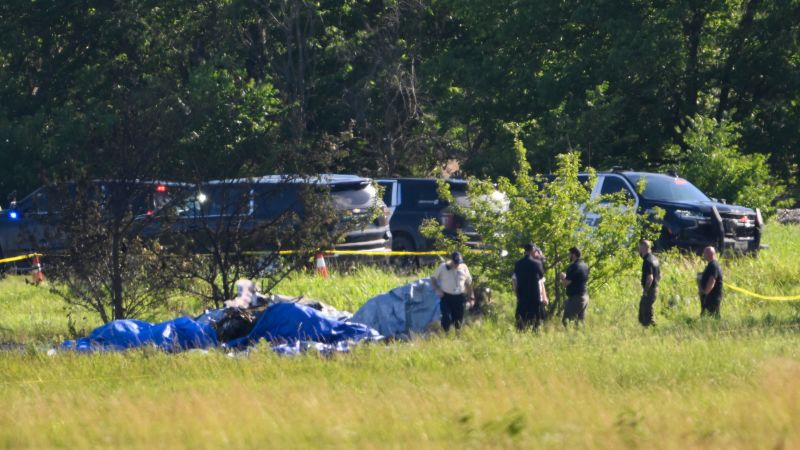
Sandego.net – On a sunny Saturday in Butler, Missouri, the wreckage of a single-engine skydiving plane lay scattered across the tarmac, a stark reminder of the risks involved in the aerial sport. Jennifer Homendy, the National Transportation Safety Board’s (NTSB) chair, stood among the debris, her voice heavy with resolve as she acknowledged the need for change. This crash, which claimed all 12 lives on board, marks the deadliest incident of its kind in the U.S. since 2019, when a similar tragedy in Hawaii left 11 people dead. While seven years have passed since that earlier crash, the latest incident has reignited a long-standing conversation about the adequacy of federal aviation regulations for skydiving operations.
A History of Concerns
The NTSB’s investigation into the Missouri crash has uncovered patterns that echo past incidents. In 2019, a twin-engine aircraft crashed in Mokuleia, Hawaii, during a routine skydiving mission, killing 11 individuals. At the time, Homendy was a board member, and now, as chair, she has called for stricter oversight. “Passengers deserve confidence that their flights are safe, with trained pilots and reliable operators,” she stated, emphasizing the gap between current standards and the expectations of those who pay for the experience.
“The company’s only direction for training was to teach new pilots how to start the engines, taxi the airplane, take off, fly the jump run, and land the airplane, after which the new pilots would be ‘good to go.’”
Homendy’s remarks come amid growing scrutiny of the Federal Aviation Administration (FAA), which governs skydiving flights under Part 91 rules. These regulations, originally designed for non-commercial operations, allow skydiving companies a degree of flexibility that critics argue is insufficient. While commercial airlines must undergo rigorous inspections and training protocols, skydiving planes often operate with fewer constraints, relying instead on self-regulation and periodic checks.
The Human Element in Aviation Safety
Investigations into the Missouri crash revealed that the pilot’s training may have played a critical role. According to the NTSB, the pilot had received only one hour of specialized instruction from Oahu Parachute Center, the organization overseeing the jump, just two days before the accident. This minimal training, combined with the pressure to meet tight schedules, may have contributed to the pilot’s decision to take off prematurely.
“They go up, they go down. They go up, they go down. They get as many jumps as the weather and daylight permit.”
These words, spoken by a former pilot at the center, underscore the challenges faced by operators. The pilot’s training, which focused primarily on engine operation and basic flight maneuvers, left little room for error. The NTSB noted that the crash occurred during a short field takeoff, a maneuver that requires precise timing and altitude control. In this case, the pilot’s aggressive takeoff likely caused an accelerated stall, leading to a loss of control at a dangerously low altitude.
Time Constraints and Operational Pressures
Investigators suspect that the pilot’s decision to depart quickly was influenced by the demand for “sunset flights,” a popular offering that maximizes the use of daylight hours. These flights often operate on tight schedules, with pilots needing to complete multiple jumps in a short window. “The pilot might have perceived pressure to take off quickly so that he could return to the airport in time for the last scheduled flight (and the third sunset flight) of the day,” the NTSB report noted.
Such time pressures are not unique to the Missouri incident. Gary Robb, an attorney specializing in aviation accidents, has previously represented victims of a 2006 crash in Sullivan, Missouri, a location about 200 miles east of the recent crash site. Robb argues that the lax regulatory framework for skydiving operations creates a scenario where pilots are expected to balance safety with efficiency, often at the expense of thorough preparation.
“It’s not the danger inherent to skydiving. Skydiving operations, in terms of the quality of the aircraft and the piloting, have been under scrutiny because they’re subject to the most lax regulations of the Federal Aviation Administration.”
The 2006 crash in Sullivan, Missouri, highlighted similar issues. The pilot had reportedly been rushed into service without adequate training, leading to a catastrophic failure during takeoff. Robb’s experience with that case has shaped his view of the current system, which he describes as “a patchwork of guidelines rather than a robust safety framework.” He believes the FAA’s reliance on self-reporting and minimal oversight has created a culture where mistakes are overlooked.
Regulatory Exceptions and Industry Autonomy
Part 91 regulations, which govern non-commercial flights, provide a loophole for skydiving companies. While commercial airlines must adhere to strict maintenance and training requirements, skydiving operators are allowed to operate with less oversight. This distinction has sparked debate over whether the FAA should apply more stringent standards to flights that carry paying passengers.
Homendy has been a vocal advocate for reform, pushing the FAA to implement stronger inspection measures. Following the Missouri crash, she urged the agency to take action, citing the need for better training records and more frequent evaluations of instructors. However, the FAA dismissed her recommendations, calling them “unnecessary.” The NTSB criticized this response as “unacceptable,” arguing that the current system fails to account for the complexities of skydiving operations.
State-Level Accountability and Industry Response
The Hawaii Department of Transportation had previously raised concerns about the licensing of Oahu Parachute Center. Just days after the 2019 crash, the state shut down the business, citing inadequate regulatory compliance. This action underscored the role of state governments in enforcing safety standards, but it also revealed the fragility of oversight in the skydiving industry.
In contrast, the Missouri crash has yet to prompt the same level of intervention. While the NTSB continues its investigation, the FAA has remained hesitant to revise Part 91 rules. Critics argue that the industry’s reliance on voluntary compliance and limited federal oversight has led to inconsistent safety practices. “Skydiving companies operate in a grey area where they’re responsible for their own safety,” said Robb, emphasizing the need for a standardized approach to training and operational checks.
Industry advocates, however, defend the current system. They point out that skydiving planes are typically smaller and require less complex maintenance than commercial aircraft. “The core of skydiving is the experience itself, not the mechanics of flight,” said one operator, noting that the sport’s appeal lies in its accessibility and the thrill of the jump. Yet, this perspective has not quelled the debate over whether the FAA should enforce stricter requirements to ensure passenger safety.
The Path Forward
As the NTSB prepares its preliminary report, the focus remains on identifying systemic issues that could prevent future tragedies. The Missouri crash has amplified calls for reform, particularly in addressing training gaps and time-related risks. Homendy’s leadership has been pivotal in shifting the conversation, but the FAA’s reluctance to act suggests that the battle for regulatory change is far from over.
The NTSB’s 2008 recommendation to update Part 91 regulations was met with resistance, highlighting the challenges of pushing for change in a system that prioritizes efficiency over safety. While the current framework allows for flexibility, the repeated incidents of crashes raise questions about whether that flexibility is justified. “The FAA has the authority to ensure that skydiving operations meet the same safety standards as commercial flights,” Homendy asserted, urging policymakers to take a closer look at the risks.
With the Missouri crash serving as a catalyst, the skydiving industry now faces renewed pressure to prove its safety credentials. The NTSB’s findings may lead to a formal recommendation for revised regulations, but until then, the debate over how best to balance safety, cost, and convenience will continue. For now, the wreckage on the tarmac stands as a symbol of the human cost of regulatory complacency—and a call to action for those who govern the skies.