Oil prices hit three-month lows on US-Iran agreement
Sandego.net – Global oil markets experienced a notable decline on Monday, with prices reaching their lowest levels in over three months. The drop followed an announcement by the United States and Iran of a deal to lift the US blockade of Iranian ports and restore access to the critical Strait of Hormuz. Brent crude, the international oil benchmark, fell by 5% to $82.91 per barrel shortly after 5 a.m. ET, marking a new low since March 5. US crude also dropped sharply, declining 5.5% to $80.21, its weakest point since early March. Both benchmarks have declined by approximately $10 per barrel over the past week, reflecting a shift in market sentiment.
Deal Details and Immediate Impact
The agreement between the US and Iran signals a potential end to the economic strain imposed by the blockade. Iranian ports, which had been restricted, are expected to resume normal operations, easing concerns about global oil supply disruptions. The Strait of Hormuz, a key maritime corridor for energy exports, is anticipated to see unimpeded traffic once the deal is finalized. However, analysts note that while the agreement has sparked optimism, the actual reversal of the blockade and the re-establishment of oil flows will take time to fully materialize.
The deal’s specifics include the removal of US sanctions on Iranian ports, a move that could immediately boost crude exports. Trump, who signed the memorandum late Sunday, emphasized the completion of the agreement, stating it would “toll free” open the Strait of Hormuz. According to a member of Iran’s parliament, ships had previously paid an average of $2 million for passage through the strait, a cost now expected to be eliminated. The agreement, however, is not yet publicly available, with the full text set to be signed in Switzerland by Friday.
Expert Analysis and Market Outlook
“Sentiment has clearly improved… but sentiment is not the same as supply,” said Claudio Galimberti, Rystad Energy’s chief economist, in a Monday note. This sentiment is echoed by many in the industry, who recognize that the agreement’s success depends on more than just political goodwill. The restoration of normal oil flows requires several steps, including de-mining the Strait of Hormuz, ensuring the free movement of vessels, and reviving Middle Eastern production, which was largely halted during the conflict.
Despite the positive reaction, oil analysts remain cautious. The current prices, though lower than earlier in the month, are still about $10 per barrel above pre-war levels. Bob McNally, president of Rapidan Energy, warned that the market could face renewed volatility if the disruption persists and emergency stockpiles, such as the US Strategic Petroleum Reserve, are exhausted. “I’m very concerned we could see oil prices skyrocket later this summer,” he said, predicting crude could rise into the mid- to high-$100 range and gasoline prices could approach $5 per gallon.
The agreement has not only impacted oil prices but also influenced broader financial markets. Stock futures showed strength, with Dow futures rising 0.84%, while S&P 500 and Nasdaq futures gained 1.2% and 1.9%, respectively. Asian and European markets also rallied, reflecting a collective sense of relief. Deutsche Bank analysts highlighted the significance of the deal, noting that after 107 days of uncertainty, the agreement provides a “fizz” of stability. Yet, they cautioned that the road to sustained peace may be fraught with challenges.
Remaining Challenges and Long-Term Outlook
While the agreement is a major development, its full effects on the oil market will depend on several factors. The Strait of Hormuz, which once accounted for nearly 20% of the world’s oil and natural gas supply, requires de-mining before it can be considered fully operational. Additionally, Middle Eastern oil production, which has been affected by the conflict, may take weeks to ramp up. Experts warn that prolonged shutdowns could leave lasting impacts on output levels, as technical disruptions and infrastructure damage may not be easily reversed.
Iran’s deputy foreign minister for legal and international affairs hinted at further steps, stating that 60-day nuclear negotiations will commence only after the US releases billions in frozen funds. This condition has raised questions about the agreement’s durability, as the US has yet to confirm its stance. A US official dismissed Iran’s claims, asserting that the deal represents a significant but temporary relief. Even if the strait is reopened, traders remain skeptical about the immediate resumption of normal oil flows. “It’s great if it happens but I’ll believe it when I see actual ships making the free and unhindered passage through the strait,” said Joe McMonigle, president of the Global Center for Energy Analysis, who resides in Saudi Arabia.
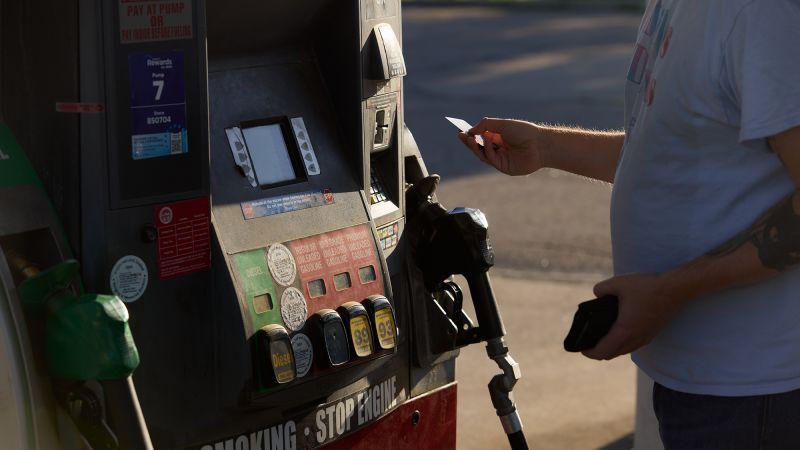
The average price of gasoline in the US dropped to $4.07 per gallon on Sunday, according to AAA, as the market processed the deal’s implications. However, this decline comes after three weeks of steady reductions, with gas prices still 36.6% higher than they were before the war began. The combination of lower oil prices and reduced gas costs has provided some solace to consumers, but the long-term trend remains upward. Analysts suggest that the market will continue to balance between optimism and caution, particularly as the effects of the agreement unfold over the coming months.
Political Dynamics and Market Speculation
The deal has also sparked discussions about its political implications. Trump’s endorsement of the agreement, coupled with Iran’s commitment to remove the blockade, signals a thaw in relations. However, the two sides appear to have diverging priorities. While the US focuses on lifting economic restrictions, Iran emphasizes the need for financial compensation as a condition for further negotiations. This dynamic may influence future oil price trends, as the deal’s permanence remains uncertain.
Market participants are closely monitoring the next steps. The agreement’s implementation will require collaboration between the US and Iran, with both nations needing to demonstrate commitment to the process. Meanwhile, traders are preparing for potential fluctuations, recognizing that the market may not stabilize quickly. The psychological impact of the deal is evident, but tangible results, such as increased oil production and reduced shipping costs, will determine its long-term success. As the world watches, the challenge lies in translating political progress into economic stability for the energy sector.