Venezuela’s Deadly Doublet Earthquakes: Single or Two Events?
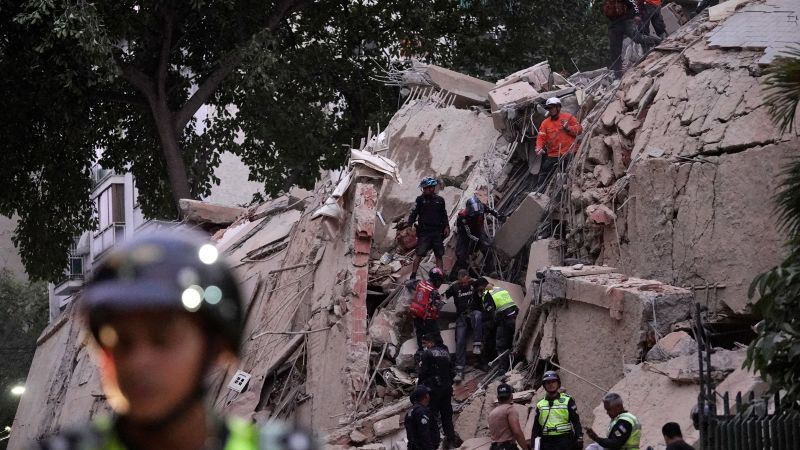
Sandego.net – On Wednesday evening, Venezuela’s doublet earthquakes struck the northern region, causing devastating damage and claiming over 500 lives, according to local authorities. Initially, the U.S. Geological Survey (USGS) labeled the event as a rare “doublet” — two strong quakes occurring in quick succession. However, scientists are now exploring whether the tremors might have resulted from a single, larger earthquake rather than two separate shocks. This debate has significant implications for understanding seismic patterns and refining future risk assessments in the area.
The Nature of Doublet Earthquakes
A doublet is defined by the occurrence of two earthquakes of similar magnitude within a short timeframe, often less than a minute apart. In Venezuela’s case, the first quake measured 7.2 on the Richter scale, followed by a 7.5-magnitude event just 39 seconds later. While the USGS has categorized the sequence as a doublet, some experts argue that the timing and energy distribution could indicate a single rupture, potentially with a magnitude higher than initially recorded. This ambiguity highlights the challenges in interpreting seismic data, especially in regions with complex geological activity.
“The distinction between a doublet and a single earthquake hinges on energy release patterns,” explained Raul Perez-Lopez, a geophysicist at Spain’s Institute of Geological and Mining Research. “Doublets often exhibit similar strength, while larger quakes may produce a primary event followed by weaker aftershocks. The overlapping effects of these two quakes in Venezuela could mask the true nature of the seismic event, making it harder to pinpoint its origin.”
Scientific Analysis and Uncertainty
Researchers are still analyzing data to determine whether the quakes were truly a doublet or a single, more powerful event. Judith Hubbard, a Cornell University seismologist, noted that preliminary findings might not be conclusive. “It could take several days for experts to fully understand the sequence,” she said. “At this stage, we are still debating whether this was one earthquake or two distinct events.” This uncertainty is prompting further studies to clarify the seismic mechanisms at play in the region.
Doublets are uncommon, yet Venezuela’s northern area has seen similar events before. In September 2025, two quakes measuring 6.2 and 6.3 on the Richter scale affected the same region. While this history suggests a pattern, the specifics of the latest event remain unclear. “We haven’t identified a consistent fault system responsible for these quakes,” Hubbard admitted. “It’s possible that the same fault could have triggered both events in rapid succession, or that multiple faults contributed to the seismic activity.”
Tectonic Context and Regional Seismicity
Earthquakes occur when tectonic plates, such as the Caribbean and South American plates, shift and release accumulated stress. In Venezuela, the quakes took place near the boundary of these plates, where slow but continuous movement creates seismic potential. The region has experienced seven earthquakes of magnitude 6 or higher in the past century, making the recent doublet particularly notable. “The proximity of the two quakes, 5 to 10 kilometers apart, complicates the analysis,” said Hubbard. “Scientists must examine aftershocks and wave patterns to determine the exact cause.”
The debate over whether the event was a doublet or a single quake could influence how experts model seismic risks in Venezuela. If the quakes were indeed a doublet, it might suggest a unique fault system or stress release mechanism. However, if they were part of a larger rupture, it could indicate a more significant seismic event. This distinction is critical for disaster preparedness and understanding the region’s vulnerability to future tremors.