Venezuela’s Acting President Faces Historic Crisis After Devastating Earthquakes
Sandego.net – Venezuela s acting president is facing perhaps the most significant challenge of her political career as the nation grapples with the aftermath of catastrophic earthquakes that struck in late June. The seismic events, which occurred just months after the detention of former president Nicolás Maduro, have transformed a natural disaster into a critical test of governmental competence. Acting President Delcy Rodríguez now finds herself at the center of a political storm, as citizens demand accountability and swift action in the face of mounting casualties and widespread destruction. Her ability to navigate this crisis will likely determine whether she can consolidate power or face growing opposition from both domestic and international quarters.
The Human and Economic Toll
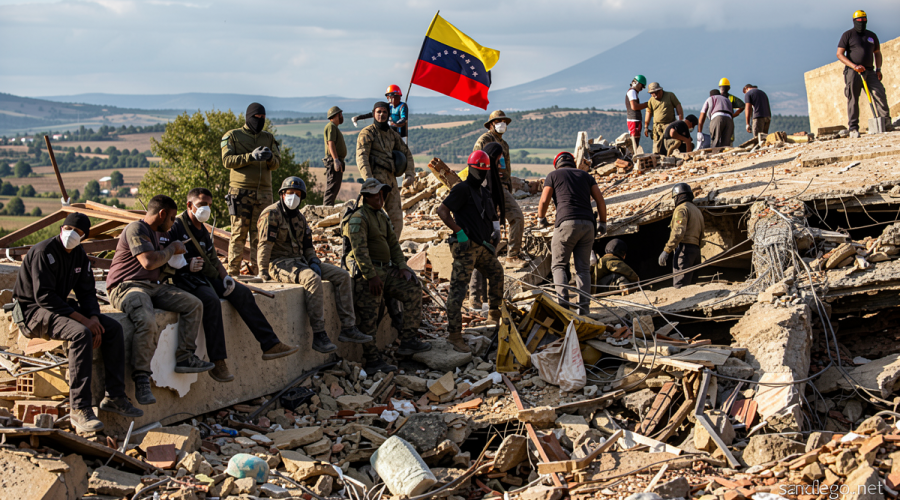
The earthquakes that hit Venezuela on June 24, 2026, delivered a devastating blow to the nation’s infrastructure and population. According to official government figures, the death toll has reached 3,685 people, though seismologists and humanitarian organizations warn that the actual number may be considerably higher. More than 16,000 Venezuelans sustained injuries of varying severity, while over 17,000 families were displaced from their homes as buildings collapsed and infrastructure crumbled. The economic impact has been equally severe, with the United Nations Development Programme estimating that the damage amounts to approximately 6% of Venezuela’s gross domestic product—a staggering figure for a country already struggling with economic challenges.
Relief efforts have been complicated by the scale of destruction and the logistical challenges of reaching affected areas. Many communities in the hardest-hit regions remain isolated, with damaged roads and bridges hindering the delivery of essential supplies. International aid organizations have begun mobilizing resources, but the pace of response has drawn criticism from opposition groups who argue that the government’s handling of the crisis reveals systemic weaknesses in Venezuela’s emergency management capabilities.
Political Implications for Rodríguez
The timing of the earthquakes could not be more consequential for Delcy Rodríguez’s political future. Having assumed leadership following Maduro’s detention six months ago, she has been working to establish her authority and legitimacy. The disaster has provided both an opportunity and a threat—demonstrating her capacity to lead during a crisis while simultaneously exposing vulnerabilities in the administration’s response mechanisms. Political analysts suggest that Rodríguez’s handling of the earthquake relief efforts will serve as a litmus test for her ability to maintain power in the coming months.
“The people of Venezuela are watching closely to see whether their government can deliver on its promises of effective governance,” said one Caracas-based political observer. “This earthquake has become a mirror reflecting the strengths and weaknesses of the current administration.”
Opposition leaders have seized upon the crisis to question the government’s priorities, pointing to allegations of corruption and mismanagement in the distribution of relief funds. Meanwhile, international partners have expressed both concern and support, with several countries offering assistance while calling for transparency in the recovery process. The United States and European Union have been particularly vocal in their calls for accountability, emphasizing the need for democratic institutions to function effectively even during emergencies.
As recovery efforts continue, Rodríguez faces the dual challenge of addressing immediate humanitarian needs while positioning herself politically for the future. Her administration has announced plans for a comprehensive reconstruction program, though critics remain skeptical about the feasibility of such ambitious goals given Venezuela’s limited resources. The coming weeks will be crucial in determining whether the earthquake becomes a turning point that strengthens Rodríguez’s position or accelerates calls for political change in Venezuela.